| The Israelite Refuge of |
| PETRA |
 |
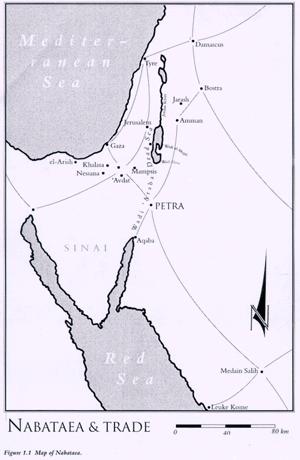 |
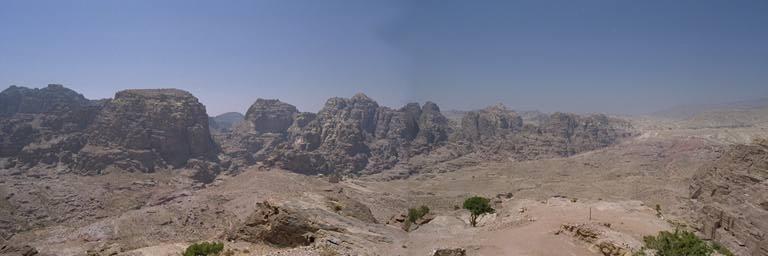
| About 3-5 hours south of modern Amman, about 2 hours north of Aqaba, on the edges of the mountainous desert of the Wadi Araba, lies the rose-colored city of Petra. The city is surrounded by towering hills of rust-colored sandstone which gives the city natural protection against invaders. The Nabataean Arabs, a nomadic tribe who settled in the area and laid the foundations of a commercial empire that extended into Syria, first established Petra sometime around the 6th century BC. Despite successive attempts by the Seleucid king Antigonus, the Roman emperor Pompey, and Herod the Great to bring Petra under the control of their respective empires, Petra remained largely in Nabataean hands until around 100 AD, when Romans took over. It was still inhabited during the Byzantine period, when the former Roman Empire moved its focus east to Constantinople, but declined in importance thereafter. |
 |
 |
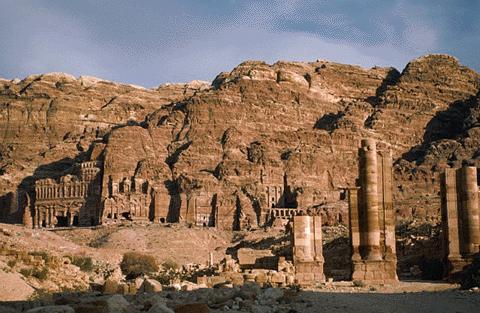
| In the 12th Century, the Crusaders constructed a fort there, but soon withdrew, leaving Petra to the local people until the early 19th Century, when it was visited by the Swiss explorer, Johann Ludwig Burckhardt. The site is semi-arid, the friable sandstone which allowed the Nabataeans to carve their temples and tombs into the rock crumbling easily into sand. The color of the rock ranges from pale yellow or white through rich reds to the darker brown of more resistant rocks. |
| The contorted strata of different-colored rocks form whirls and waves of color in the rock face, which the Nabataeans exploited in their architecture. Petra was reinhabited following the Rapture of Christ's own by throngs of refugees fleeing the control of the Antichrist. It has been predicted and prophesized that the city's rock and sandstone walls will protect and keep the refugees in complete safety until the time of the Glorious Appearing of Christ. |
| Note: Images not available for The Crusader's Castle or The Necropolis |
| click on a link on the left to view images of these sights |
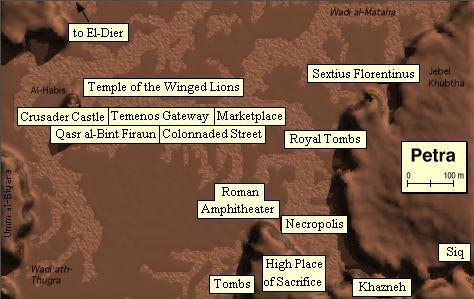
| MAP OF PETRA |
| See the official Databank entry PETRA |