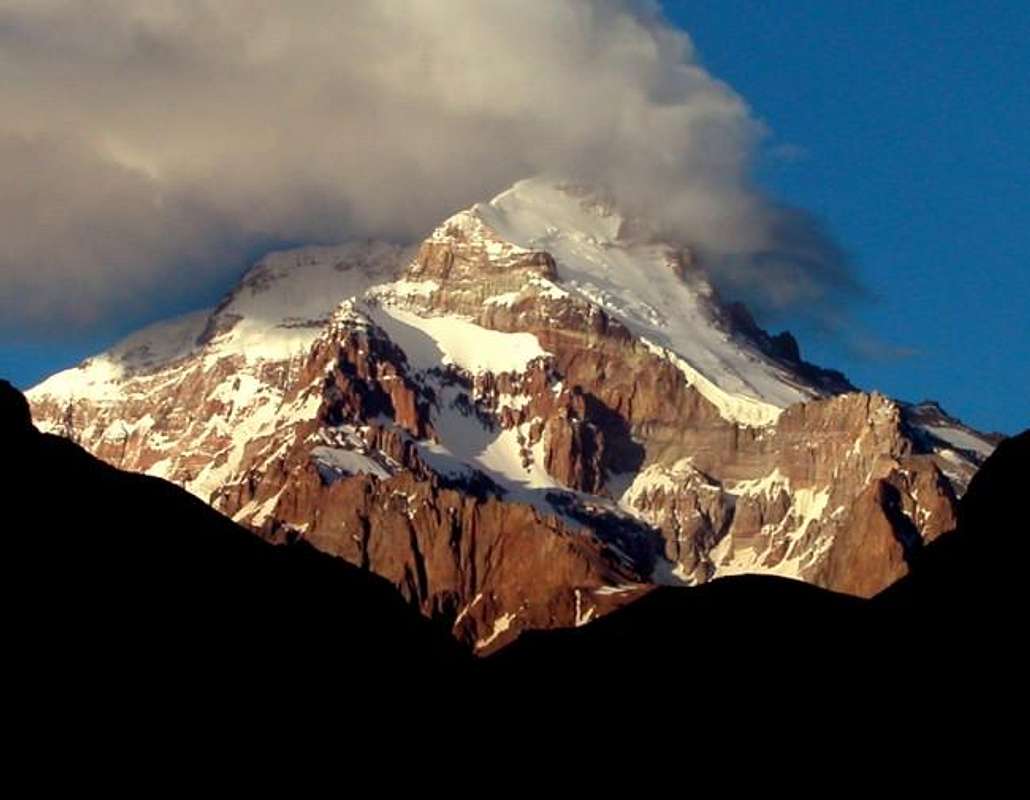
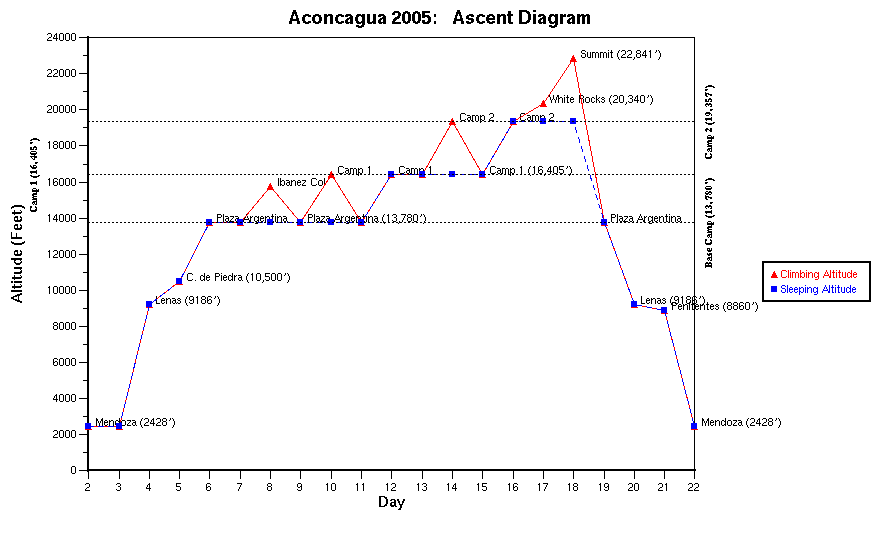
The Mountain: Aconcagua (22,841 ft / 6962 m), the highest mountain outside of Asia.
Expedition date: January 29 - February 22, 2005 (25 days).
Route: False Polish route (aka Polish Traverse).
Climbers: Miguel Forjan, Mike Ostby
Excerpt taken from Cosley & Houston guide services:
At 22,841 feet above sea level, Aconcagua is the highest peak in the world outside of Asia. It is a major expeditionary goal. Despite its relatively easy technical difficulty, the peak still turns back many alpinists. Success rates on Aconcagua are scarcely higher than those on Denali, a peak with its own fearsome reputation. The reasons for Aconcagua's challenge lie in its great height and difficult weather.
Perhaps it is the availability of a technically easy route which causes many climbers to underestimate the peak. Too frequently one hears of severe, and occasionally fatal altitude illness --- illness that could have been prevented with a more patient approach.
Likewise the weather also has taken its toll on many expeditions. Though the climate is generally dry, Aconcagua is subject to intense winds. Climbers must learn to wait for the correct conditions. Too many groups have rushed up the mountain, bringing only a minimum of food and fuel only to find that the summit day they have selected offers only marginal weather and only a marginal chance of summit success.
There are 4 main ingredients to a successful Aconcagua expedition: planning, patience, fitness, and luck.
The climb begins with planning. Good and appropriate equipment, allowing adequate summit attempt days, slow and methodical movement up the mountain to allow for thorough acclimatization, including enough extra days to sit out periods of poor weather --- all these are part of good planning.
Patience is a key word in high altitude mountaineering. Many a time parties have battled their way upward in poor weather and conditions, unwilling or unable to wait for the inevitable improvement. After a brief and challenging stay up high in the wind, they come down, battered, just as conditions improve. Even sadder, many expeditions leave the peak without having made a serious attempt, simply unwilling to believe that the weather will get better. And most tragically, climbers who ascend too fast play Russian roulette with high altitude pulmonary or cerebral edema. Patience is key.
Fitness is another necessary ingredient. Climbers need the kind of fitness which enables them to keep going all day long. Because of the extended nature of the climb and its brutal weather and cold, packs are often large and heavy. Legs, lungs and heart are the necessary ingredients. Psychological fitness is also critical. Successful climbers have a strong combination of drive and patience. Tent life is not for everyone. Living in close proximity for weeks on end takes its toll. Maintaining drive can be a challenge. But it is drive that keeps us moving upward, and ultimately, finds us on the summit.