 |
|||
| Home | Articles | Photos | Links |
| UP for Grabs: on the brink of commercialization | |||
|
The play of words was apt to the situation. The claws of commercialization are reaching for the University of the Philippines (UP), dangerously close to snatching the university away from its already feeble grip on democratic education. On Jan. 24, the League of Filipino Students (LFS-CMC) and the Union of Journalists of the Philippines (UJP UP) organized UP for Grabs: The State of the Philippine Education System, an Alternative Classroom Learning Experience (ACLE) in the UP College of Mass Communication auditorium. Guest speakers Alvin Peters of the National Union of Students in the Philippines (NUSP) and Student Regent Terry Ridon discussed the current state of education in the Philippines and the controversial UP charter respectively.
Peters explained that this colonialized and commercialized system is clear in the prioritization of the English language and Nursing courses to cater to the international demand for call center agents and nurses. He also stated the Education Act of 1982 as essential to the intensification of this movement. Section 42 of this Act gave private schools the freedom to increase their tuition and other school fees. "It (Section 42) removed the government's role in ensuring that fees being imposed in private schools would be affordable to the majority of Filipinos," Peters pointed out. "Pinapaubaya lang nila sa higher sectors yung secondary and tertiary education." Tuition increase is a subject that hits close to home for most UP students, after Tuition and Other Fee Increases (TOFI) has come in effect the past semester amid protests of the majority of student population. At present, Student Regent Terry Ridon is fighting a different battle, opposing the Pangilinan Bill that pushes for a new UP charter. While Ridon agrees that it is time for a new charter, he finds some of the provisions in Sen. Francis Pangilinan's draft objectionable. The Pangilinan Bill retains much of the decision-making powers of the Board of Regents (BOR). According to Ridon, this compromises the autonomous nature of the university because four members of the BOR are Malaca�ang appointees. The utilization of university lands for revenue that was proposed in the Pangilinan Bill sees the beginning of a road to commercialization not just of UP, but also of other state universities in the country. UP is being used as a guinea pig for government policies on education, Peters observed. He pointed out, "STFAP was first tried out in UP before other SUCs (state universities and colleges)." It is ironic that as UP celebrates its Centennial as a university, it finds itself on treacherous ground as it struggles to maintain its hundred-year tradition of democratic education amid pressures of commercialization. |
|||
|
Related Links:
Pangilinan Bill LFS Primer on UP Charter Bills |
|||
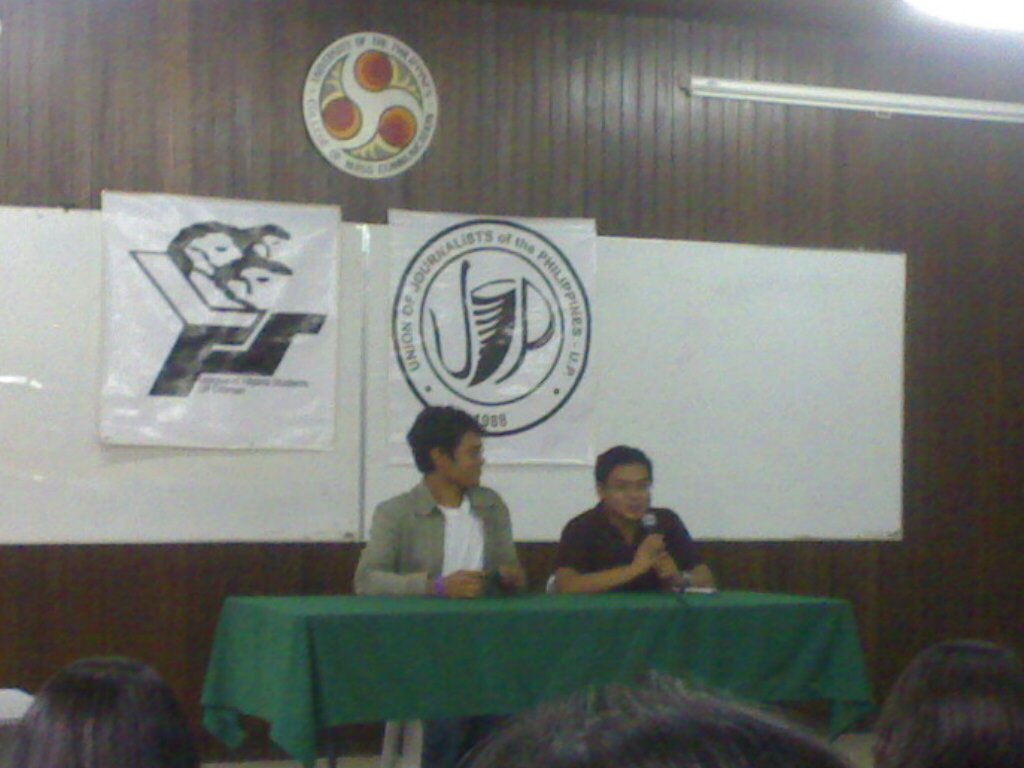 Peters was vocal in protesting against the commercialization of education happening in the country. "Education should be nationalist and mass-oriented," Peters said.
Best Viewed Using MOZILLA FIREFOX
All Rights Reserved.
Copyright � 2008 Celia Nachura