Cecilia Spiller
LEGACY PROJECT
| Return to Menu |
You may talk until you are blue in the face, but it is what you leave behind, your legacy, that makes a difference in the peoples’ lives that you encounter. As a Texas A&M Agriculture Science student, we are required to perform a legacy project while at our student teaching centers. When I first began planning my legacy project I had considered doing a landscape project, but since James Madison is about to build a whole new Ag facility, it was not a logical choice. After realizing that my original idea was not going to work, I decided to use a class project that my Aquaculture PEL class was doing as my actual legacy- breeding and rearing albino and colored African Clawed (Xenopus laevis) Frogs. These frogs are completely aquatic and are sold as pets at stores across the nation for anywhere from four to seven dollars. Early in October we ordered in a pair of proven breeders($67), choronic gonadatropin(2,500 IU) and syringes, breeding tank with egg catcher($150), two orders of albino tadpoles containing one-hundred tadpoles each($100) and frog/tadpole brittle all from Nasco Living Science company. Before the tadpoles and frogs arrived, the PEL class and I took four aquariums that were not being used from the old greenhouse and set them up with aerators in the classroom. Once the tadpoles arrived they were distributed evenly into the four different aquariums and cared for by the aquaculture classes, Mr. Anderson and myself. The breeders were placed in their own separate tanks until time to breed. Each day the students performed water exchange on all of the aquariums, using non-chlorinated water from the old greenhouse, carrying it over in buckets, and fed using the tadpole and frog brittle along with their other chores. After the breeders were given a week to settle down, we began the breeding process. The breeding process began with injecting the female with the gonadatropin, then the male and female and eventually placing them in the breeding tank together. After forty-eight hours there were about five-hundred eggs at the bottom of the tank, so we removed the frogs to their separate tanks and allowed the eggs time to metamorphous into tadpoles. However, since this is the first time that either Mr. Anderson or myself has bred frogs it was a learning experience and we were unaware that the eggs were supposed to be aerated to keep the ammonia levels down and only about fifteen tadpoles survived. Despite losing most of the eggs, the experience has proven to be very rewarding, teaching the students the responsibility and the satisfaction that comes with hard work and doing something the right way. As the last week of my student teaching experience came to an end the albino tadpoles were no longer tadpoles, but actual frogs, and the students that chose too took one home, the rest are being traded to a pet store for equipment the aquaculture department needs, but does not have room for in their budget. Also, the tadpoles actually produced by the breeders are all still alive and on their way to becoming frogs. Upon leaving James Madison, I was assured by Mr. Anderson that the classes would continue on with the African Clawed Frog project. While my legacy project is not in anyway traditional, I am satisfied that the students will walk away from the experience with pride and a renewed sense of what hard work really is and where it can take you, for I have seen it in the students in my PEL class, as well as in myself.
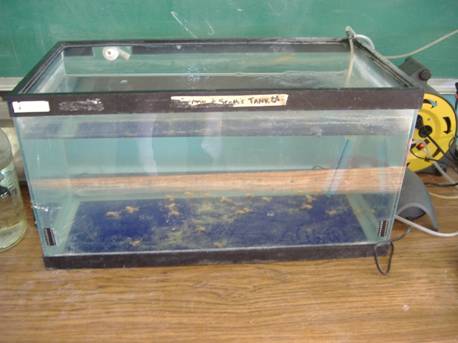
Picture 1- Before tadpoles arrived
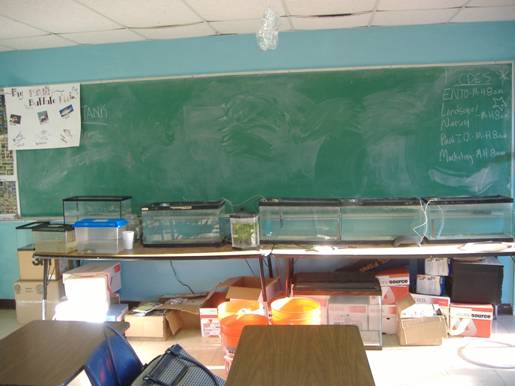
Picture 2- Albino tadpoles feeding a week after arrival.
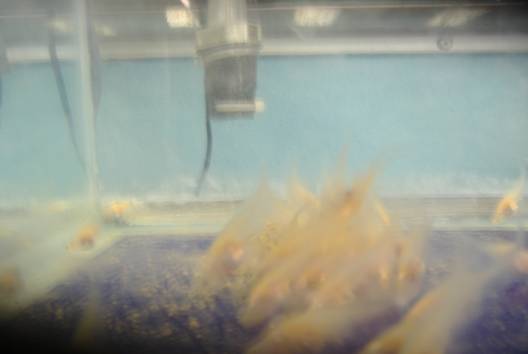
Picture 3- Tadpole Brittle
Picture 4- Preparing female for injection
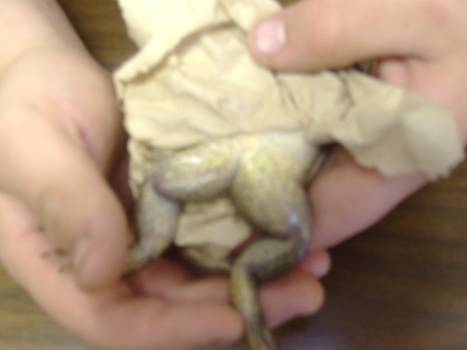
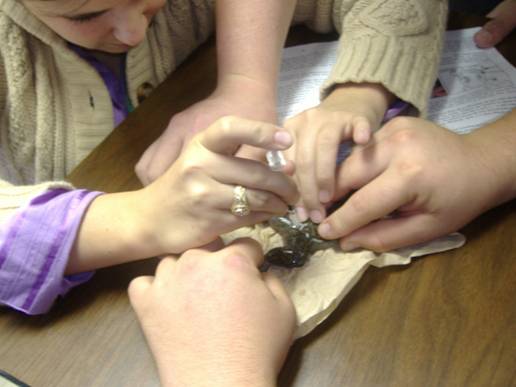
Picture 5- Actual injection of female.
Picture 6- Albino Frogs at the end of semester