| Some Algae is up to 50% Oil !!!!! An acre of corn can produce 20 gallons of corn oil. An acre of algae can produce 15000 gallons of algae oil !!! (maybe more!) Farmers who have 750 acres, could grow food corn on 749, and fuel algae on one, making food plentiful and affordable, and making farms profitable. Urban areas could grow algae on roofs in plastic bags. Algae BioFuel co-ops, like Milk co-ops, would provide the collection, transport, and processing. The Ocean can be farmed too... All we need is marker buoys, nylon rope, oil bearing seaweed, and Harvester Vessels. The Ocean is vast, and production is scaleable. Grown Fuel crops will oxygenate the ocean, improve fishing, and remove CO2 from the air. The process will also create NEW JOBS and INDUSTRY !!!!! |
 |
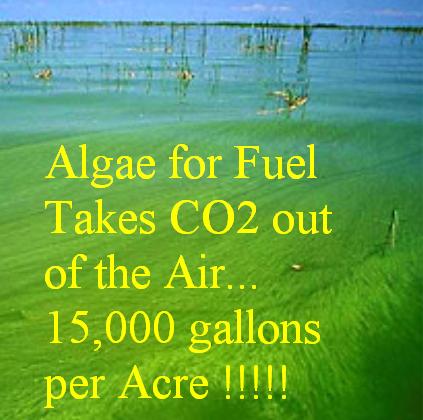 |
| 15000 Gallons of Oil !!! |
| 1 gallon of Oil = 40.476 KWH |
| 15000 gallons of Oil = 607,142 KWH / year |
| 41.09 gallons of Oil / day = 1663 KWH / day ! ! ! ! ! |
|
High Density Algae Test Delivers 33,000 Gallons of Oil Per Acre
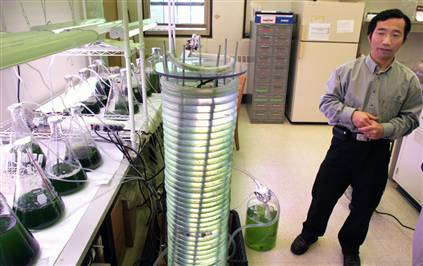
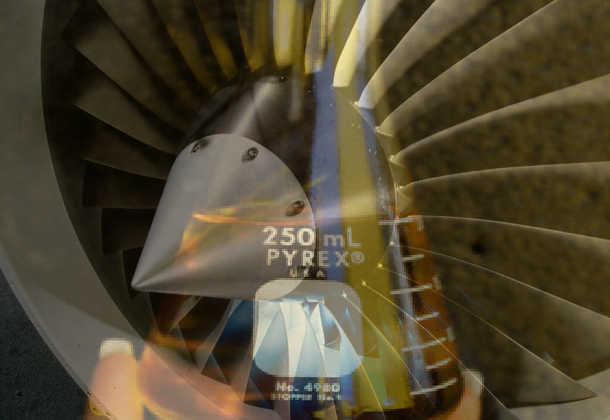
The Vertigro Joint Venture has released initial test results from its high density bio mass (algae) field test bed plant located at its research and development facility in El Paso, Texas. The primary focus of the 90-day continuous production test was determining the robustness of the field test bed. Other secondary tests were also conducted including using different ph levels, CO2 levels, fluid temperatures, nutrients, types of algae, and planned system failures. It is important to note that the system has not been optimized for production yields or the best selection of algae species at this time. The next phase of development will include increasing the number of bio reactor units from 30 to 100 and then continuing a number of production tests that may further increase production as well as initiating various extraction tests. The results released today are in keeping with data previously announced from the Joint Venture's laboratory proof of concept test bed. Subsequently, the joint venture intends to build out a one acre pilot plant with engineer design work underway at this time. As a comparative, food crop such as soy bean will typically produce some 48 gallons oil per acre per year and palm will produce approximately 630 gallons oil per acre per year. In addition, the Vertigro Bio Reactor System is a closed loop continuous production system that uses little water and may be built on non arable lands. Glen Kertz and Dr. Aga Pinowska, who head the research and development program, commented, "This is a major milestone for us as we have demonstrated the robustness of the Bio Mass System with satisfactory production results from a system that has not yet been optimized for algae production, which will become part of the next phase of testing." They also noted, "We have learned how to produce a very large algal bio-mass under varying environmental and operating conditions in our continuous process photo bioreactors. We believe these initial results are amongst the best achieved to date, and we are confident we can now increase the productivity." "We are extremely pleased with the robustness and performance of the Vertigro technology in sustainably producing commercial quantities of algae biomass," states Doug Frater, Global Green Solutions CEO. "Over the coming months we will further optimize the technology and demonstrate economic algae production for biofuel feedstock purposes." The Vertigo system may be a solution to the renewable energy sector's quest to create a clean, green process which uses mainly light, water and air to create fuel. The Vertigro technology employs a proprietary high-density vertical bio-reactor that produces fast growing algae which may yield large volumes of high-grade algae oil. This oil can be refined into a cost-effective, non-polluting diesel biofuel, jet fuel and other applications. The algae derived fuel may be an energy efficient replacement for fossil fuels and can be used in any diesel powered vehicle or machinery. In addition, 90% by weight of the algae is captured carbon dioxide, which is "sequestered" by this process and so contributes significantly to the reduction of greenhouse gasses.
|
 |
 |
| 1 acre = 43560 sq ft. |
| my estimates, at 4 hours per day solar power, and 2 dollars per watt, would make an acre of algae equivalent to an $800,000.00 solar cell... (-chuck) |