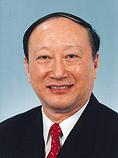
 Xu Kuangdi
Xu Kuangdi
What a surprise! Here is Willy's comment on the situation:
December 12, 2001 Posted: 9:23 AM HKT
By Willy Wo-Lap Lam - CNN Senior China Analyst
(CNN) -- Skullduggery and jockeying for position associated with the transition of power in China have gone into high gear.
This is illustrated by the announcement over the weekend of personnel changes in Shanghai, Shenzhen, and the important central province of Hubei.
The popular and dynamic mayor of Shanghai, Xu Kuangdi, has been transferred to a "pre-retirement job" as party chief of the Academy of Engineering in Beijing.
He has been replaced by his deputy, Executive Vice-Mayor Chen Liangyu.
The Vice-Party secretary of Guangdong Province, Huang Liman, has become Party Secretary of the Shenzhen special economic zone (SEZ).
And the Minister of Construction, Yu Zhengsheng, has been named party boss of Hubei.
Let us first examine the intriguing case of Xu.
No reason was given for the apparent demotion of the cadre who was widely praised for the earth-shattering transformation of Shanghai since the mid-1990s.
In a terse dispatch, the official Xinhua news agency merely said the Shanghai People's Congress had accepted Xu's resignation.
Shanghai officials have told foreign investors it is normal that Xu, having reached 64, should be "retreating from the front line."
It is true, of course, that Beijing has in recent years been stricter with retirement ages. For example, heads of ministries, provinces and major cities must step down by 65.
However, until the sudden development last week, the expectation in Chinese political circles was that Xu would in a year or so be promoted to Beijing as either state councilor, vice-premier, or Politburo member.
Since the retirement age for these senior positions is 70, Xu could well hang on to his position until the 16th Communist Party Congress next October or the plenary session of the National People's Congress (NPC) in March 2003.
Analysts in Beijing and Shanghai suspect the real reason is rivalry between President Jiang Zemin and Premier Zhu Rongji -- and that between Xu and the Shanghai Party Secretary, Huang Ju.
It was Zhu who brought Xu, a former professor with good links with foreign businessmen, into the Shanghai government in 1989.
"Top leaders such as Jiang and Zhu are engaged in an elaborate horse-trading in connection with the changing of the guard at the 16th party congress," said a Chinese source in Beijing.
"Zhu is pushing for the promotion of several proteges such as People's Bank of China Governor Dai Xianglong, State Councilors Wu Yi and Wang Zhongyu, as well as Deputy Finance Minister Lou Jiwei. Xu's 'early retirement' may be Jiang's way of telling Zhu that he can't win them all."
Xu's replacement, Chen, 55, is close to party chief Huang Ju, who is in turn a crony of President Jiang's.
Analysts said Huang, 63, a humdrum bureaucrat much less well regarded as Xu, would likely be made a vice-chairman of the NPC soon after the 16th party congress.
And Jiang has already maneuvered to appoint another trusted associate to the No 1 slot in the East China metropolis.
Frontrunners for the position of Shanghai party boss include the Party Secretary of Jiangxi, Meng Jianzhu, and Education Minister Chen Zhili.
Both Meng and Chen are former vice party secretaries of Shanghai who owed their good political fortunes to Jiang.
The elevation of Huang Liman, who, like Chen, is one of the most powerful women in China, to Shenzhen party boss also represents a big victory for Jiang.
The friendship of Jiang and Huang dates from the early 1980s, when they both worked in the Ministry of Electronic Industry (MEI).
Largely due to Jiang's influence, Huang was "parachuted" into the prosperous SEZ in the early 1990s as secretary-general of the municipal government.
According to a Shenzhen cadre, Jiang has made no secret of his patronage of Huang.
"On a visit to Shenzhen, Jiang surprised local officials by telling them he would have some home-made dumplings in Huang's house," the cadre said.
"While Huang is considered a mediocre apparatchik, she was promoted to Vice-party Secretary of Guangdong Province in 1998."
He added that given Shenzhen's position as the pacesetter of reform -- and that there is a good possibility of its being upgraded to a directly administered city in 2003 -- the zone needed a stronger and more competent leader than Huang.
By contrast, the appointment of Yu, 56, as Hubei party chief is less controversial.
And despite the fact that, like Jiang and Huang Liman, Yu also served in the MEI, his promotion is not seen as a result of cronyism.
Yu, who first made his mark in major cities in Shandong province such as Yintai and Qingdao, has been regarded as an innovative administrator by leaders ranging from the ousted party chief Zhao Ziyang to Jiang.
Since moving to the Ministry of Construction in 1997, Yu has been credited with reform in housing as well as the building industry.
However, the elevation of Yu has confirmed the rise of the so-called Gang of Princelings -- a reference to cadres who are descendants of party elders.
Huang's father, Huang Qiwei, is a first-generation cadre who also happened to be a lover of Madame Jiang Qing, wife of Chairman Mao Zedong.
Apart from Huang, a host of high-born officials is expected to climb up the bureaucratic ladder at the 16th congress.
They include the Governor of Liaoning Province Bo Xilai; the Governor of Fujian Province Xi Jinping; the Chairman of the China Securities Regulatory Commission Zhou Xiaochuan; and the Vice-Head of the Office for Restructuring the Economy, Wang Qishan.
Diplomatic analysts said that apart from his own Shanghai Faction, Jiang wanted the Gang of Princelings to act as a counterweight to the fast-expanding Communist Youth League (CYL) clique headed by Vice-President Hu Jintao.
In the past two years, Hu, set to succeed Jiang as party general secretary next year, has placed more than a dozen CYL alumni in important central and regional posts.
Machiavellian maneuvers by the major factions have testified to the fact that despite Beijing's determination to render governance more transparent, Mao-era intrigue and back-stabbing is still very much the rule of the game.
***
Xu Kuangdi, 61, is the current mayor of Shanghai, definately a charmed seat--several predecessors went on to greater things in the capital. Xu, who studied in Britain and worked as a technician in Sweden, was teaching technology in Shanghai when Zhu tapped him to head the city's planning commission--because Xu had said he "hated" central planning, a sentiment right up Zhu's street. Since becoming mayor in 1994, Xu has tirelessly promoted Shanghai as a world financial and industrial center, while making the city a relatively clean and efficient place to live.
Xu graduated 1959 from the Department of Metallurgy at the Beijing Iron and Steel Institute and designed a stainless steel pipe for use in aircraft production that won him a national award. Xu didn't join the Communist party until 1983, but quickly distinguished himself as a capable administrator and ingratiated him self to his predecessors, Jiang Zemin and Zhu Rongji.
1985 - Shanghai municipal planning commission
1989 - Director of Shanghai Department of Education
1992 - Vice Mayor Shanghai
1995 - Mayor of Shanghai
Predictions: ??
