 |
 |
 |
 |
 |
| Hardwoods up in smoke |
 |
 |
 |
 |
 |
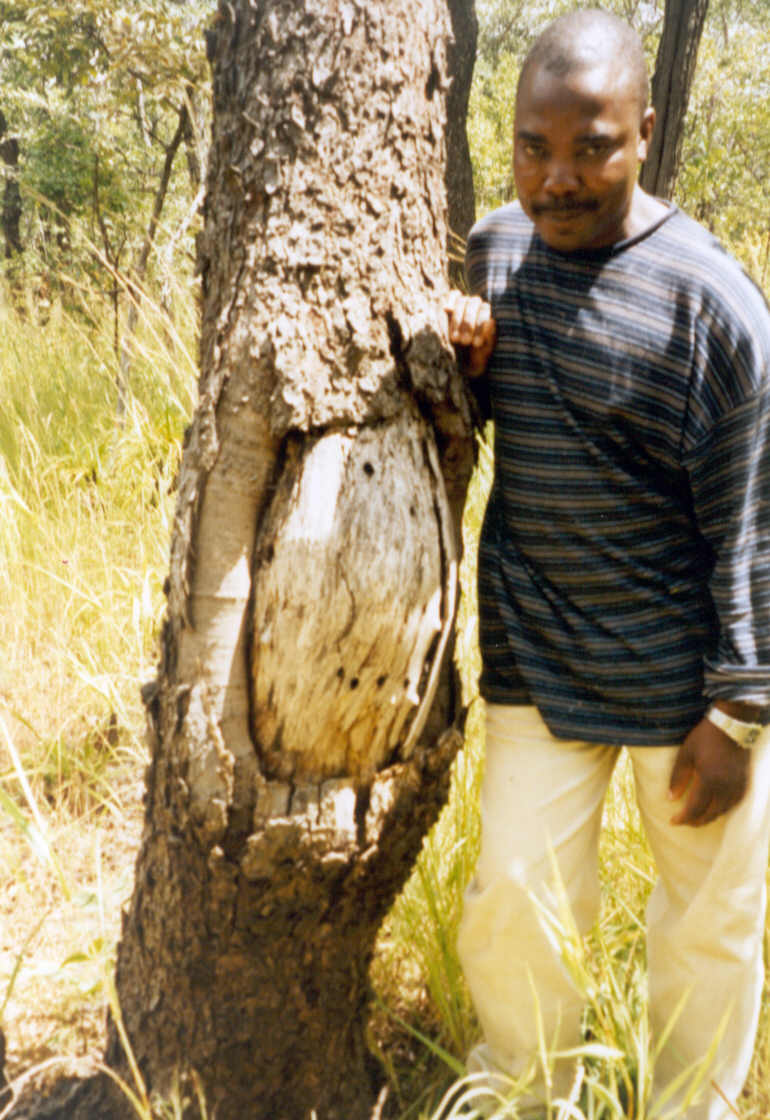
| 1 Easily-removed Julbernardia bark makes a conveniently-removed tray that may end up killing the tree. |
| 1 |
| 8 |
| 9 |
| 7 |
| 6 |
| 5 |
| 4 |
| 3 |
| 2 |
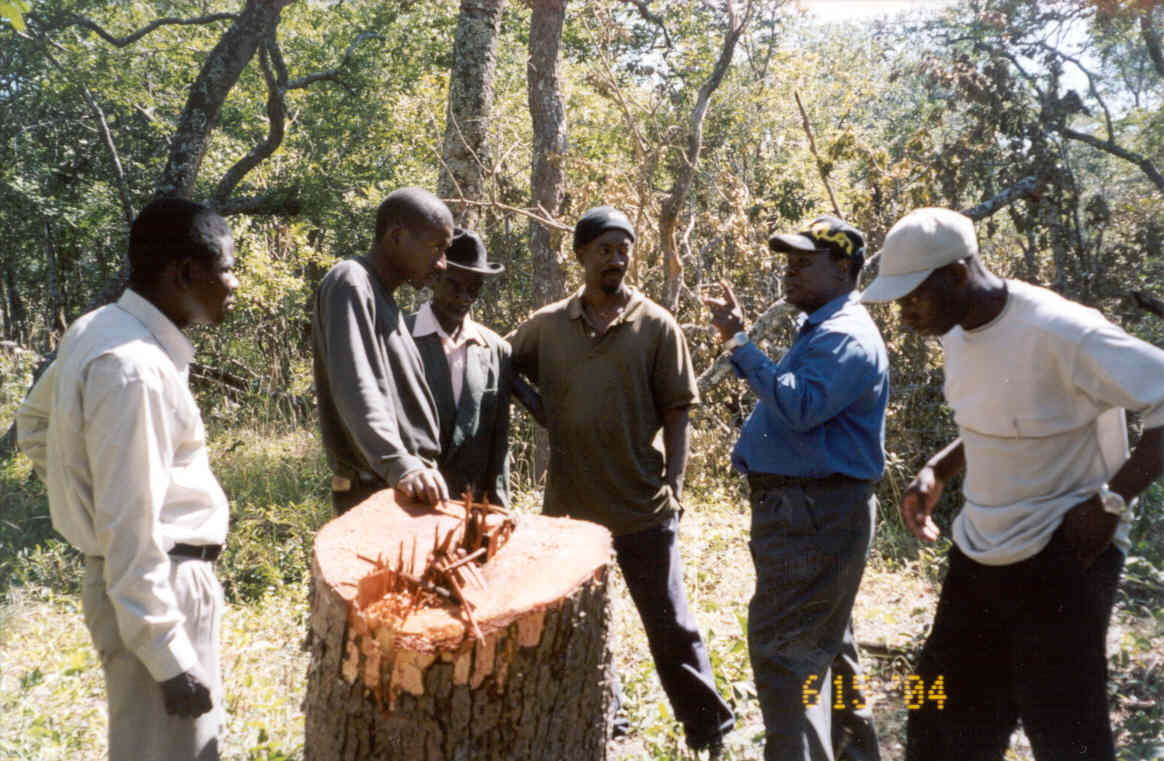
| Informational campaigns, technical training, and markets for small pieces are needed to improve the tendency to waste hardwood resources. |
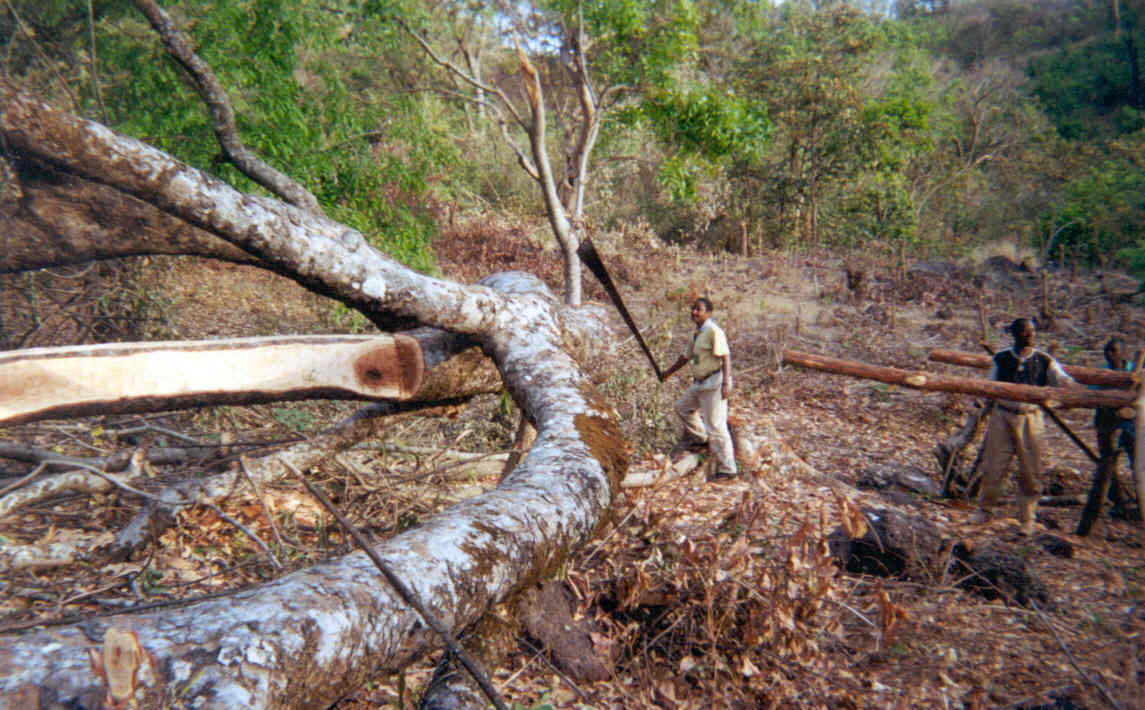
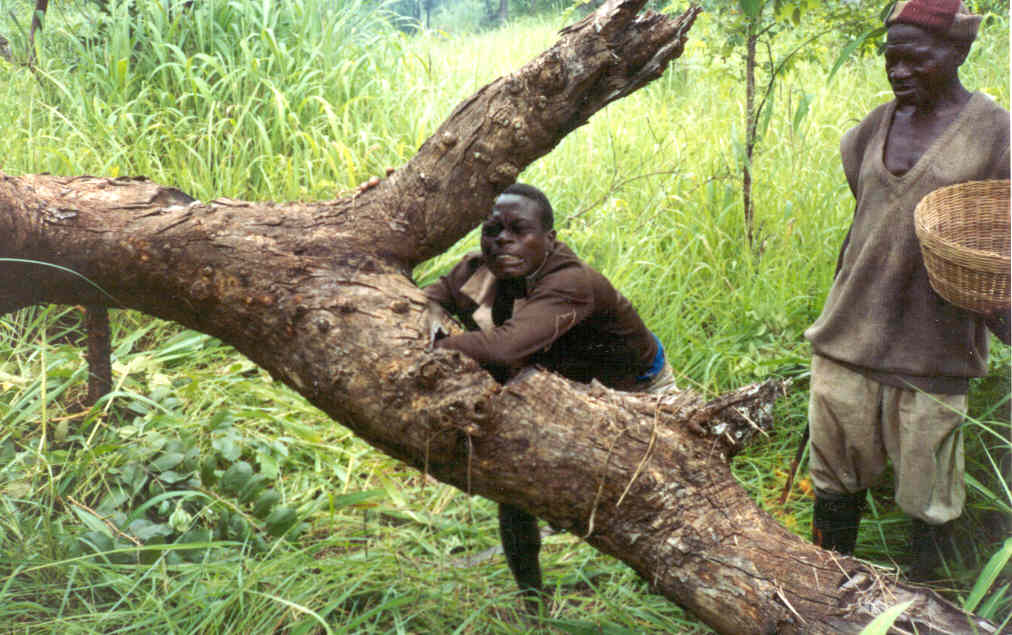
| 5 More large branches of a valuable Khaya will be burned after the biggest planks are removed. |
| 6 This entire tree was felled just to get at a comb of wild honey in upper branches. |
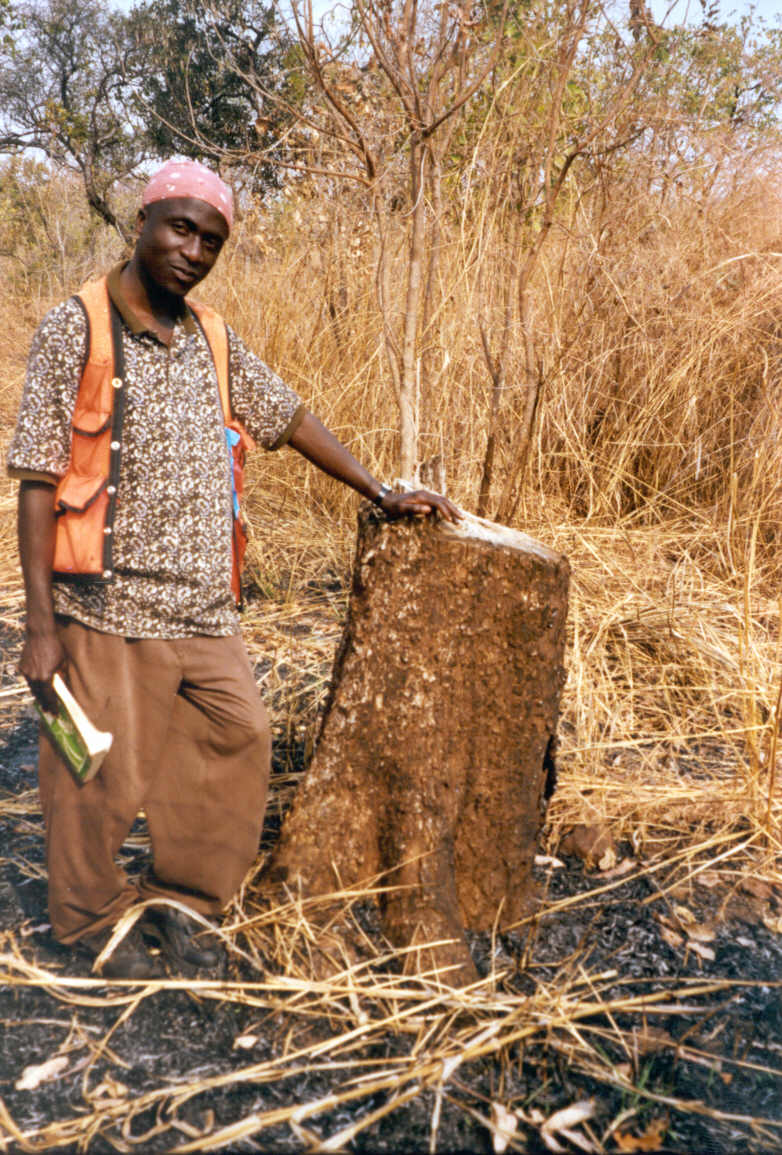
| 7, 8 Tall stumps left during sawtimber removal could be made into pieces worth 20 to 50 dollars if exported. |
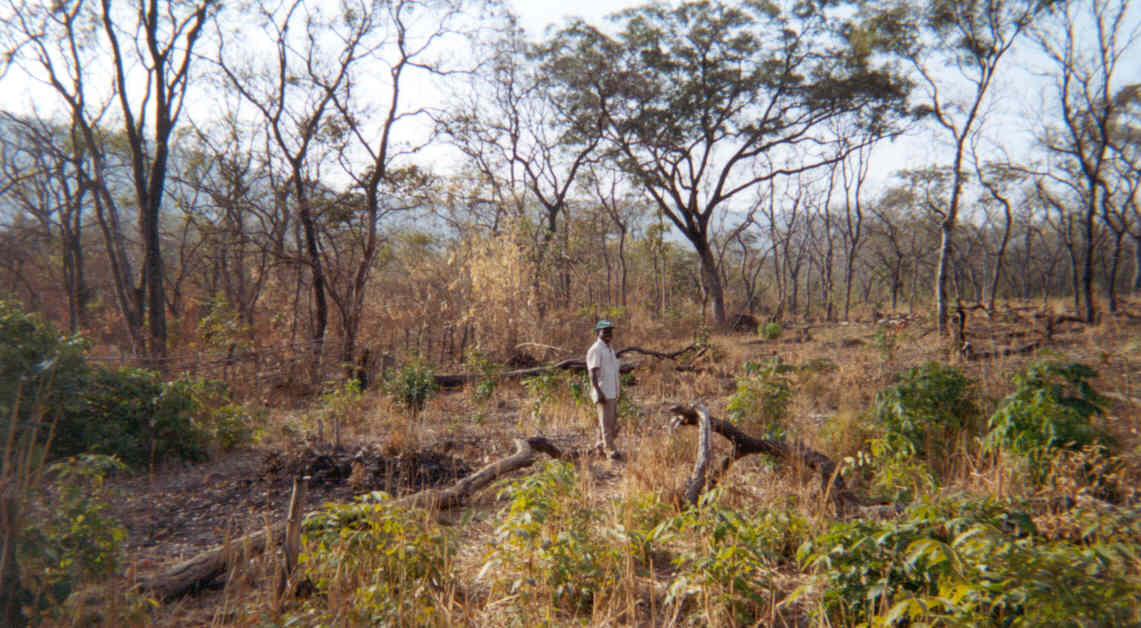
| 9 A field's worth of Pterocarpus is girdled ("ringbarked") to eliminate crop competition and sell for 50 cents a pile on the roadside. |
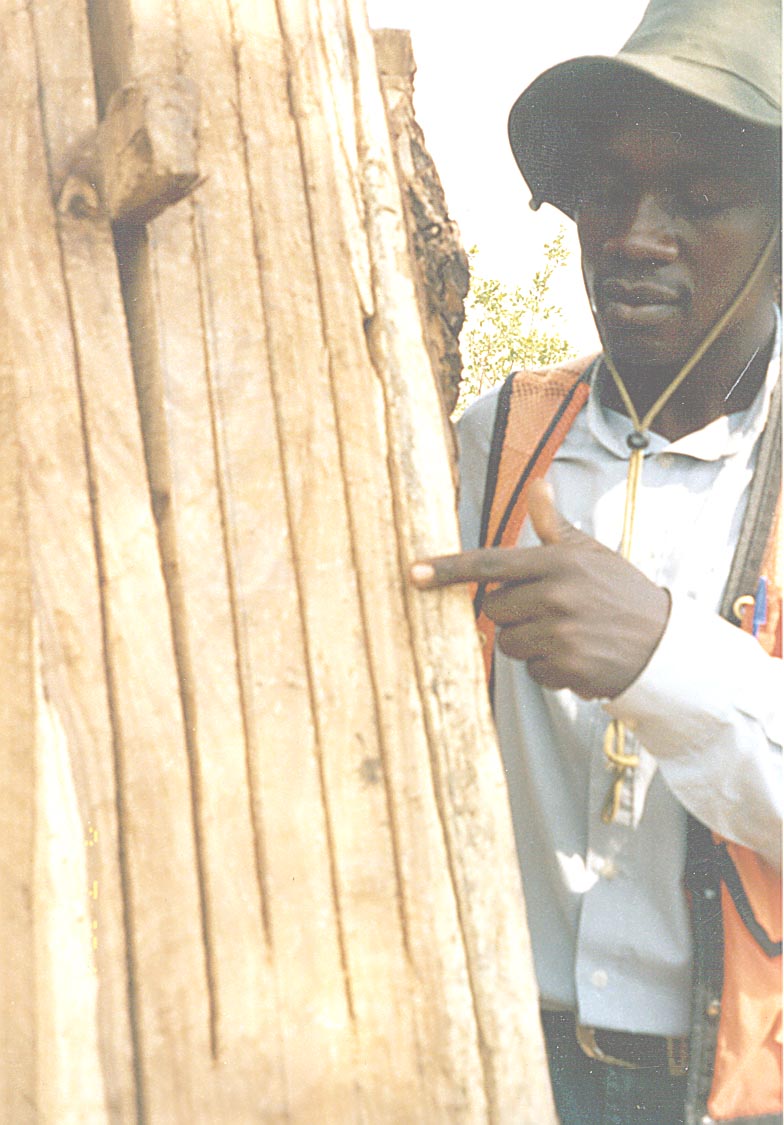
| 4 Crooked handsawn planks have spoiled this high-quality piece of Pterocarpus. |
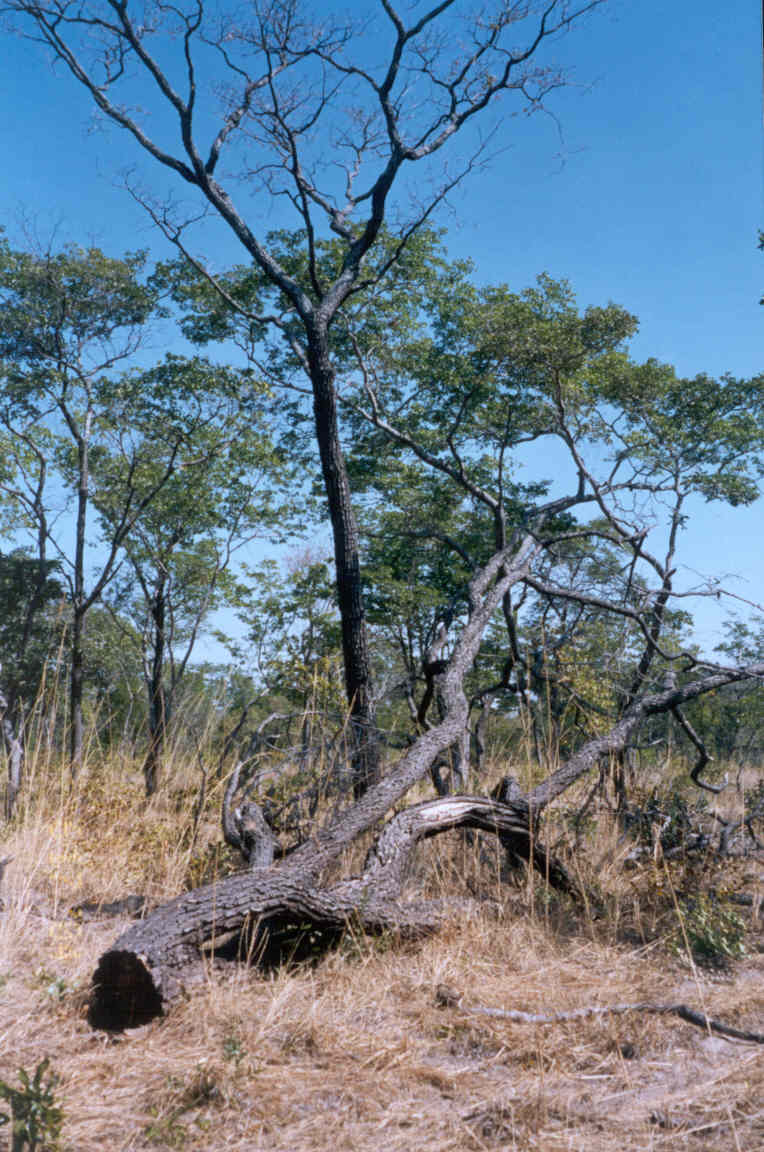
| 2 Large Pterocarpus treetops are often left to rot after the butt log is removed. |
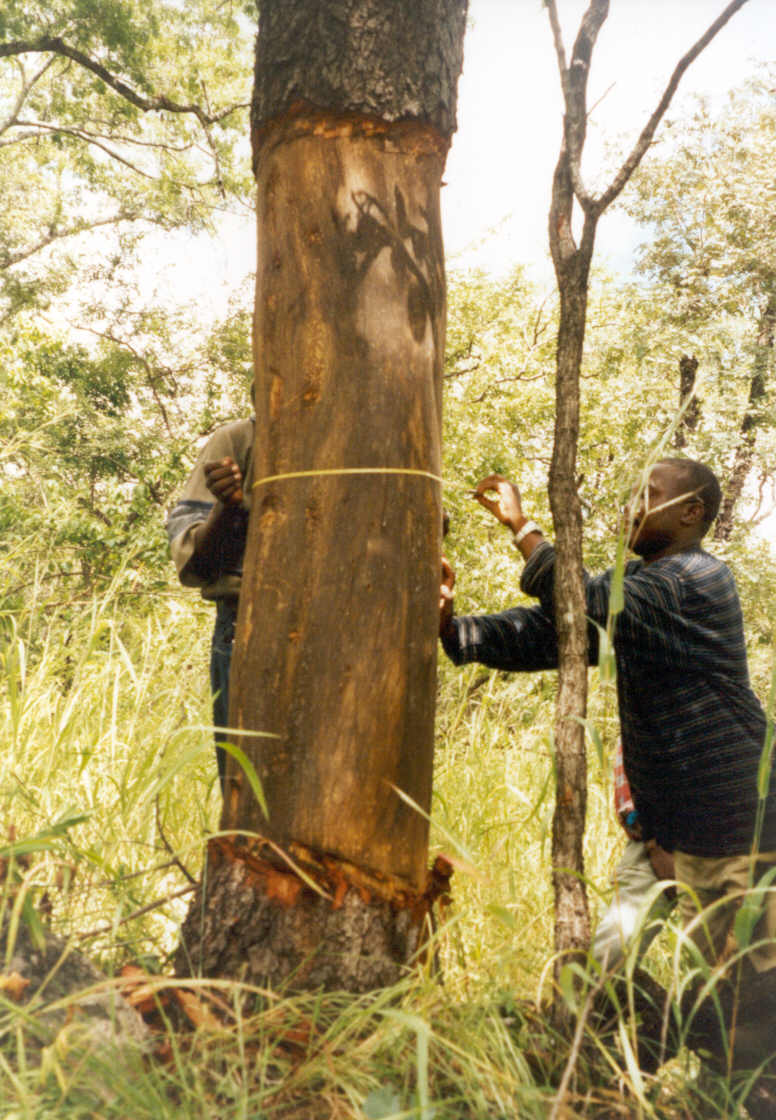
| 3 A single barkhive swath removed from this Brachystegia will certainly kill the tree, while several more barkhives were still available higher up the trunk and large branches; felling the tree was too much trouble and expense. |
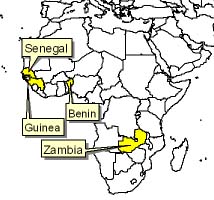
| Photos from Guinea, Zambia, and Benin by Cecilia |
 |
| Lady Forester Home Page -> |
|
 |