History of Hand-pulled Rickshaws
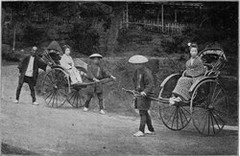
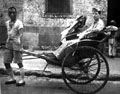
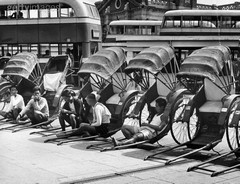
Hand-pulled rickshaws are two-wheeled vehicles pulled by a man and able to carry two passengers in a taxi style of operation . Rickshaws were mainly used in Asia, but nowadays they are outlawed in many places and have been replaced by cycle rickshaws and auto rickshaws (and the term "rickshaw" is today commonly used for these vehicles as well). The last sizeable fleet of true rickshaws can be found in Calcutta (now are known as Kolkata), where the rickshaw driver union resisted prohibition.
A European mmissionary to Japan named Jonathan Scobie invented rickshaws around 1869 to transport his invalid wife through the streets of Yokohama. The word " rickshaw" comes from the Japanese jinrikisha which literally means "human-powered vehicle". The term jinrikisha is Japanese and was first used in Japan in 1874. It derives from "Jin" meaning man plus "riki" meaning power plus "sha" meaning vehicle. In 1887 this term was shortened colloquially to rickshaw.
Around 1880, rickshaws appeared in India, first in Simla and then, 20 years later, in Kolkata. Here they were initially used by Chinese traders to transport goods; in 1914 they applied for permission to use them to transport passengers. Soon after, rickshaws appeared in many big cities in Southeast Asia; pulling a rickshaw was often the first job for peasants migrating to these cities.
The rickshaw became very popular amongst the newly established middle class Japanese while some wealthy families employed their own runner for the family's exclusive use.
As new methods of transportation were developed in Japan including railways, buses, automobiles and river steamers, the demand for rickshaws gradually declined in the twentieth century.
History of Trishaws/Pedicabs
Pedicabs were also slow to gain a foothold at first, partly because of resistance from the rickshaw pullers, partly due to the lack of smooth, hard road surfaces and partly due to the expense of imported bicycle components. The invention of pedicabs has been invented in Europe not long after the bicycle but that they never caught on there. The various types suggest that they were probably independently invented in various places as a natural adaptation of the bicycle.
In Asia, pedicabs were first introduced to Singapore in 1914 but did not catch on until 1929. They then quickly appeared in Bangkok in 1933, Jakarta in 1936, and Surabaya in 1942. Pedicabs tended to displace hand-pulled rickshaws and horse-drawn cabs, although regulation also played a role in the decline of rickshaws. Pedicabs became numerous in Singapore, Bangkok and Jakarta in the 1930s but it was not until the 1950s that they existed in large numbers in many countries of Southeast Asia.
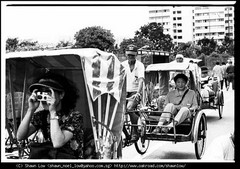
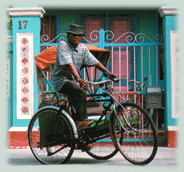
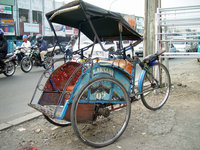
The trishaw was built in Malaysia and was still in use in 1984 when it was purchased and moved to Canberra. The covered passenger seat for two is at the front. It is typical of the many pedicabs designed for carrying passengers around Asian cities with flat terrains. And they replaced less-efficient hand-pulled rickshaws that required the driver to walk or run while pulling the vehicle.