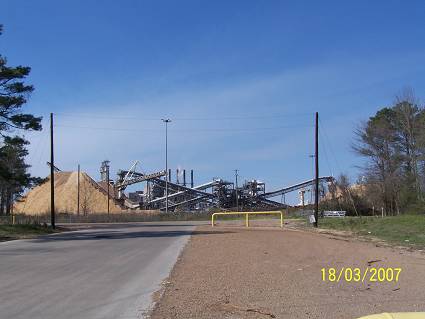
chapter1.The wood that is delivered to paper mills is skinned (debarked), the bark is sent to a boiler (bio fuel) burned to make steam.Steam runs the turbine that makes the electricity to power conveyors, bumps and lights.The steam discharged from the turbines is used to heat water and dry the paper.
chapter 2. The logs are chipped up (by electric motor) into chips the size of your thumb nail.these are dumped into a large vertical tank, (called a digester ) with a liquid mixture of lime and sodium hydroxide (lye ) and cooked 6 to 8 hours with steam.The water vapor boiled off is condensed to seperate the water from the turpentine, (chemical recovery).The cooked mixture of wood pulp and chemicals is pumped to large filters called brown stock washers, here the fiber (pulp ) is filtered out and sent on to the bleach plant (for white paper) or to the paper machines for brown paper, (bags,boxes).
chapter 3.the liquor from the filters is sent to large settling tanks where the light ils rise to the surface and are skimmed off.(this is soap,the same thing you washed with today,
some of the raw soap is processed to make paint thinner and cosmetics bases.)
After skimming, the remaining liquor (and there is a lot of it) is sent to a set of vacuum evaporators that removes most of the remaining water, the remaining heavy liquor contains a solution of sodium hydroxide and lime and lignin (the glue that holds the wood fibers togather).This solution is pumped to a chemical recovery boiler where it is sprayed into a furnace, the lignin burns producing heat for making steam.(more steam for drying or heating processes) the recovered chemical mixture is collected at the bottom of the boiler, recombined with water and pumped to the caustic plant (chemical recovery plant.)
chapter 4, at the caustic plant the (green liquor ) is filtered ,then fed into the top end of a rotary lime kiln and cooked (1800 degrees F) to futher remove impurities.The hot lime mixture is recombined with water (chemical recovery ) to make a solution called white liquor (lime and sodium hydroxide). This is pumped to the digester and mixed with another load of fresh wood chips for cooking.
chapter 5.A paper mill typically recovers and reuses about 98% of it's lime and hydroxide chemicals.
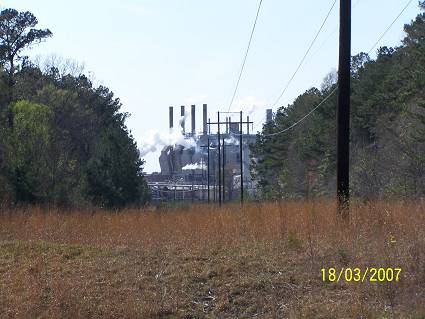
chapter 6.The cloud you see over a paper mill is STEAM from the chemical recovery process and paper drying.
chapter 7.The old paper mill smell (from yesteryear ) is now bottled and sold as cosmetics and or paint thinner.
|