 |
| Chaucer Web Exploration Project |
| This project was to present an aspect of Chaucer's world to the class using internet and multimedia resources. Here are the guidelines as prepared by Mr. Maite, my British Literature teacher: 1. Try and hit at least three links from your page. Some pages do not have three or have a great deal of information on them already; if that is the case for you, then you won't explore three links. Part of your grade will be based on the interest level and usefulness of the links you choose to present. 2. You will be using the computer projector with full access to your page to present to the class but be sure to take some organizational notes today. Remember that you are being evaluated in part for your familarity with the material and your ability to organize an effective presentation. 3. The presentation should be 2 to 6 minutes depending on the complexity of your selected site. 4. If your partner is absent, proceed on your own. 5. Good luck and have fun. Some of this stuff is truly fascinating. |
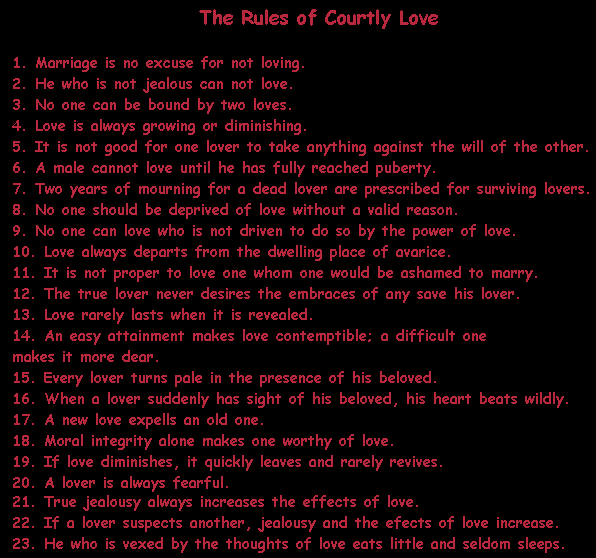
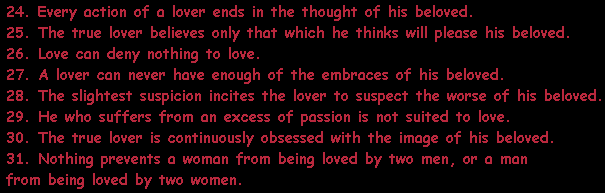
| Click on the link below to learn more about Courtly Love The Geoffrey Chaucer Page-Courtly Love http://icg.fas.harvard.edu/~chaucer/special/lifemann/love/ To get to "De Amore" 1. Once in the site click on "Andreas Capellanus" in the first paragraph. 2. At the bottom of that page is "De amore," as well as "The Rules of Courtly Love." |
|
 |
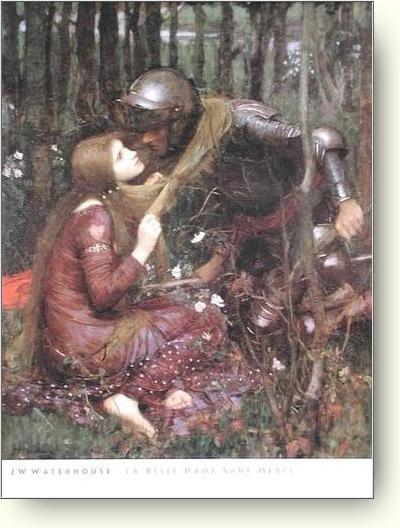 |
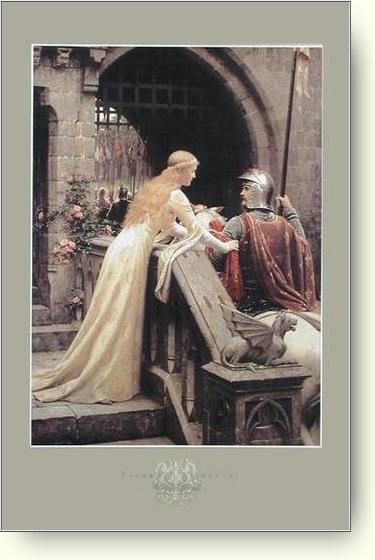
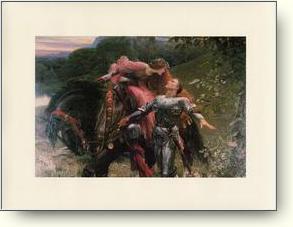
| The topic my partner and I were chosen to cover was Courtly Love. The main idea behind courtly love is that you are allowed to have affairs. During the medieval times marriage was a political thing. One did not marry for love, but for position and wealth. Thus to avoid complications of morals and religion, rules were created to allow the nobility to partake in loving relationships. The rules worked because it was understood that spouses did not love one another and must seek out companionship in others. This wasn't always the case, as shown on the page titled "De Amore" on the web site listed below. It describes a situation where a Lady has a Lover, but is courted by a Knight. The Lady promises the Knight if she should ever fall out of love with her Lover, then the Knight would be the one she would turn to. Time passes and the Lady ends up marrying her Lover, upon which time the Knight comes to claim the Lady as his new love. For you see, one of the rules of courty love is that love can not exist between husband and wife. So it follows to reason that the Lady must not love her Lover if she consented to marry him. Following the orders of the Countess of Champagne, the leading authority on the rules of courtly love, the Lady must submit herself to the Knight to fufill her promise. One other thing that we found interesting were the actual rules of love. It is the story that a Breton knight was the one who spread the ideas of these codes of chivalry to the medieval world. He learned the rules at Camelot when he went to join King Arthur and the Knights of the Round Table. |
 |
 |