Knossos and Knowledge
The ancient city of Knossos to some, the Palace of Minos to others. The myths surrounding Knossos is more than there is room for but a short version is, Minos was the son of Zeus and Europa, daughter of the Phoenician King Agenor (or Phoinix). Minos married Pasiphae, daughter of Helios and the nymth Crete. They lived in the palace of Knossos. The ancient myth of Theseus and the Minotaur is also rooted in Knossos.
The excavations of the city began in 1870 and with the discovery began the interest in the writings of Homer and his world.
But it was Sir Arthur Evans, an English archaeologist, that began the complete excavations in 1900. Evans worked on the excavations until 1932 and died in 1941 at the age of 90. John Pendlebury continued in his place until the German invasion in May 1941. Pendlebury led a sally of the Cretan Guerrillas during the siege of Herakleion and was shot while wounded by the Germans. A distingquished archaeologist, a fine scholar and athlete, he had lived for many years in Crete and was much loved by all who knew him.
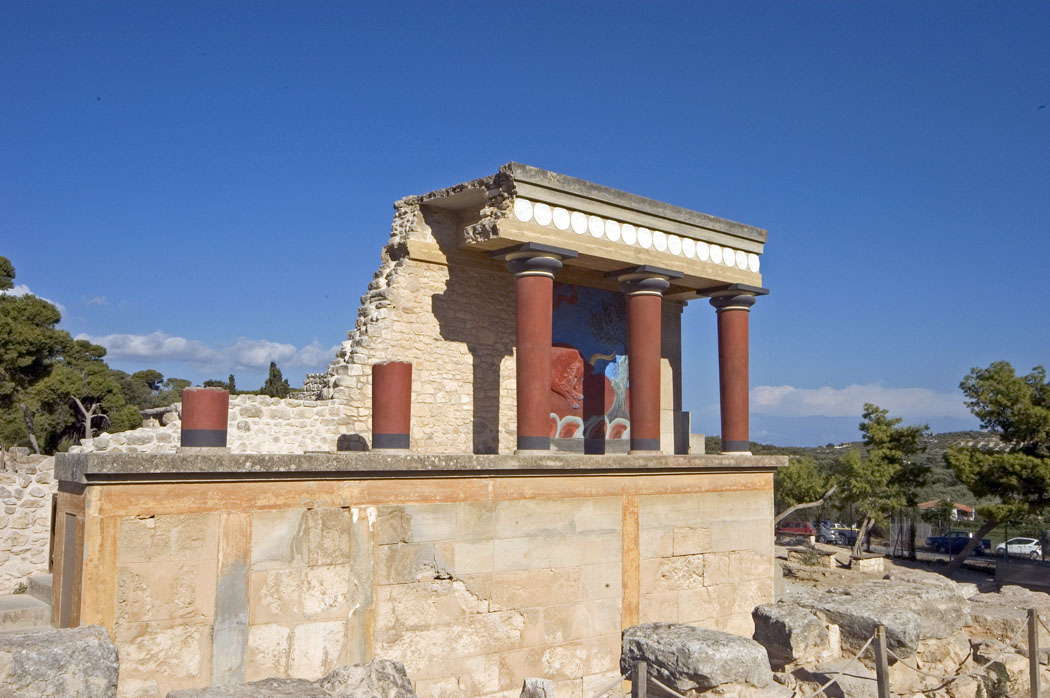
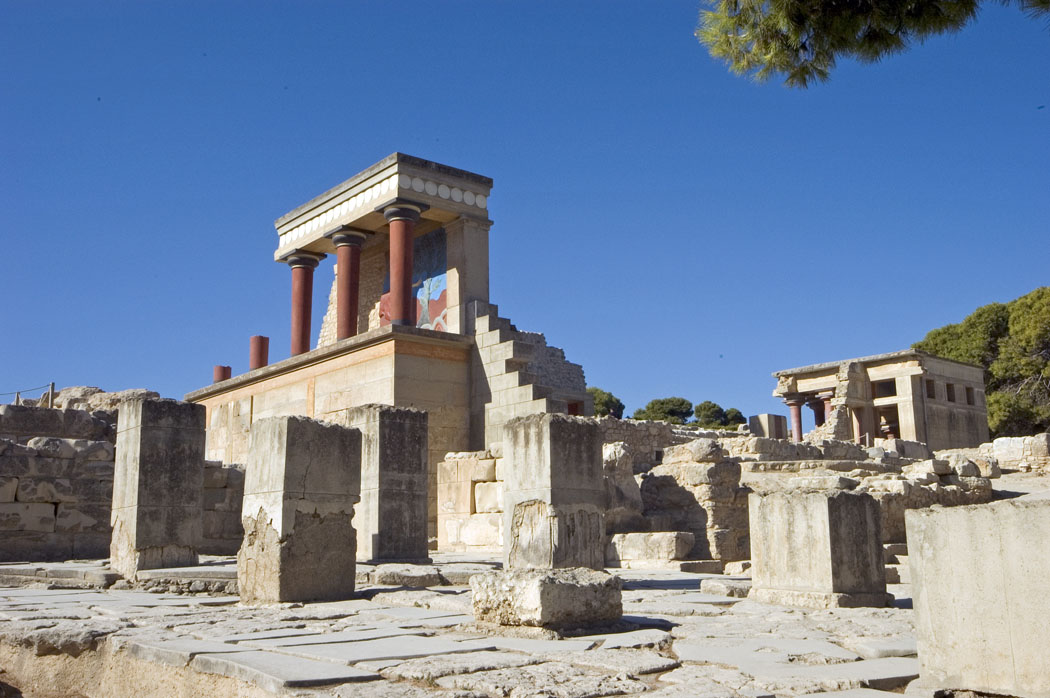
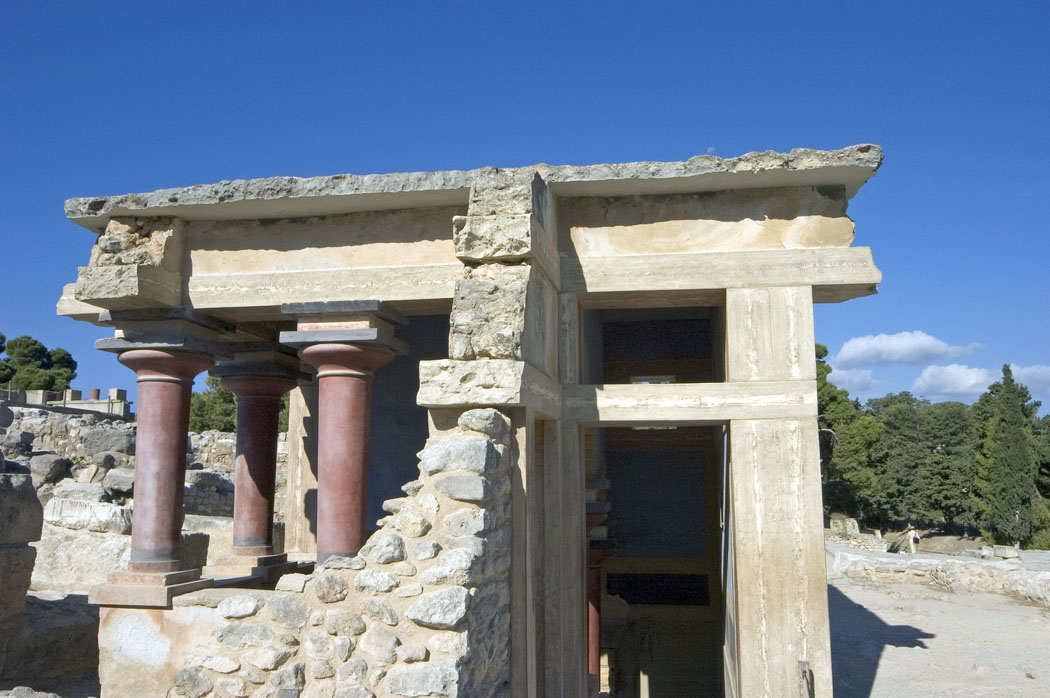
The West Bastion of the North Entrance Passage Another view of the West Bastion
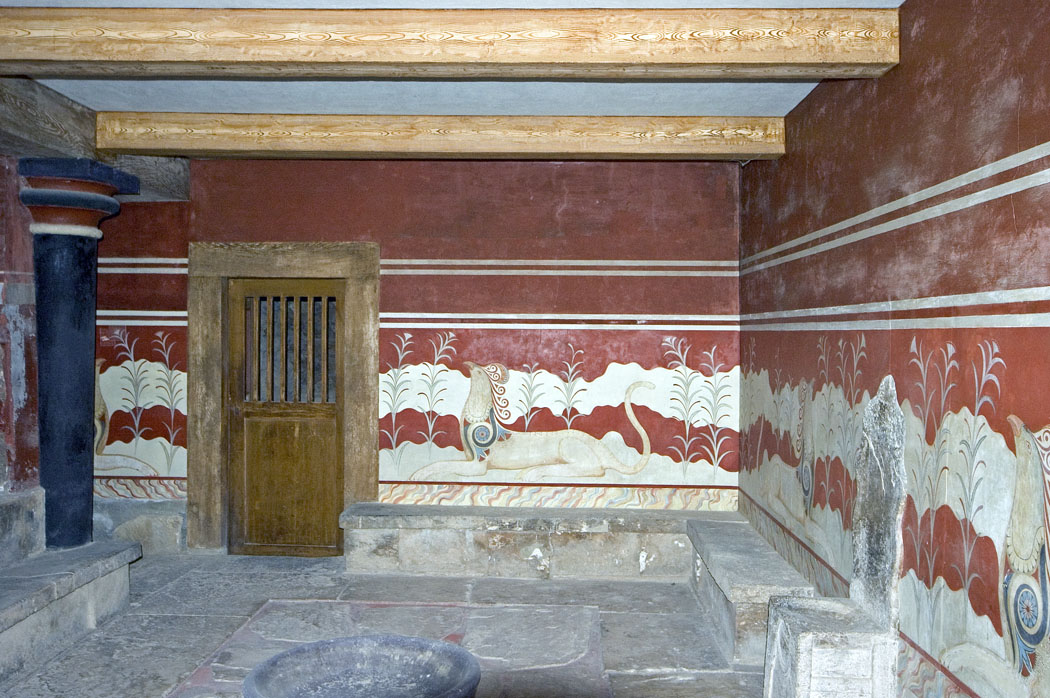
The Throne Room
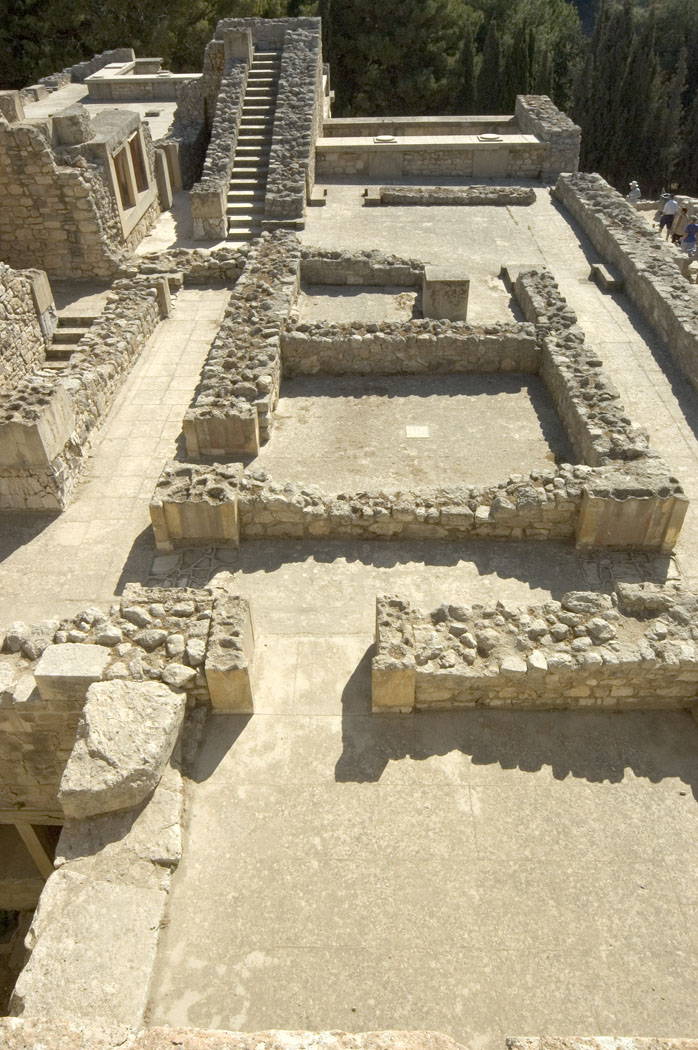
Ruins
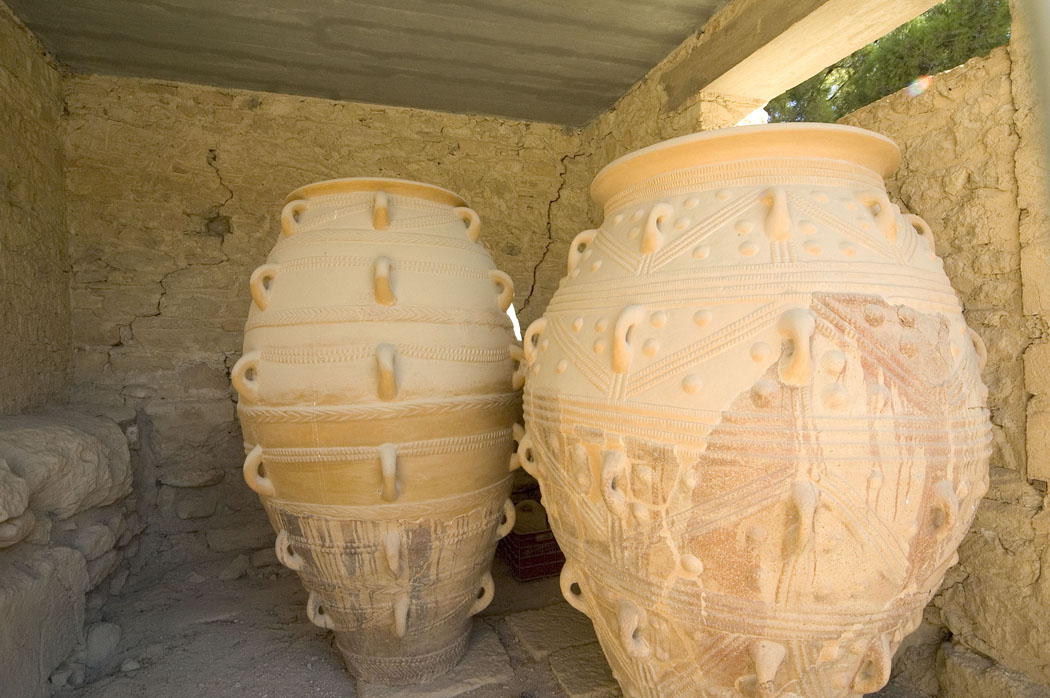
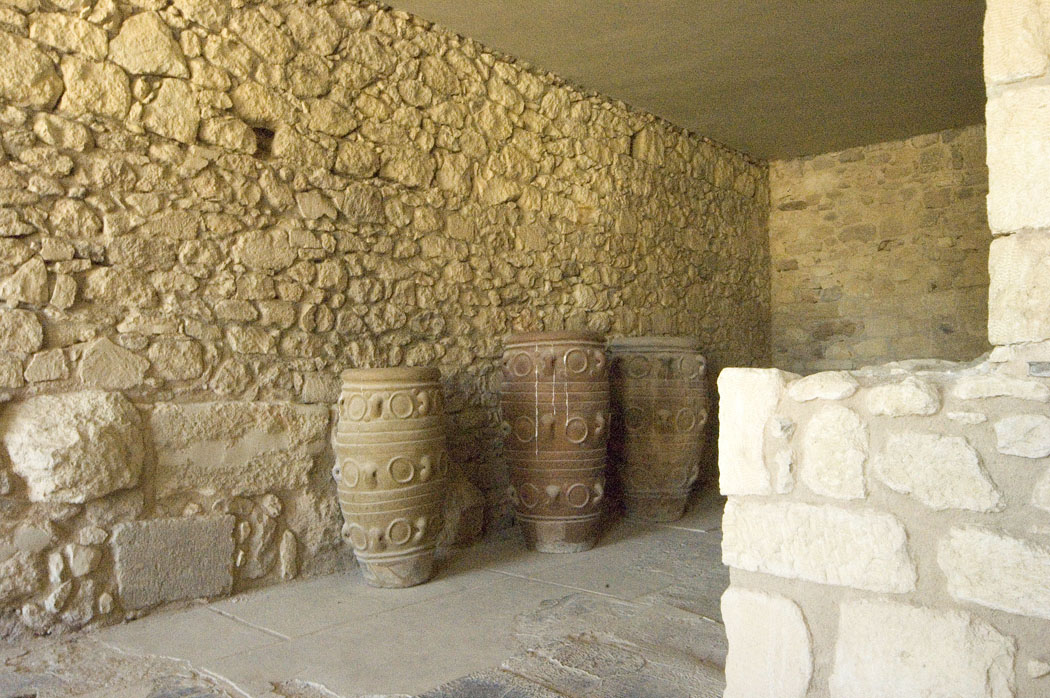
Magazine, store room, with enormous pithoi
Another store room with large urn.
The North Lustral Area
Hosted by www.Geocities.ws

1