June 2006 part two
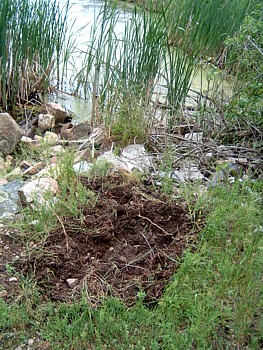
June 10 a cold front came through dropping the night time temperature into the 40s and for most of the day while it drizzled, it didn't get much above 50. I headed off at 3pm, after the northwest wind had dried the tall grasses a bit. I wanted to tour the South Bay otter latrines, and check on the beavers and muskrats at Audubon Pond and the beavers at Thicket Pond, and though I saw diverting things, for once, I completed my appointed rounds. Something had cut a path in the grass up from South Bay around the small causeway, but nothing had visited the otter latrine which has just about grown over with grass. There has been some digging -- a huge turtle nest just up from the water, but no sign of eggs.
So I don't know if this means a raccoon dug out a dry hole, or a turtle, probably a snapper, has dug a wider hole out of frustration or guile. Usually such a damp day is good for birds, but the chill seemed to subdue them a bit -- save for the unstoppable orioles. I checked the New Pond knoll otter latrine and did see a new wrinkle there.
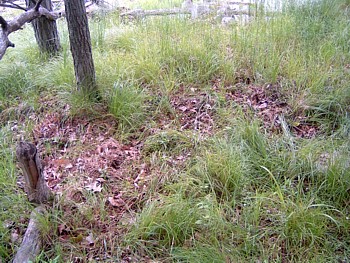
The three old scent mounds were joined by a fourth at the edge nearest the pond. One clump of grass was dramatically pinned down.
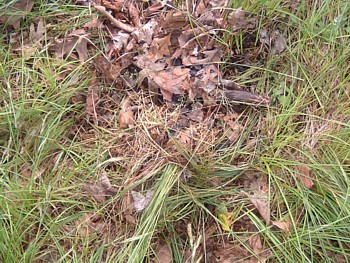
The squirt of scat in middle wasn't fresh but still appeared sticky.
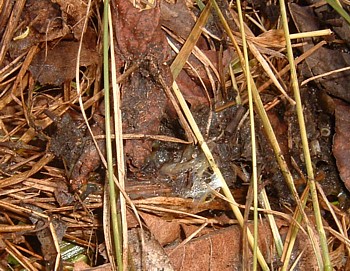
But there was still no sign of an otter visiting the old dock latrine down on South Bay. I sat there awhile and watched occasional eruptions from carp. Then a sparrow finally protested enough that I moved on -- one, I think, hopped under the dock. I doubt there is a nest down there but maybe a fledge was confused. As I walked up the bay, I saw a few carp hurl their heads high out of the water -- have to be lucky to get a photo of that. I saw raccoon poop well above the docking rock latrine so I can't be sure if the bit of a trail I saw through the latrine was made by an otter, and I saw no scat. After seeing a few larger trees, an elm and a maple, girdled and almost cut by a beaver up on ridges along the bay, I was surprised to see three smaller trees on low wet ground just cut.
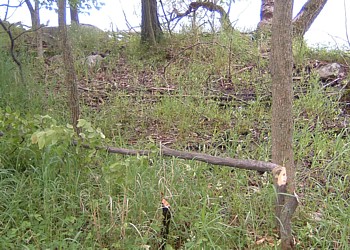
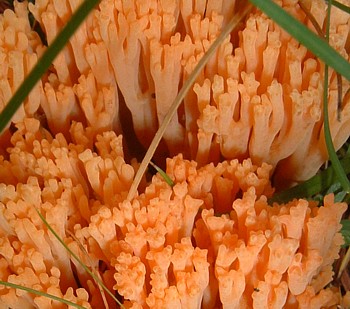
You'd think the beaver would take the easy stuff first. In other year the beaver or beavers working South Bay seemed more methodical. This beaver seems to have a wide range and is hit and miss with its cutting. Nearby I saw coral mushroom popping out all over.
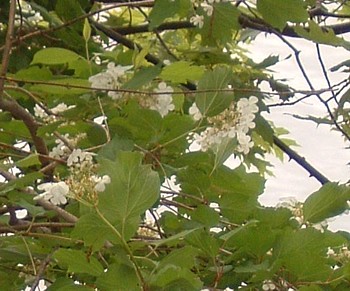
And then I got come photos of the highbush cranberry, looking down at it.
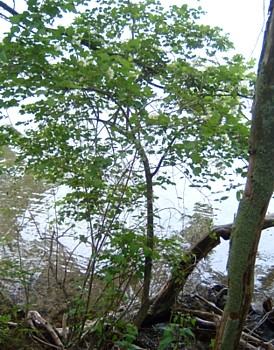
which didn't afford as dramatic a view of the blossoms.
As I came up to the otter latrine above the entrance to South Bay, I was greeted by a fresh, strung out, black otter scat.
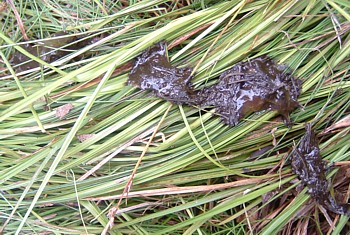
Quite the most normal scat I've seen in a while. Having run out of space extending the latrine closer to the water, the otter is scratching up grass and leaves at the eastern edge of it,
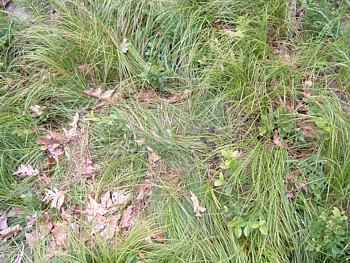
and extending that low on the slope.
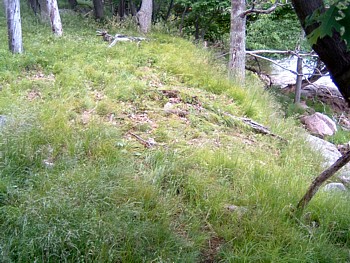
I saw a drying scat from a few days ago. Before I felt like at least two otters were capering about here, but now it seems only one otter is visiting. I sat above the latrine and took a photo of the view,
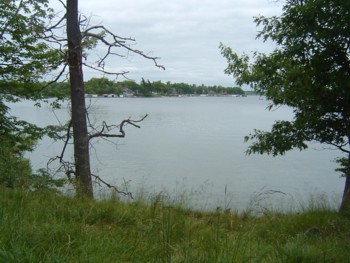
convinced that I was overlooking the otter's fishing grounds that extends to the edge of the boat houses across the bay. Another interesting angle is that this latrine is oriented much like the latrine on Picton Island, a south slope on what appears to be the northern edge of a good place to fish. I'll have to think more about that, or better yet, get out the charts and find a similar set up and see if I can find an otter latrine there. While kayaking the other day, I noticed that the water was running steadily out of Audubon Pond, so I wasn't surprised to find the water level of the pond down two feets, finally at the point the park managers want it. However, the drain looked mudded over again, so the beavers are still on the case.
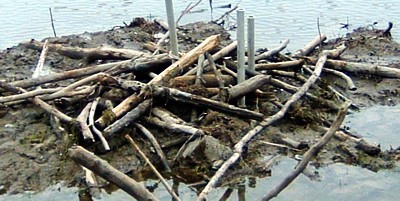
The bank lodge which I think they were favoring has almost lost the water in its entrance.
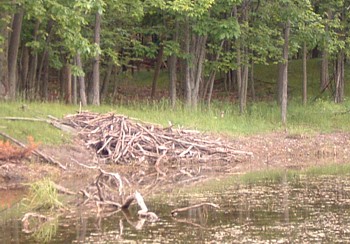
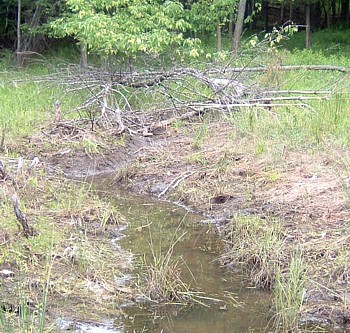
I stood there hoping for signs of life inside, but no. With the lower water level I can see how the beavers shaped a canal to the ash and pine they cut on the northwest corner of the pond.
The main lodge is also high now, and no sign of activity around it.
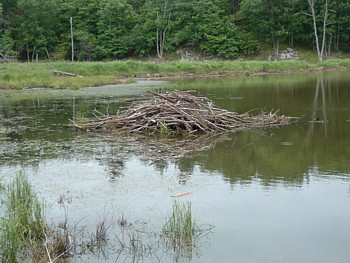
These beavers have been out at this time, 5pm, before, but not today. I continued around the pond to get a closer look at the muskrat burrows which had been so active last time I was here. Now they are high and dry, but the pile of shells outside betrays the muskrats' activity
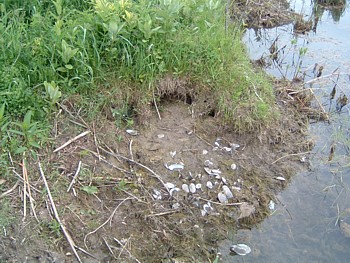
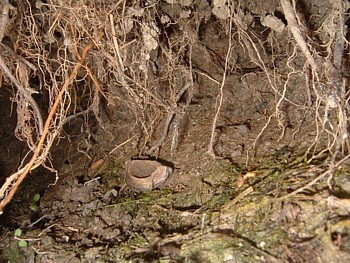
and I stuck my camera in the hole, and below the roots hanging from the ceiling, there is green pond vegetation -- left over from a recent meal.
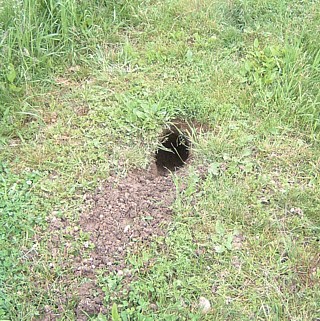
As I came down to the causeway I saw a muskrat on the other side of it swimming down to the culvert, so I looked for muskrats in or around the old beaver bank lodge, but saw none. A fox seems alive to the muskrat activity here, judging from the fresh new hole into the middle of the causeway -- hooking up, I bet, with a muskrat burrow.
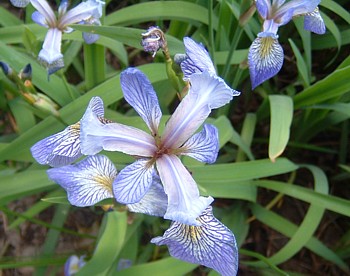
I didn't see any muskrats but I was diverted by a clump of blue flag iris. I tried to get to the larger, in fact just about largest clump around here, of irises at the northeast corner of the pond but the area well around the blooms was flooded. So I took several photos of the smaller clump and picked the nicest to show.
To get to Thicket Pond, I headed up along the rock ridge south of the swamps and meadow and soon saw that I had a perfect view, from there, of where I thought the muskrats were living.
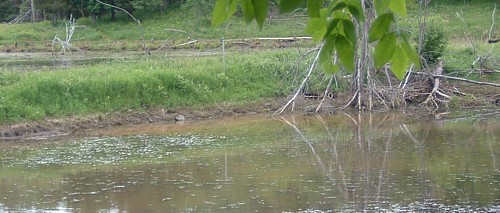
And sure enough I was soon entertained by the tentative explorations of one baby muskrat. Its size, of course, is the main indication of its youth, but then there are the wild waves of its tail and the abrupt body arch as it dives -- more like it is bending its body with a deep breath and then sinking into the water. Then it would only stay on the surface of the water for a few seconds -- fortunately, I seemed to be seeing a learning curve because it steadily surfaced for longer and longer, finally up to about ten seconds! The adult I saw swim away from this area came back and evidently is still feeding babies inside as it toured the pond and collected vegetation with a bucking motion as it bit off leaves and then swam back to the burrows. I hope to come back and check on things here. I went down to the edge of the pond attracted to what looked like a nest atop a free standing rock -- probably geese, but no poop or feathers or down.
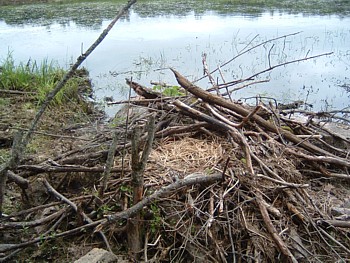
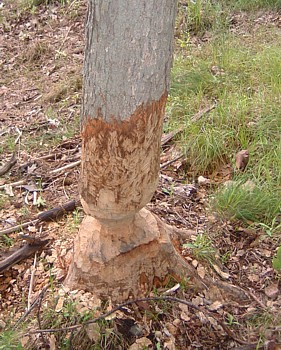
I also saw that while the beavers did find some ash here, which was cut, the enduring monument to their recent labors was harder stuff.
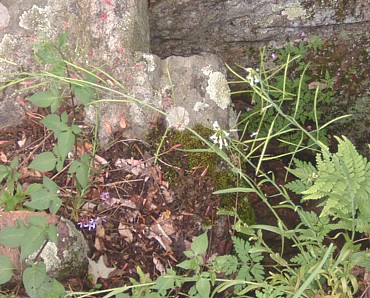
The ridge I was on is well vegetated and that conceals some remarkable crevasses. On top of one there was a profusion of nightshade, along with herbrobert and a delicate white flower, weed most would call it.
And below this area I saw a rosy brown doe blooming in the tall green grass.
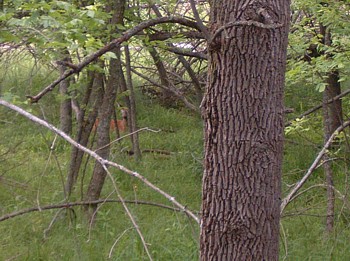
It kept lying down even though it saw me and I wondered if it was giving birth, but soon enough, it was up and snorting and running from me. No fawns today. The old beaver trails around Meander Pond are growing over, the water in the canals is clear. All the beaver activity now is at the end of Thicket Pond,
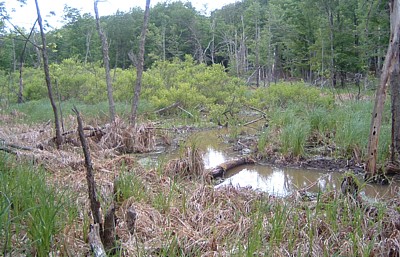
yet these beavers have not taken any tree in the watershed that drains east toward the East Trail Pond. Even though beavers have not been there for two years, that area is still foreign territory to the Thicket Pond beavers. So with much to think about, I headed home, head down and around, but still no fawns.
June 11 a repeat of yesterday weather-wise, but less rain. Again I went out around 3 pm and started at the South Bay causeway latrine, nothing new, then I went out along the peninsula to the willow latrine. In the marsh just to the west, I saw a clump of yellow flag irises.
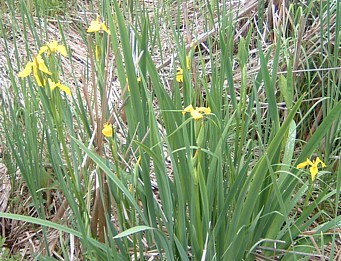
One bloom still had some vigor.
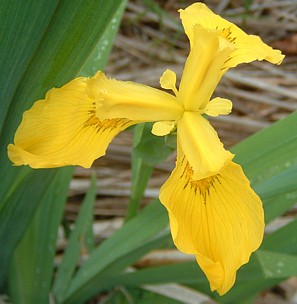
This is an introduced plant and I suppose bulbs that escaped from river side gardens washed up along this shore. Then I examined the area under the willow for otter scats and much to my surprise found a large porcupine spread out on the dirt underneath one of the low willow trunks.
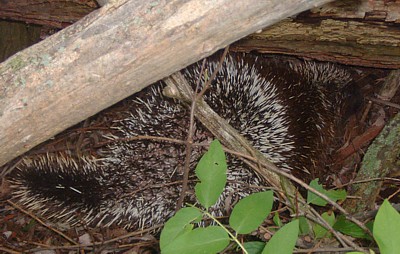
After two photos the porcupine remained riveted to the ground. Then as I walked away it stood up, looked at me, and then climbed high into the willow tree. I often see porcupine along the shore this time of year but never groveling under a trunk in the dirt. I forget to get a close look at what it might have left behind because I was soon distracted by a real fish out of water. A large bullhead had been left in the grass about a yard from the water.
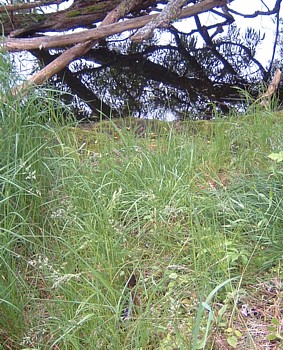
It was bleeding back toward the tail.
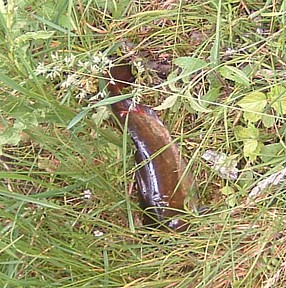
Though still breathing it wasn't struggling. On the chance that an otter had just left it, I sat back in the grass for fifteen minutes. But all the splashes in the nearby bay were from carp, and other likely suspects flew around me -- herons. I took a close look at its wound.
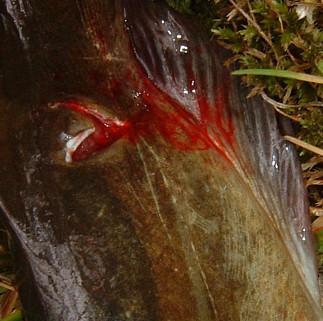
I usually don't credit otters for chewing on bullheads unless I see some vigorous tearing of the flesh. Plus, I could almost picture this fish in the heron's beak. Just the other day I saw a heron pick up and then drop a bullhead. And as I walked away, a heron flew low over the willow. I was just able to get through the marsh out to the island where I fancied the otter pups would be. I found no signs of that. There were some depressions in the grass, but no scats. As I came out, a deer fled from the marsh onto the island. The greening marsh did look like an inviting place.
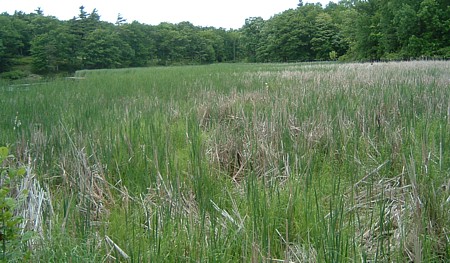
Even a piscivore must appreciate the soft new growth. There were two otter scent mounds on the rock facing the bay.
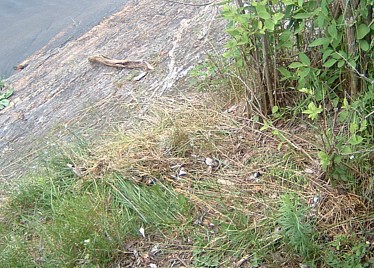
So an otter has been here since my kayak tour of the area a few days ago. I walked very slowly through the interior of the island, looking for otter signs and fawns. I came upon a fish head
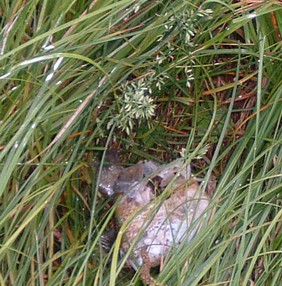
under a tree herons perch in, judging from the stains of white poop.
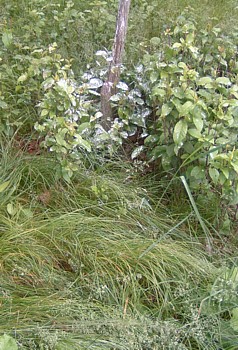
There was a trail in the grass to the fish head, so I bent down looking for otter scats, and missed the fawn that jumped up and ran away before I could click a camera. Last year I found the fawn out here before it could run. I checked the New Pond knoll, where there was nothing new, sat awhile, psyching myself up for exploring the porcupine hotel.
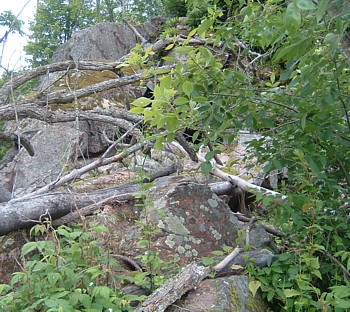
I am pretty sure the pups were raised in that jumble of granite back in 1998-99. Once an otter blew at me from one of the holes formed by the collapsing rocks. Before going into the jumble I took a photo of the New Pond, or the meadow.
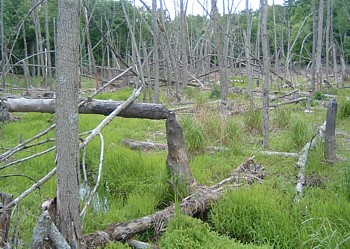
This had been a very shady area, and I remember the year the ice and snow were high enough for beavers make their cuts four feet off the ground. As usual the only token left by an animal using these rocks was from porcupines.
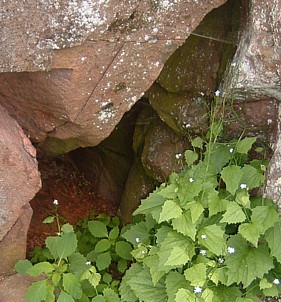
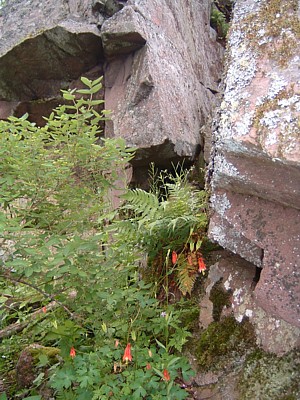
So I simply enjoyed the rocks and the vegetation clinging to it, especially the columbine.
As I walked around the rocks, I bumped into two deer.
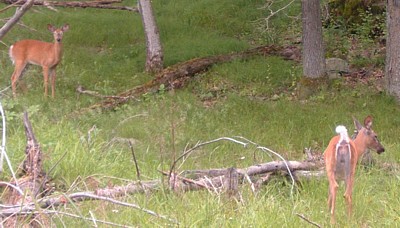
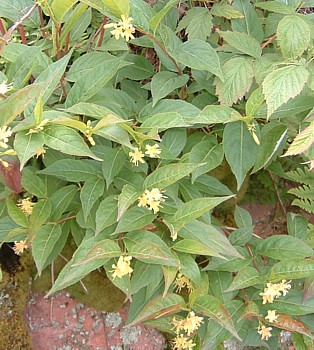
They didn't panic and to avoid walking toward them I walked up through the meadow, which suddenly struck me as a great idea. The grasses are there in all their variety but nothing is too high entangling my progress. I enjoyed clumps of blue flag irises and then fancing I saw a flowering shrub I'd never seen before (or is it the bush honeysuckle I discover every year?)
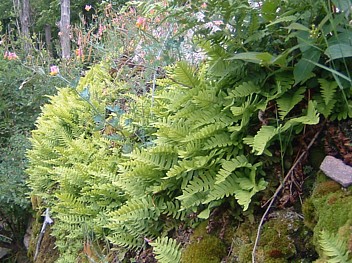
Corydalis danced above some brilliant ferns.
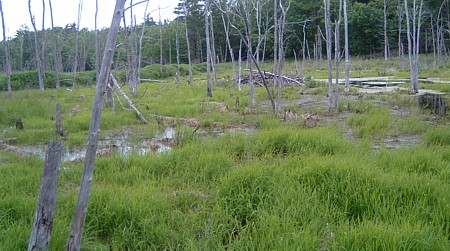
I continued enjoying grass all the way up through what once was Otter Hole Pond
and wound up, shoes dry, in the middle of the Second Swamp Pond dam where I saw my first flowering cattails.
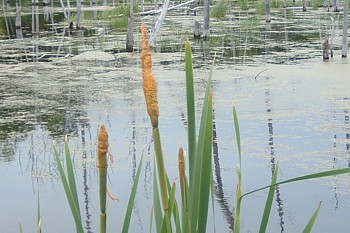
No beaver out there today, but when I got up to the Upper Second Swamp Pond I saw a beaver swimming into the low shurbs, then it came out and slapped its tail, even though I was rather far away. So I went up to the Lost Swamp Pond, where I saw a muskrat steaming east. As I walked along the slope, I saw several new trails through the grass -- these are from muskrats, I think, or beavers, since none led to any turtle diggings. I sat briefly, then when I heard another tail slap from the Upper Second Swamp Pond, I situated myself so I could see what was going on down there. A beaver was diving behind the dam, then swimming under water, and bringing mud up to the dam, but not on it. It seemed to be widening the wall of the dam. I watched it do this three times and then a small beaver swam over and tried to horn in on the action, in a fashion. Bumping heads and humming certainly wasn't helping get any work done. The big beaver went about its business and the littler one left. I bet the kits are born and come out in the pond at night, and this yearling is jealous and was trying to bum a ride on its father's back, a privilege it enjoyed when it was a kit. As I walked around the Lost Swamp Pond, I heard a muskrat whistling and cocked my camcorder to record the fight, but it must have been whistling to itself. The Big Pond was quiet but I could see a beaver had brought more snacks onto its feeding niche on the dam.
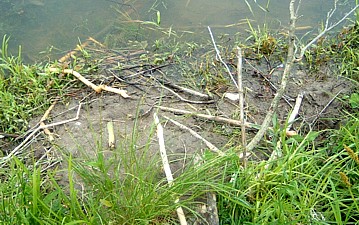
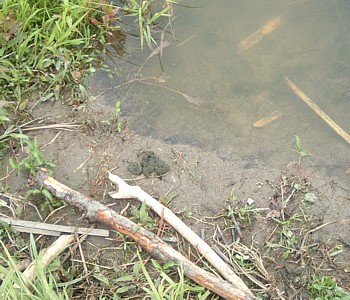
And in the niche further along a muskrat had left its mark, just to let the beavers know who had been bossing this pond.
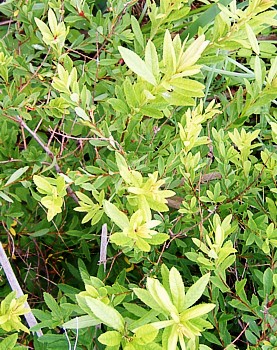
Before I left the pond, I took a photo of the plant so ubiquitous around here, to get a definitive identification of it, meadowsweet.
June 12 I had a chance to check the ponds on our land for signs of the beaver, but came up empty. I did see that the muskrats packed in some sticks at a gap into their burrows in the dam.
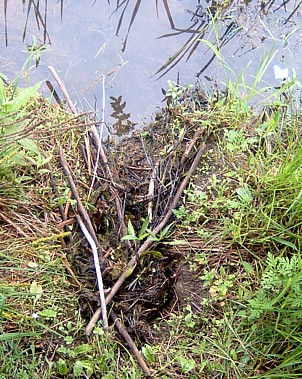
along the dirt and gravel road I saw an invasion of slugs, and then I saw seven red squirrels cross the road, leaving our land, one looked rather small. Wonder how all those squirrels will sort out. And the mushroom that comes up every year along the trail to the Teepee Pond did so again
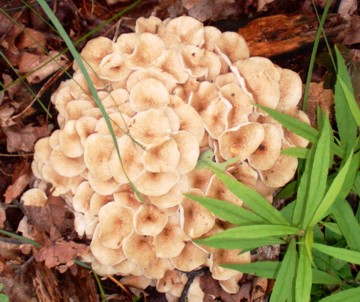
Back on the island I brought the kayak back to our dock and in the process checked a few points along South Bay. As I came down to the willow latrine, I could see three herons on the shore, then three flew out of their roosting spot and one flew across the bay from the south -- so seven herons in view, and I'm sure there are more. Nothing to be seen from the water at the willow latrine, nor at the rock latrine. As I headed out of South Bay, I heard loud chirping from one of the boat houses. Sounded like an otter, and I got closer to investigate, and sure enough, one periscoped up out of the shallow water in the slip then dove, probably into the cribs. I nosed around in case this was a family of otters, but no signs of that. I think it is the single otter, a juvenile, probably male, who has a propensity to chirp loudly when he is alarmed. Glad to see him and sorry to get him out of sorts. I finally saw some goslings -- six of them guarded by four geese near out house.
June 13 checked the Picton latrine and was pleased to find more development. On the western slope the otter or otters went another ten yards up the slope, digging and bending the grass, no fresh scats though.
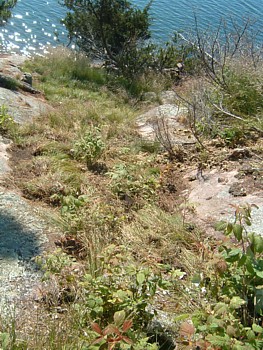
On the eastern slope above the swinging rope there was a fresh scat
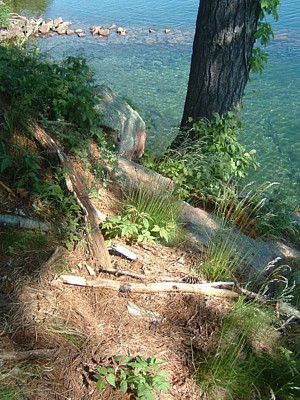
and here too they took their latrines higher, even up into the more virulent viney undergrowth. And here I saw a very fresh scat.

Such perfectly tubular scats are not characteristic of otters, and I should check my notes to see when I started seeing otter scats shaped like this -- might help me to identify a particular otter. Several years ago, I suspected that a mother was raising her pups high up on this point. At least as I drifted below it at dawn one late May morning, I heard a bit of screeching, aimed, I think, at warning me away.
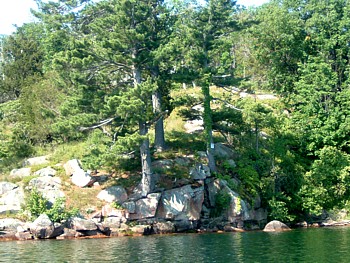
I got the great notion of checking the next face of rocks to the north, similarly situated with a view to the south on a penisula of Grindstone Island, but no signs of otters there. One difference is that there is no view of the main channel from those rocks, though I am not sure why that should make a difference to an otter. Going through the Narrows I saw a family of geese
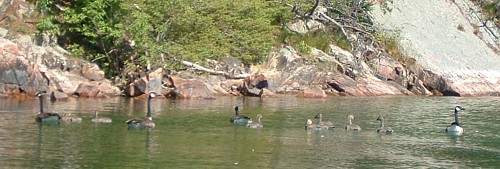
and ducks,
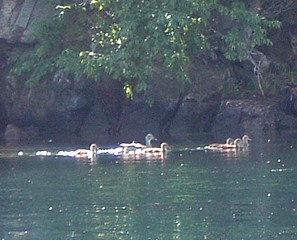
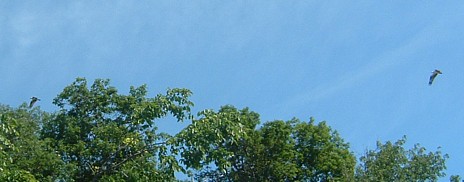
Nice to see. Then as I rounded the point into South Bay, two osprey flew low over the trees and circled above me. One clutched a fish, which they were probably contending for -- too soon I think for young osprey to be taught the ropes.
Then I checked the latrine at the entrance to South Bay and here too I found the rolling area extended, to the east, with new mounds,
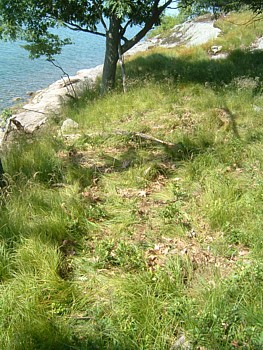
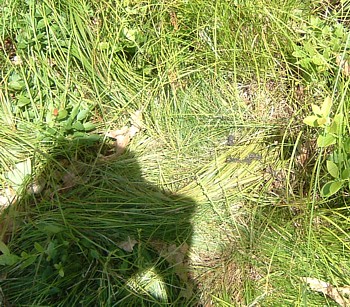
but no fresh scats. But there was a new one that the sun caught me posing over.
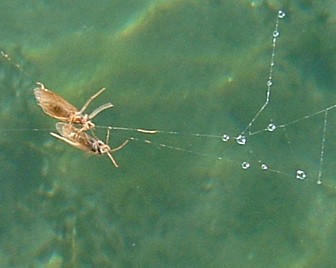
I was wondering how to get a photo of the beige midges that are all over just above the water. Then as I went to start my engine, I saw that a spider had taken care of that for me.
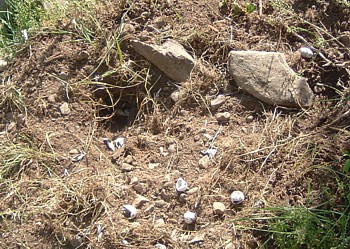
June 16 we went to Philadelphia for three days, and as soon as we were back I stretched my legs with a walk around South Bay. Something had discovered the turtle egg nest on the little causeway along the South Bay trail
No otter signs there, nor on the New Pond knoll, the old dock latrine, nor the docking rock latrine. But I could easily see that the otter extended the latrine at the entrance to South Bay. No fresh scats though.
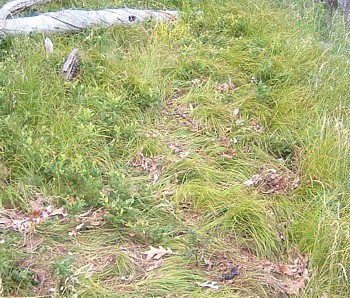
Then I went up to Audubon Pond which has not recouped any of the water it lost despite the beavers continuing to patch the drain.
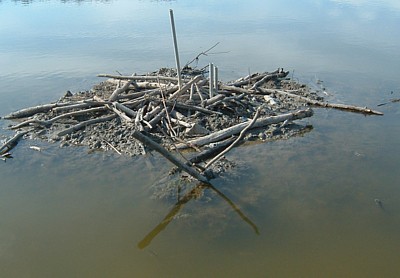
No signs of beavers or muskrats along the embankment. I sat up on the ridge to the east so I could look back on the east side of the causeway where I saw the baby muskrat learning to forage. But no action today.
by Bob Arnebeck
Check out my other web pages: otters; beavers; minks; muskrats;porcupines;Leslie's art