
August 2006 part three
August 21 with the kayak back in our dock I had to round the headland to get to South Bay. Fortunately there was a freshening wind and a delirious chop, and then, as usual, a quick push down to the willow latrine where I was surprised to see a sizeable willow log floating a few yards from the willow. The beavers here are getting more amibitious. The lodge appears to be growing still with alder now being pushed up on it. The alder saplings are only partially eaten. This is rated a favored food of beavers but here they have been slow to harvest it. I wondered if the alder saplings had been harvested from the north shore of the north cove where there are more alder, but a paddle up the bay a few yards put that idea to rest. The beavers had beat a circle around a clump of alder saplings and were half through cutting them down. They eat them on site too. I saw some stripped twigs. As I continued around the point heading for the ash the beavers had girdled, the stiff west wind blew the ash down with a sharp crack and generous splash into the bay. So I can say lingering at the willow latrine, as I am want to do ever since that otter pup entertained me there, may have saved my life, though I am pretty wary of trees about to fall. Beavers knowingly cut them to a point and let wind and gravity do the rest, and I do always keep that in mind. However, when I paddled up to the ash, it was hard to tell if the beavers had gnawed off much more than the superficial girdling I saw last time. Good chance that it was the rotted heart wood more than the beavers' persistence that brought the ash down. I'll be curious to see how soon and how much they harvest. The south shore of the north cove was sheltered from the wind so I could patiently poke into the otter latrines, and saw nothing new. The only sights to see were four osprey over head -- perhaps in a territorial struggle, certainly there was screeching enough to make me think so. And the turtles were back out enmasse striking poses on half sunken tree that I think would engage the attention of the master painters of the Dutch Renaissance, though with their stripes the painted turtle hardly looks so bourgeois. Of course, they all dove when I paddled by with the exception of some not bigger than a half dollar. I couldn't see if otters had once again visited the old dock latrine, but from the water I could see the path they took through the grass. Not too much new in the alder groves on the north shore. Then I paddled back to the rock on the south shore and got out to check the latrines. I am pretty sure that an otter had been up on the grass a few feet from where I usually make my landing. And there were flecks of scat on the big rock there. That said, there was positively no new otter signs in the mint latrine or on the more concealed rocks. This is disappointing, but understandable given that the water level of the river is going down -- by six inches or so in the last two weeks, and the marsh is getting drier. Since my trip was not confined to South Bay, I can report that one black backed gull is off the headland, and no cormorants -- my guess is that they avoid the wind and waves.
August 22 while working on the house at the land, I've neglected my usual tours of the ponds, especially the beaverless first ponds. Today I walked around the pond to see what difference a year without beavers meant. The first obvious difference is the thickness of the grass in the little spit of land between the two ponds. Here is where mother beaver cut grass to take into the lodge, and where the kits, and other beavers, grabbed a quick meal. First a photo from last August
and then how it looks today.
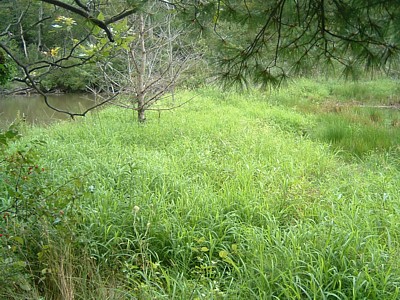
Muskrats also harvested the grasses here and this is an indication that the muskrats did not thrive in the pond this year. There were some trails in the grass, made by deer, I think. We were hoping the pickeral weed would return. It seems to have made a start, but it is being nipped by the deer.
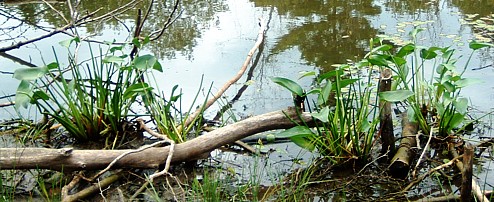
Indeed, I saw a deer lurking up in the nearby ridge. The other side of the teepee pond shows the other major difference. Last year there was no apparent under water vegetation
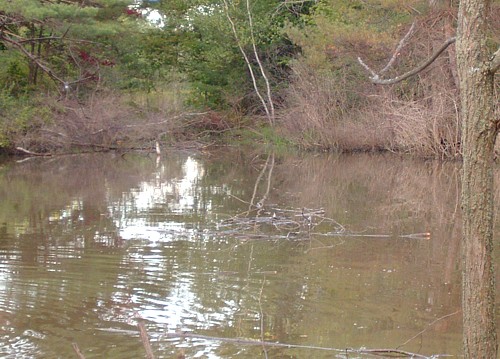
This year, it abounds
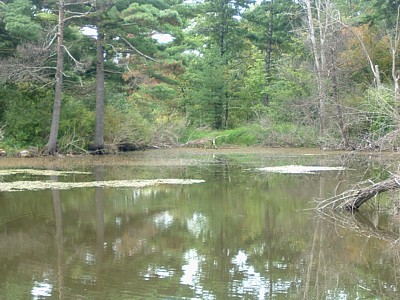
with much of the bottom thick with milfoil.
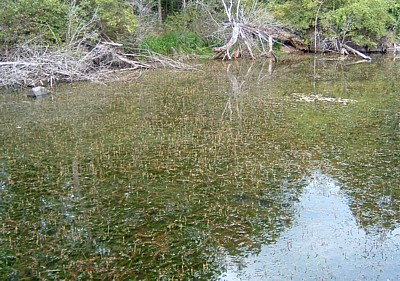
looking quite luscious.
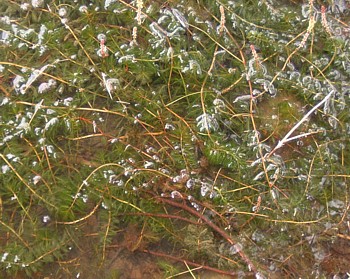
Deer are probably wading into the pond to eat some, but they've only made a dent in the vegetation in the canal.
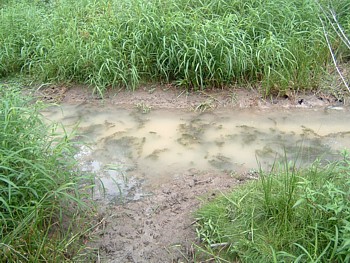
Raccoons have been all over the shores, best seen where they've cleaned out what struggled to surviving in the drying pool above the First Pond.
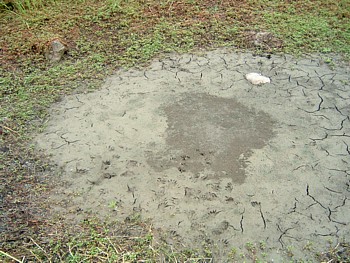
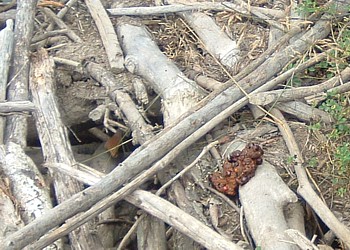
But they have at least used the beaver lodge -- for a latrine.
And wherever there is mud, there is a raccoon print. However I think there are some muskrat prints,
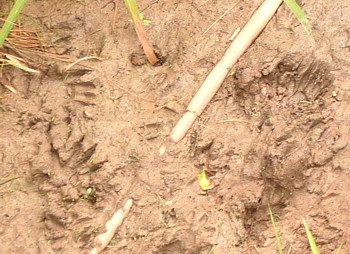
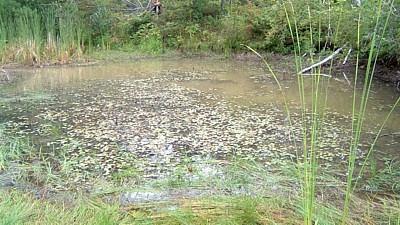
but if they are still around, I think they are most active in the pool at the head of the valley.
I also saw a beaver development I didn't see last year, and which I've never seen before. I first noticed a hole, or a wallow along the shore of the Teepee Pond with a burrow heading out to the pond
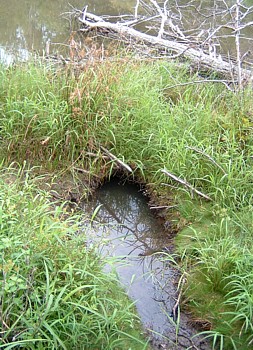
where the beavers had piled some sticks making a kind of mini-lodge.
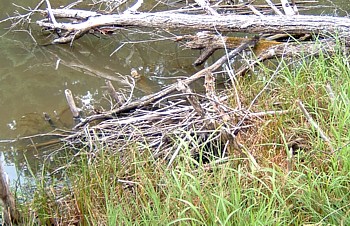
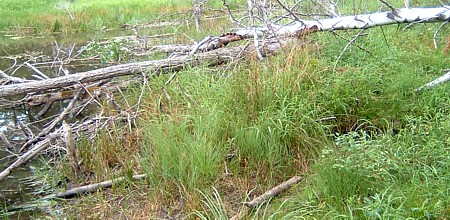
I'll have to check the video from last year to see if I can tell if one of the beavers periodically disappeared into this.
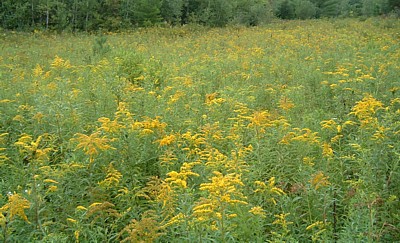
then I waded through a meadow of golden rod.
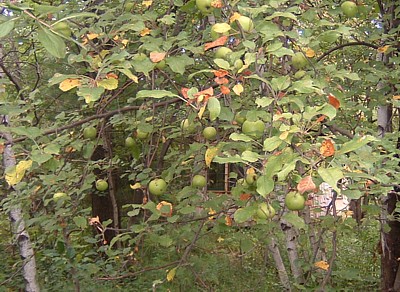
This may be a good year for fruit. The apple tree near the cabin from which we have never gotten an apple, is heavy with them
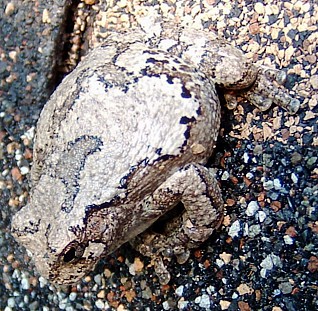
Then it was back to work, after photographing a tree frog on the roof who could quite blend into the roofing shingles.
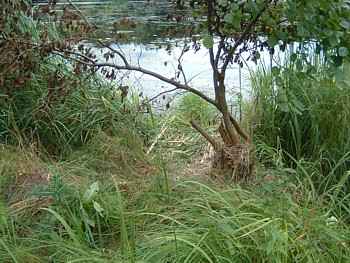
August 23 with longer days working on the house at the land, I have less time for hikes on the island. So at 3:45 I rode my bike over to the entrance to the state park, planning to go through the marsh out to the island and photograph what I saw from the kayak two days ago, and then I would check out the East Trail Pond, all before dinner. Negotiating the marsh was easier with the lower water level and I found that gaining the island didn't get me an angle on the alder the beavers have been harvesting. I had to wade back down through wet grass and some cattails and then found the firmer ground behind one of the rocks along the shore where the beavers had cut alder and generally made a swath through the grass.
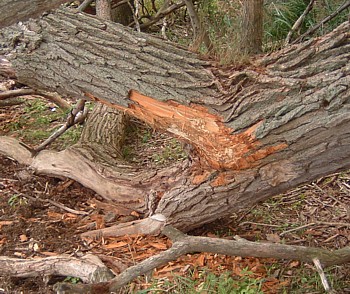
Then back on firmer ground I continued around the shore of the island looking for more beaver work. They haven't come on shore to browse and principally gnaw on the big trunks of the willows that reach like octopi over the shore
From the kayak I only see half the work because the beavers perhaps prefer gnawing on the land side of the trunks. I suppose they feel less exposed.
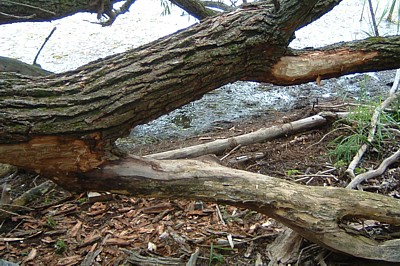
Then I took some photos of the ash that fell while I was kayaking. It didn't appear that the beavers had taken anything off it.
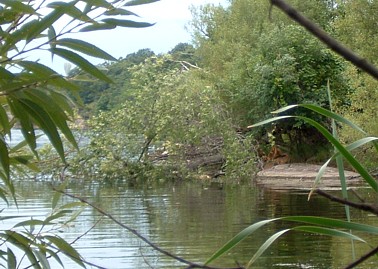
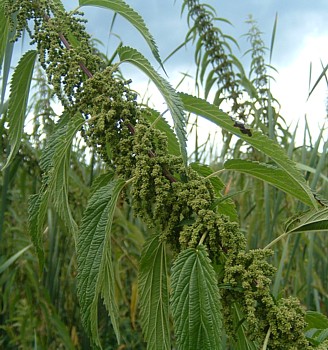
I found some fish bones in the litter along the shore, but no otters scats. Then I thought I might try to part the marsh out to the point and get a closer look at the ash. But I was intimidated by eight foot high plants that looked much too much like stinging nettle!
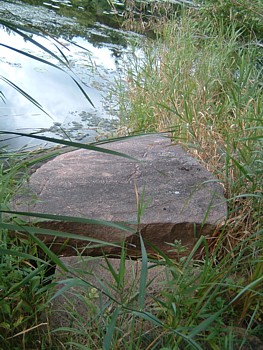
So I headed over to the otter latrines. I took a photo of the rock where I climb out of my kayak
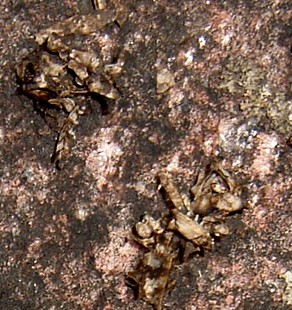
and the remnents of fish parts that might have been scatted by an otter.
Then I walked around the rock that they've favored over the years, and found nothing new and very little old. I had to console myself with whirligig beetles, uncharacteristically calm.
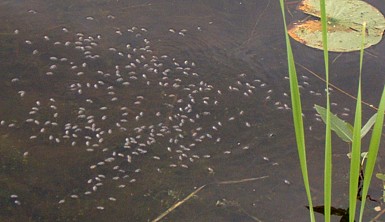
I thought of sitting on the rock and contemplating the marsh,
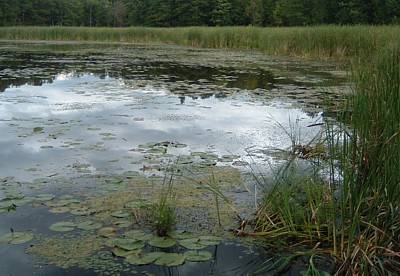
but decided to move on in part because of chatty hikers going around the cove. That underscored the irony of my searching for secret paradises of otters and beavers in a small bay completely washed over by the noises of civilization. Lets hope the animals and I know something that the rest of the world doesn't. There was nothing new at the rock along the interior of marsh
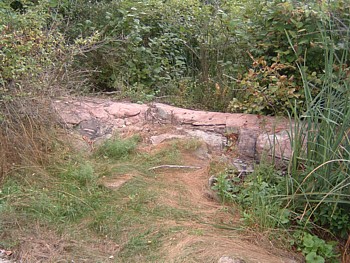
This is proving to be less of an otter paradise than I thought. Going back to the marsh I saw what I think was a veery, judging by it bright brown feathers, fly into the middle of a berry bush. A good many birds, especially song sparrows, phoebes and goldfinches were busy fattening up. As I waded back into the marsh to get back to the South Bay trail, I noticed a clearing in the vegetation and found an old beaver trail leading back from one of the rocks along the shore
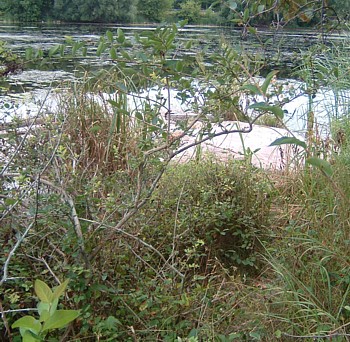
The beavers had sculpted two old ashes and left some recent gnawings.
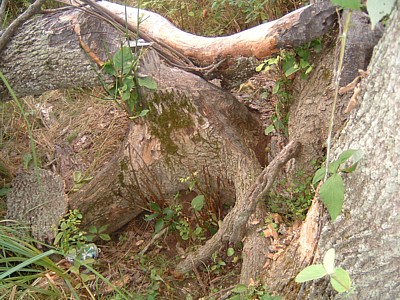
I also noticed how a channel, now dry, curled around behind this area. There was a well picked fish bone there, as well as a beer can. They could have washed in with the high water, but I strained to find any sign of otter scat as this looked like a well secluded spot where an otter could contentedly gnaw on fish. But I found none and then reminded myself that in general otters don't prize seclusion. They scat and eat well exposed, which is why I've been able to keep track of them. I made my way through the marsh to the willow latrine where I first admired what the beavers have added to the lodge.
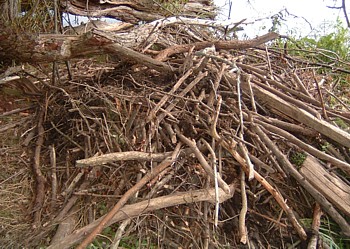
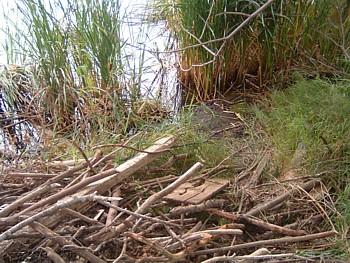
The hole that I was privy to in the spring had been layered over with logs. And they have another ramp to carry logs up on -- and some boards.
I looked for otter scat but found none and then admired the beaver gnawings on one of the trunk-like limbs of the willow,
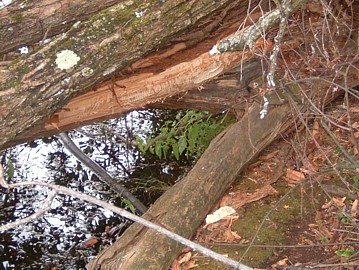
and two branches that had been trimmed.
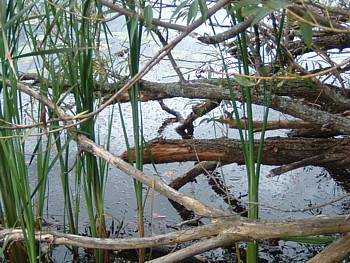
The water was calm, and the Caspian terns' raucous squawking was entertaining and I had a hunch I should stay awhile so I cancelled the rest of the hike and sat down. Then I saw a water snake resting on a willow limb
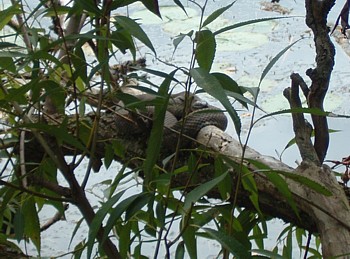
more or less right in front of me.
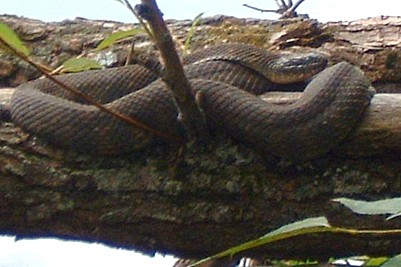
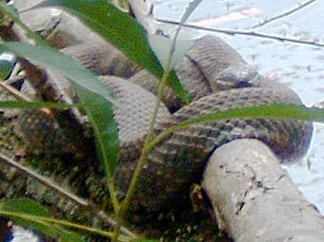
Just took me ten minutes to realize I was not alone, though the snake seemed completely oblivious to my presence.
I did hurry over to check the old dock latrine and there were no new otter scats and all the old ones had been washed away by the recent rain. I did notice that the arrowhead flowers were blooming, looking rather elegant.
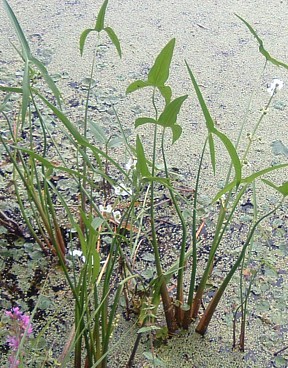
I followed the animal path along the shore, heading east, to see if the otters might have moved their latrine, but while I did see a fish jaw with sharp teeth,
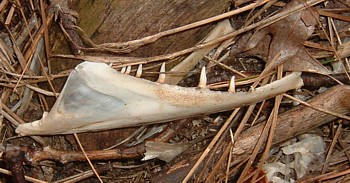
I didn't see any scats.
August 24 back from building I hurried out for another late afternoon hike resolved to check the East Trail Pond and then cross the Second Swamp Pond dam -- it was cool enough for long pants, a necessity at this season of tall, thick and cutting grasses. I checked the old dock latrine first and again there were no scats -- evidently the otters moved off again. Have they gone to the ponds? I checked the New Pond knoll first and found a good number of brown fallen leaves but no scats. The pond is almost dry, all green duck weed and the dam has a formidible wall of eight foot high pilewort.
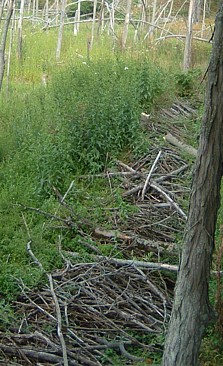
Of course these towering weeds would not intimidate an otter but I thought it symbolized a barrier that seems to be keeping the otters away from the ponds this August. I went back to the East Trail and since I was in the neighborhood I thought I'd be remiss not to check on the Thicket Pond beavers. I came up on the side that afforded a view of Meander Pond which, somewhat to my surprise still has water. Thicket Pond is low with only the deeper side canals on the south side half filled with water. And some canals were dry. The water there was not muddy which argues for the absence of beavers, plus I did not see any tree harvesting along that shore. Then I got to the back of the pond with a view of the main canal and it was muddy
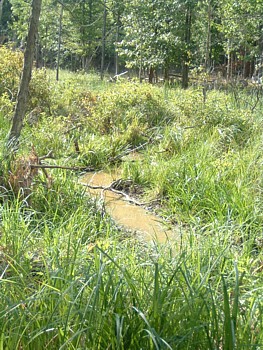
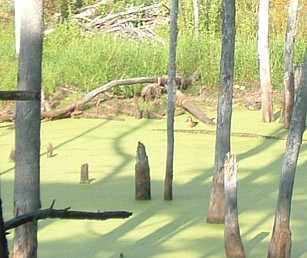
-- no doubt that the beavers are around and I even heard a half splash back in the button bushes. I'm sure there is plenty of tree harvesting on the north shore, but I had appointments to keep. A sad one at that. A heron did fly up from the East Trail Pond meadow and an osprey flew high, but there is little water behind the dam and that all carpeted with bright green duckweed,
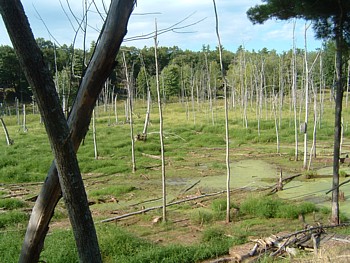
and a duck atop a log admiring it all.
The only otter trail up the ridge was all covered with grasses some rather tall.
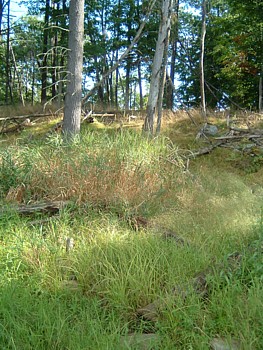
However, something had been using it because there was a fan of feathers from a dead bird. I headed up to the Second Swamp Pond which was much livelier. A heron flew up from the water, an osprey flew over the pond at my eye level. Ducks congregated on logs -- mallards, as usual. The northeast wind had the pond strumming with ripples. A kingfisher perched in a dead tree in front of me, and I saw an osprey perched on a dead trunk across the pond. All piscivores but the otters? I sat a bit and then checked the two lodges. The old otter latrine above the auxilliary lodge was hemmed in by thistles, though the beaver niche a few feet to the left was still clear. The main bank lodge was thick with thistles, vervain, jewel weed, etc.
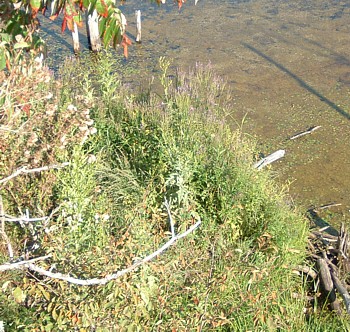
No sign of otters there, and the dam below looked solid green.
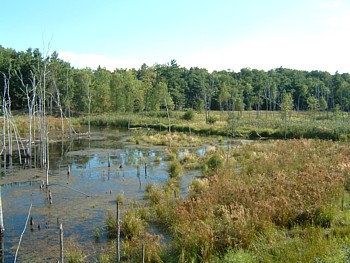
I still waded through the thick grasses and cattails on and below the dam -- no deer trail here. And in my mind I wrote my journal entry about this temporary jungle obviously keeping the otters at bay, literally.
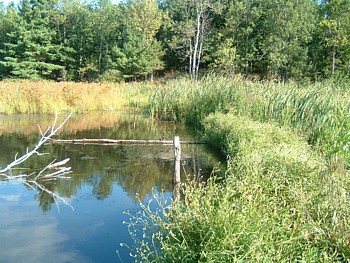
Then about at the spillover I saw a clearing in the smartweed about two feet in diameter and there in the middle were two otter scats,
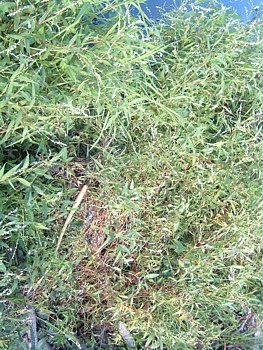
not fresh but relatively recent.
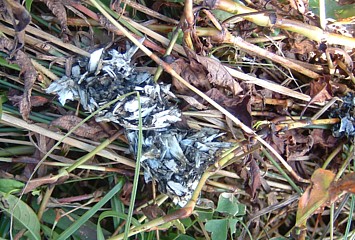
There was a brown smear of scat too, still moist,
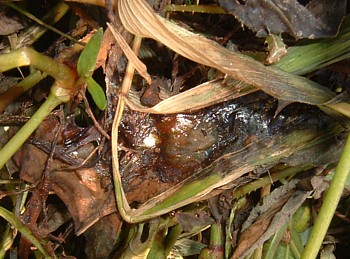
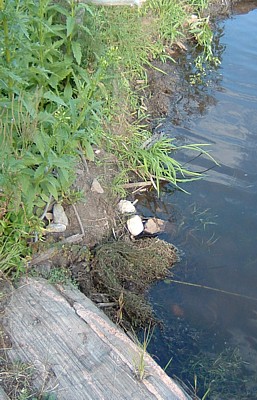
and at this time of year they dry out in a few days. Call the rewrite man, otters are back. I was overjoyed, though such a modest swath argued that just a mother and pup came, if that. I had planned to save the other ponds for another day, but now I had to see if there was any scat up there. To make a long story short I didn't find any more scats, which doesn't dampen my enthusiasm. Often I've seen otters in a pond before I've noticed the scats around it, and at this season the grass is high at most of the old latrines, but I was disappointed to see nothing at the old rolling area on the north slope of the Lost Swamp Pond which the beavers and geese have matted down. Coming up to the Lost Swamp Pond presented me with a novel sight. Two osprey and a heron flying off the same dead tree -- too late to get a photo of anything but the tree. Then I scared the ducks off and a flock of twenty geese took a vote and soon flew off. Their honking was in nice harmony with the screeching of the osprey flying high over the pond. Then some coyotes started yodelling. While I didn't see any otter scat at the dam, I saw a token of the beavers presence, pushed up grass and mud.
Then I continued on to the Big Pond, where I flushed another heron, but no osprey here. The ducks almost ignored me. Young mallards like to stay rooted but eventually do fly as they must. Half the dam was easy to cross, then came the thistles taller than me. Fortunately I could hang on to a formidable pilewort as I sidled around the thickets. Pilewort is a most serviceable plant and I still haven't put its name to use. At the spillway here there were several berry laced raccoon scats -- could have been deer, but the tubular shape of one argues for raccoons.
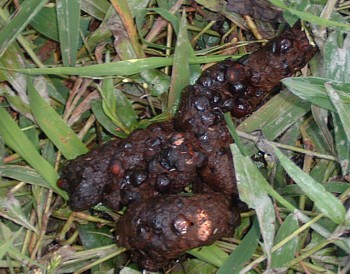
In the mud I could see their prints. The grass behind my perch is well matted down and some of it roughed up and tufted as an otter might do, but there were no scats. However this pond is surrounded with latrines inaccessible to me at this season unless a get a spasm of true grit and wade into the jungle not waist high this year but head high. Must be done, but not today.
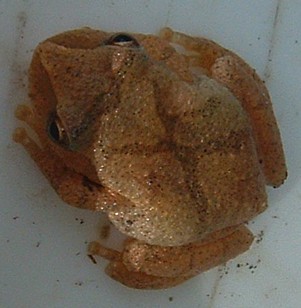
August 26 when we got to the land and opened the trunk of the car we saw a peeper on one of the plastic buckets we use to haul vegetables.
After lunch I took a tour of the lower ponds. The Third Pond is dry
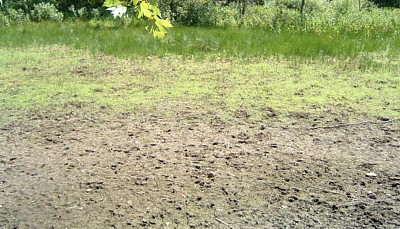
with raccoon tracks suggesting that the tadpoles in the drying pool did not die in vain. Flies were still finding something to get excited in the almost dry mud. This gave me an opportunity to see where the beaver and muskrats made their burrow. Along the dam there were some small and medium size holes not really comfortable for either animal, I think
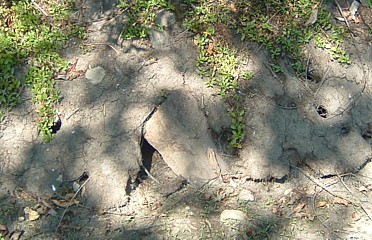
Back where I knew they had a burrow I saw three, and that the beaver, probably, dug a bit of a channel,
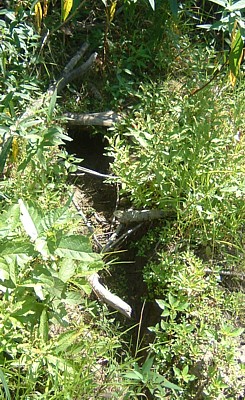
and that the muskrats, probably, built a tunnel in the channel, I guess, through an obdurate patch of mud. In the photo I am facing the deeper water.
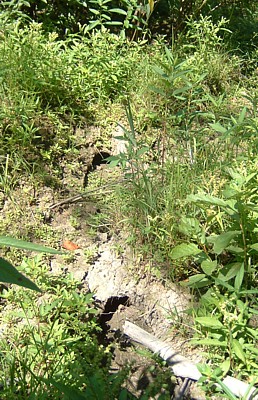
Or the muskrats alone pulled off the engineering feat because they were in the pond much longer than the beaver. Don't recollect seeing this before. The Deep Pond is rather low,
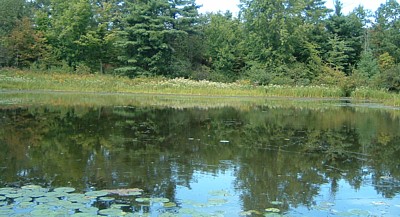
but I learned to appreciate that. I found a comfortable seat in one of the beaver niches right along the current water lever. Baked by the sun, I was soon inspired to take a dip in the pond. The shore is very muddy but the beavers left enough logs under water to afford some firm footing. Without the beavers eating them the milfoil hampers one's strokes but I managed to paddle about. Once out, there was a riot in my wake by innumerable shiners attracted to the commotion I made. A frog took advantage of my foot print in the mud and looked out at the author of so many changes in the pond.
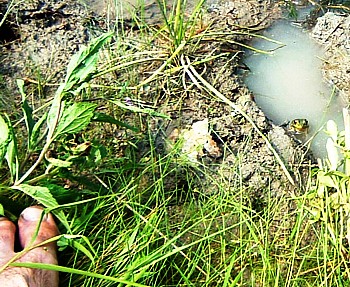
There were no signs of beavers or muskrats, but I'll have to begin checking back more frequently to get a feel for whether muskrats are here. Probably are. As I walked to the dam I took photos of the bees on the boneset flowers
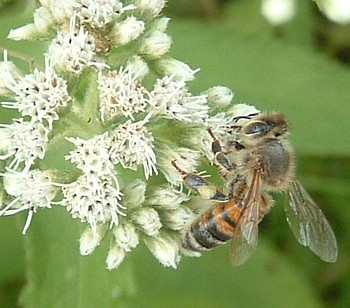
and they turned out better than I thought they would.
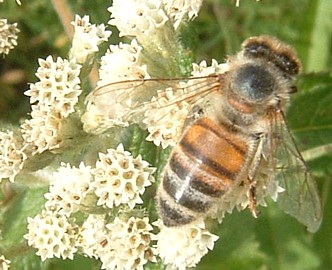
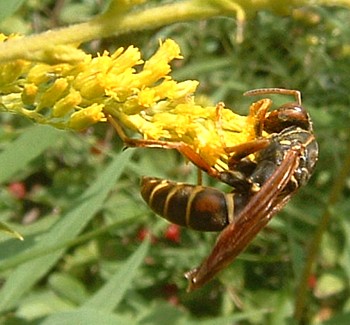
I also got a photo of a hornet on a goldenrod
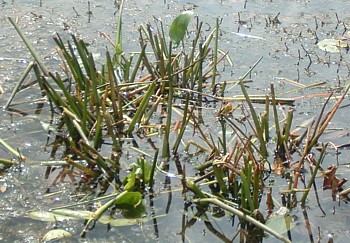
The pickeral weed crop that I had such hopes for has been trimmed, probably by deer,
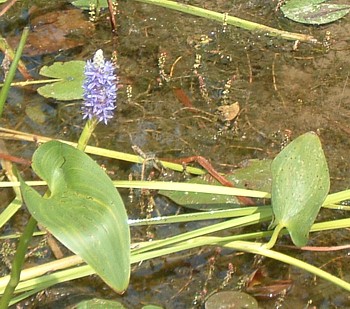
but one or two blooms survived.
While the beaver didn't build up the dam much, it at least leveled the dam area making it easier to build up a dam
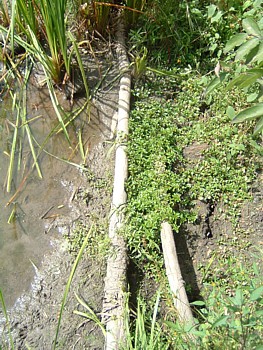
But I'm not sure I want to.
We got back home to the island in time for a kayak tour of South Bay. There was a good east wind so I enjoyed paddling to the end of the coves and drifting out. There were some exquisite water lilies, especially in the south cove. These blooms come and go, and from June to the end of August there are always some at a point of perfection. The snake was still draped on the willow, in a different position and there were two painted turtles propped on branches low to the water. Phoebes used a higher branch as a base for their forays against the insects, and more gnawing by the beaver. But their big feast is at the ash that fell into the water. They are gnawing the trunk and cutting the small twigs, both those in and those out of the water. I get my boat back in the water tomorrow and will get photos of this. There was nothing to note at the otter latrines, except a heron standing at the rock along the water. As I let the wind blow me out of this cove, allowing me the leisure to look for things like bryozoa, I began noticing jelly globs on the river grass and entangled in the milfoil. I fished some out and put them on my kayak and took a photo when I got home. I think the are the jelly from bryozoas and in some globs I can see the outlines of a colony.
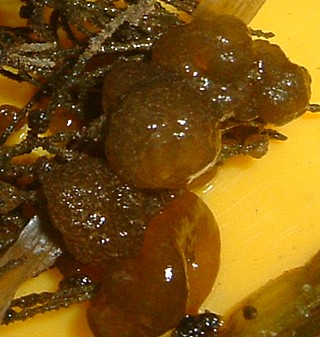
These were all in a band of the cove about fifty yards wide where the water was two to three feet deep. These might be the remnants of blasted colonies from another bay of the river blown into the cove, or this might be the start of something big and some bryozoa will get organized and grow. While reaching down to get the jelly globs, I saw the South Bay bowfin that Ottoleo reported seeing several times
by Bob Arnebeck
Check out my other web pages: otters; beavers; minks; muskrats;porcupines;Leslie's art