Bogd khan mountain
Bogd khan mountain reservation is located in the southern of the
Ulaanbaatar . Tooril khan of Khereid aimag preserved the Bogd Khan mountain
in the end of the XII century .Officially Bogd Khan mountain became a reservation
in 1778 .
The reservation is home to 187 species of birds, 47 mammals and 1060
species of insects . Holy peak Tsetseegun is 2268 meters above sea
level.
Gorkhi, Terelj (resort)
Gorkhi, Terelj tourist camp is 50-65 kilometers from Ulaanbaatar. There
are many interesting places along the way from Ulaanbaatar to Terelj.
This area is rich in the terms of wild life and wild flowers .forested
high mountains, rock formations, clear watered mountain stream, pine covered
mountains and a dazzling variety of wild flowers , Gorkhi, Terelj
park is a natural wild museum.
The Huvsugul lake
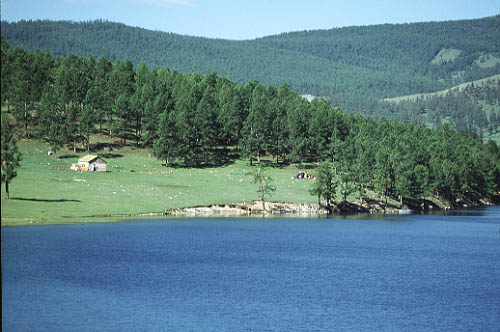
Known as the "Dark Blue Pearl " of Mongolia, the Huvsugul is country's the largest and the deepest lake. The Huvsugul lake's length is 136 km ,width is 20.3 km depth is 262 meters It is located at the altitude of 1645 meters above sea level. It is the second largest fresh water lake in Central Asia. Fishing and sport fishing are becoming popular in the lake area. 68 species of mammals, including ibex, argil sheep, elk, reindeer, musk deer, brown bear, lynx, marten, wolf, beaver, moose, and 244 species of birds inhabit the lake and surrounding area . The lake itself is habitat for 9 species of fish , including Siberian grayling and lenok.
Khorgo, Terkhiin Tsagaan Nuur
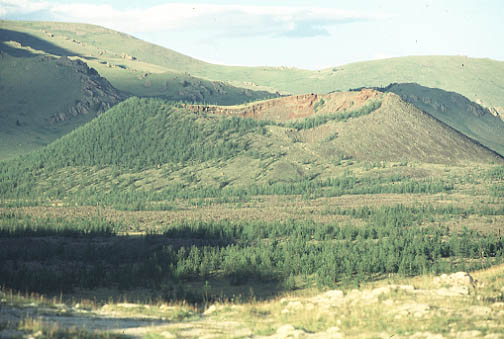
It is 680 kms from Ulaanbaatar. Horgo volcano is a dead volcano covered with basalt lying in the last of the lake "Terkhiin Tsagaan" in Arkhangai aimag. Horgiin togoo, shar nohoin khonkhor (yellow dogs hollow), musun agui (ice grotto), Zaluuchuudiin agui (youth grotto), 13 stone gers, Old rock, Chandman mountain island, fresh water lake "Terkhiin Tsagaan" and many kinds of fishes are the main attractions for tourists. Khorgiin togoo is located at an altitude of 2210 meters above sea level and 180-200 meters wide and 70-80 meters deep.
Khustain Nuruu
Khustain Nuruu Nature Reserve is about 100 km from Ulaanbaatar. The Khustain Nuruu Nature Reserve was established in 1993 to reserve Mongolia's wild takhi horses and the steppe environment, where they live. In the early 1990s, with assistance from Holland's environmental groups for takhi protection, many takhi horses were reintroduced into specially protected areas. Now over 100 takhi live in this park. This beautiful park is a home to many kinds of animals, and birds. There are many monuments of Bronze Age in this place.
Karakorum, Erdene Dzuu
In 1220 Chinggis Khan decided to build the capital city of his vast
Mongolian Empire near river Orkhon. Building was completed by his son,
Ogodei khan, after Chinggis Khan's death. Karakorum was not only the capital
city of Mongolian Empire, but also it was the largest center of history,
culture and trade. Khublai Khan moved it to Khanbalik (Beijing). After
the collapse of Yuan Dynasty, Mins seized Karakorum and destroyed it. The
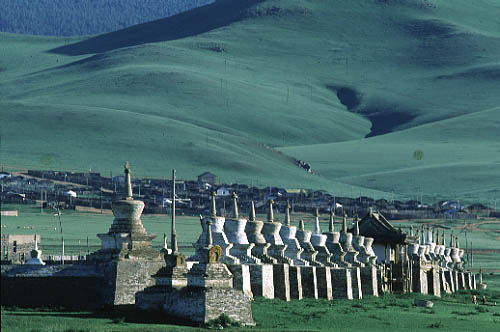
symbolic ruins of Karakorum, monumental walls (400 meters of length) with
108 stupas, are surrounded the first Buddhist monastery in Mongolia
Erdene Dzuu Monastery in 1586. Since 1990 ,it became an active monastery
again.
The ruins of this ancient capital of Mongolia Karakorum and the Erdene
Dzuu monastery with their 108 stupas are a great interest to travelers.
Mongolian Gobi Desert
Gobi - one of the most interesting and mysterious place in the world.
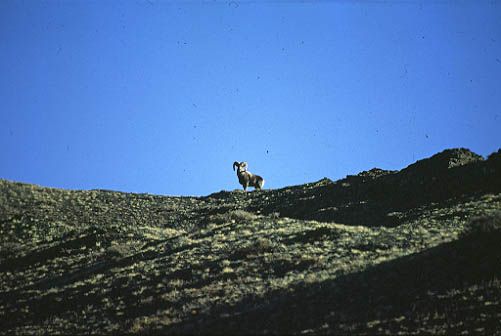
According to the scientist there are 33 Gobi, which are home to Argali
(Ram), Tekh (Ibex), Irves (Snow leopard), Hulan (Wild Ass), Zeer (Steppe
antelope), Havtgai (Wild camel) and Mazaalai (Gobi bear).
Gobi holds many attractions. The site of an ancient sea, the
Gobi is a treasure chest of dinosaur bones and eggs. Nestled between the
beautiful peaks of the Gurvansaikhan (Three Beauties) Mountains, towering
1000 feet above the surrounding steppe. Yol Am (Eagle's Mouth) Canyon shelters
glaciers which remain frozen even on the summer's hottest days.
Gobi Desert, stretching for 3.000 miles along the border of Mongolia
and China, holds many thrilling surprises. Herds of over 1.000 antelope
can be seen grazing on the steppe next to towering sand dunes. Naturalists
from around the world are attracted by the chance to view rare area attracted
Sheep (wild mountain sheep), Przewalski's horses, Asiatic Wild Asses, Wild
Bactrian Camels, Snow Leopards and Ibexes in the Great Gobi Reserve, one
of the world's largest.