|
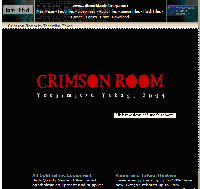
Crimson room and Clues Reading a detective story is exciting, but being a detector in a computer game is another story. The game of “Crimson room” is a story about someone waking up in a room which is a strange place and he or she is locked in it and has to find keys in order to leave crimson room. If it is a story, people just have to read it from first page to the end, but it turns out that “Crimson room” is a game which presents a nearly real situation for a person who not only plays it but also like the person who seems locked in without any reason. The functions of it can be divided into three points. First, it makes a person who plays it as a detector who is trying so hard to discover some clues to get away that room. I f it only a detective story, the thing readers only have to do is follow the story, but they cannot really connect with the story. They will still be an outsider to the story. However, a detective game as “Crimson room” will make a person who plays this game as a victim and wants get out this room as soon as possible. Under such circumstance, people will involve with this game and be incited emotions from this game. Second, by playing this game, a person will encounter some conflicts which won’t happen in a detective story. For example, it will make someone who plays this game feel frustrated when they cannot leave that room and it also will make them excited when they almost solve all the puzzles which mean that they are able to find the last key and open the front door and leave that room.
|
|
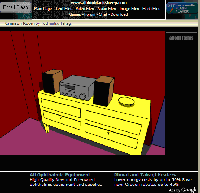 |
The final point is the answer still is unsolved even that in the end people can get away that room. From the opening of the game is a puzzle and blur situation for a person who plays this game. He or she doesn’t have any idea that why they are in this room. Even that they understand that they have to find keys to leave this room, but everything is unknown. Thought in the end people who play this game can open the door, they still cannot figure out why they are here and what will happen when the door is opened. Thus, the detective game is different to the detective story, because everything in the game is still a puzzle, even that the door is opened, but for detective story everything in the story is clear and readers understand everything from the beginning to the end. |
| Compared to the “Crimson room”, the “Clues” is more difficult to understand for people who play it. In the beginning the game of “Clues” has three doors and people have to decide which door they want and start the game. However, after choosing the door inside the game still has lots of options need you to pick. Sometimes if you pick the possible answer, still people can not discover 10 clues. People will still struggle in finding clues and need to go back the starting place to choose another door and then continue the game again. | 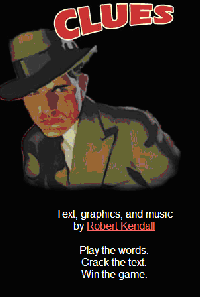 |
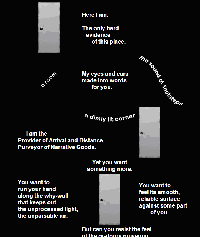 |
Sometime the clue is in a poem or in the forest, no matter where the clues are people who play it will be getting more and more into this game, even thought in the end the 10 clues still are not discovered yet. Thus, the detective games as “Crimson room” and “Clues” are games of meditative immersion. These games pervade the ambiguity in the whole text. It is a pleasure to play these games which own lots of conflicts inside and represent and simulate meditative immersion. Reading a detective story is fun, but playing a detective game is more pleasure. The reality in the game is hard to tell, but the game is a way to represent the reality and presume in popular culture.
|