|
|
|
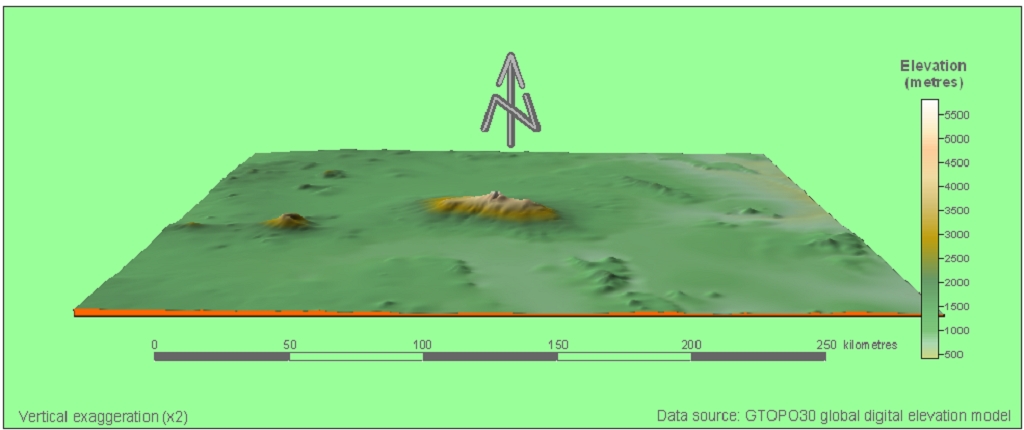
This section demonstrates the isolated regional setting of Mount Kilimanjaro (5895m) and the effect it has on its climate. The mountain is seen in the center of the image with Mount Meru (4566m) some 80 kilometres to the west (left). It is this isolation from other upland areas that gives it the title of the world's highest free-standing mountain. As air masses approach the mountain they will be modified by the surface below. Consequently any winds that are forced up over the mountain will contain charactertistics from the lower elevations. These include warmer temperatures and increased humidity levels. On the other hand, high mountains that are within an extensive upland region are buffered against the modified winds. Not only do they have further to travel over upland regions, (and hence lose their low-elevation characteristics), but also their overall velocity is reduced due to topographic forcing and increased surface friction. |