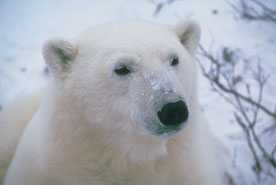
The Polar Bear is the great hunter of seals. The most carnivorous of the bears, it is also the most patient. They will sit near a seal blowhole for hours, waiting, until the animal surfaces. When it does, it is over for the seal. With one powerful blow from a forepaw this will bring a swift meal for the bear and a quicker death for the seal.
The conditions of the north polar are harsh, with temperatures well below freezing almost constantly. In order to survive, the polar bear has to be an expert at surviving, and be able to cope with the grueling conditions of his environment. Like a giant solar panel, the skin of the bear is black to draw every bit of heat from the sunlight. The hairs of the pelt appear to be white, but are translucent and transmit the light down to the skin. Below these hairs are "under hairs" of orange or yellow.
The ears of the Polar Bear are round. They are, small and close to the head. This, with the shape of the animal, help make it a formidable swimmer. The paws are large, and slightly webbed, which contributes to the bear's abilities as a swimmer.
There is a great deal of sexual differences among the bears. The males are large, the heaviest of them weighing as much as 1300 pounds. The females are much smaller the largest of them being about 600 pounds.
The boars (male bears) do not generally hibernate, but remain active for most of the year. The pregnant females are the exception to this, however. They den and hibernate, just like that of the black, brown, and other bears.
Polar Bears are much more aggressive than other bears, even in captivity.