
The Battlefields Route in South Africa is not a journey, it is a rich experience.
If you want to contact The Battlefields Route in South Africa please call us on +27-0720390184 or fax us at +27-0880218838384 [RZA only] or e-mail us on [email protected].
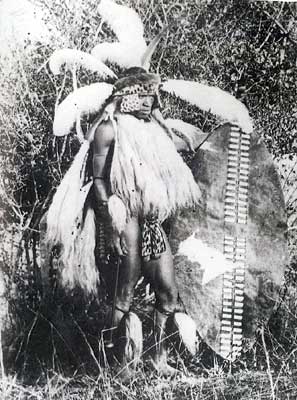
Zululand, ancestral home of the Zulu people and site of many a bloody battle between the British, the Boers and the Zulus during the 19th century, abounds in significant towns, memorials and battle sites that form part of the historic Battlefields Route. This land once encompassed the Zulu kingdom led by legendary Shaka Zulu, and then by his half-brother Dingaan, who clashed with both the English and Afrikaaner settlers in what are today recorded as some of the most important battles in South African history.
Over a period of about 70 years, the plains, rolling hills and river valleys saw numerous brutal, blood-soaked conflicts over land ownership, political independence and the desire for colonial domination. The first major battle, and one of the most terrible, took place in 1838 between the Voortrekkers and the Zulus in what became known as the Battle of Blood River. Then followed the Anglo-Zulu War in 1879 in response to British dissatisfaction regarding the increasing strength of the Zulus, and the battles that took place at Isandlwana Hill and Rorke's Drift are remarkable for their tales of heroism and brutality.
In 1880 and again in 1889, anti-British sentiment among the disgruntled Voortrekkers, as well as a desire for Afrikaaner independence, led to the two Anglo-Boer wars that captured the attention of the world and resulted in heavy loss of life among both the Boers and the British. The devastating siege of Ladysmith and the Battle of Spioenkop are among the most famous battles that took place during the second Anglo-Boer War from 1889 to 1902.
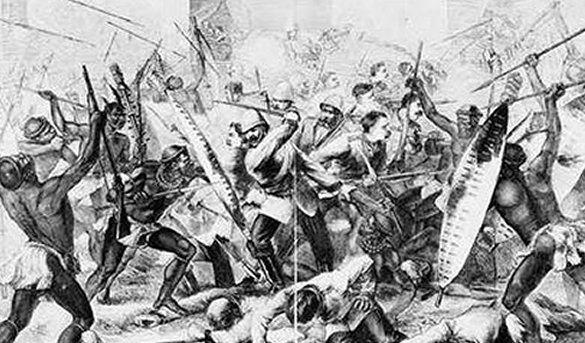
Following the treacherous murder of Piet Retief and his men at the hands of Dingaan, the Zulu chief, the Voortrekkers, led by Andries Pretorius, prepared for battle against the Zulu kingdom on the banks of the Ncome River on 16 December 1838. They formed an impenetrable laager (a defensive camp encircled with their ox-wagons) and fought the 15,000-strong impi attack until the Zulus finally fled, leaving thousands dead and the river red with blood. The violent encounter became known as the Battle of Blood River.
The Blood River/Ncome Heritage Site commemorates this significant battle with monuments and museums to both the Voortrekkers and the Zulus on either side of the river, so giving the visitor a more complete perspective of events. On one side is the Ncome Monument and Museum Complex, dedicated to the fallen Zulu warriors, while the Blood River Monument and Museum is located on the west bank and features a life-size replica of the Boer wagon laager.
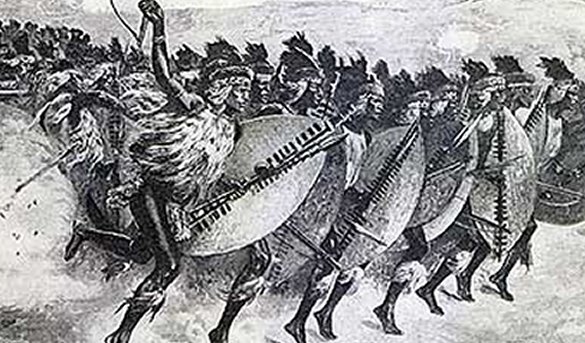
The battle at Isandlwana Hill on 22 January 1879 stunned the British Empire in what was to be the worst defeat in the history of their imperial warfare. The news that an entire battalion of British troops had been wiped out by a 'native' army was unbelievable. The Zulu kingdom, under the leadership of King Cetshwayo, had been gaining strength and was perceived to be a threat to the British colonists, refusing to submit to British rule.
British troops were ordered to invade Zululand, but grossly underestimated the Zulu warriors, and the surprise attack on the British camp on the slopes of Isandlwana Hill left thousands dead. Today the battlefield is dotted with memorials, and mounds of white stones that mark the British mass graves.
During the Anglo-Boer War, Ladysmith was besieged for 118 days, when thousands died, either during battle, or from the lack of food and water. The museum is considered to be one of the best Anglo-Boer War museums in the country, with a collection of artefacts, documents, firearms and uniforms on display, as well as a series of excellent photographs, which vividly tells the story of the siege of Ladysmith that involved numerous battles between the Boer and British forces.
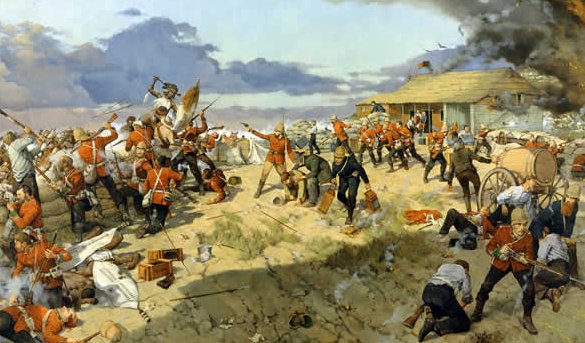
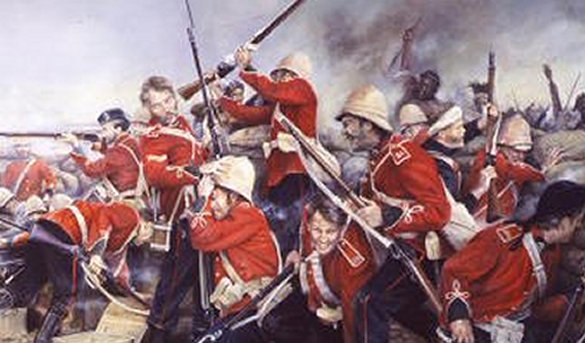
Fought on the same day as the nearby battle at Isandlwana Hill, the Battle of Rorke's Drift is remembered as one of the most famous sieges of the Anglo-Zulu War. Survivors from Isandlwana fled to the Swedish mission station that was used as a British field hospital and storehouse, and sounded the alarm. Inside, the 139 men, many of them seriously ill or wounded, barricaded themselves in and prepared for the onslaught of 4,000 Zulu warriors.
The Battle Museum dramatically tells the tale of the 'Heroic Hundred' who desperately defended the station for 12 hours, until the Zulus finally retreated with a heavy loss of life. Eleven Victoria Crosses were awarded to the defenders, the most ever given at any other battle in British history.
Come for a visit.

| If you want to contact The Battlefields Route in South Africa please call us on +27-0720390184 or fax us at +27-0880218838384 [RZA only] or e-mail us on [email protected]. |
| You could also contact us with snail mail at: PO Box 12216 Die Boord 7613 Stellenbosch South Africa. |
| If you are a SKYPE user and would like to contact us feel free. Click Here! (make a SKYPE call to South African Tours) or Click Here! (Chat via SKYPE with South African Tours for FREE.) |
|
Disclaimer: TravelinSouthAfrica.co.za endeavors to provide accurate, up to date and truthful information on this site, neither TravelinSouthAfrica.co.za nor any of its employees, agents and associates make any representations or give any warranties, whether expressly or implied, as to the operation of the site, the information, content, materials and products included and available from this site. Whilst the utmost care has been taken in the compilation of this work, TravelinSouthAfrica.co.za, the authors, editors, publishers and system administrators take no responsibility for any loss or damage suffered by any person as a result of the reliance upon the information contained therein. |
| Copyright
- TravelinSouthAfrica.co.za All rights reserved. E-mail: [email protected] Afrihost.com - Click here to get the Best Web Hosting Ever! |
|
Copyright © 2000 -
2008 by [Webcraft.ws]. All
rights reserved. |
|
This website is maintained by Webcraft.ws South Africa |