
|
and 180,000 Asian troops who fought with the Allies were captured. Included were over 50,000 British and 20,000 Australians. There was too little food and two few medicines. POW's died in great numbers. Sick POW's, unable to work, were fed less by the Japanese, As the winds of war turned against the Japanese in Sandakan rations for the POW's were cut, although they held large stockpiles of food. Fearing an Allied invasion the Japanese in early 1945 decided to march groups of Sandakan prisoners away to the west coast. The 260 kilometer route was along a recently cut foot track, first through swampy terrain and then into the mountains. The appalling terrain, wretched mud and lack of food further weakened the already exhausted and malnourished men. The Japanese would not care for the sick. If prisoners could not do the job they were routinely bayoneted by guards and their bodies left by the track. The ratio of soldiers to men was high. All but two escape bids ended in death. |
||
|
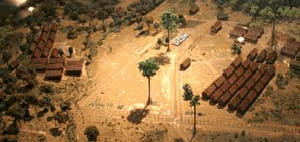
Model of Sandakan P.O.W. Death Camp. |
||
|
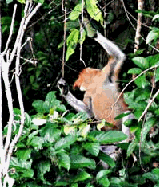
Proboscis monkey. |
||