|
was dredged for the construction of the Bali Hai Hotel.
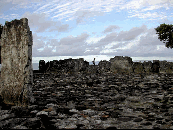
Some 98 maraes have been found on Huahini. The ancient population was divided into ten districts with a centralized government --- a fact unique in Tahiti Polynesia. We peddled along Lac Maeva, an enclosed lagoon in whose protected waters the war canoes must at one time have been drawn up. This area of ancient maraes is one of the five most important archeological areas in Oceania, along with those on Easter Island, Tongatapu, Pohnpei, and Kosrae. We came to a complex of large stone platforms, measuring about 100 feet on their seaward side. Most jutted some 20-30 or so feet into the shallow lagoon leaving a narrow beach between them. Each was surmounted by a long raised platform constructed of huge flat slabs of coral, upended around the perimeter, the space between filled with coral rubble. These ahu are seats for the gods. We could only wonder at the sacrifices carried out here, some of them human, dedicated to the murderous God of War, Oro. We gathered that it was from Maeva marae, with all due ceremony, that expeditions set off in large canoes with up to 100 brave souls, to sail across open seas to adjacent islands with friendly alliances.
In the gathering dusk we climbed Matairea hill behind the lagoon-side maraes. There we found a large stone platform, defensive walls and other signs of early settlement. We also discovered a very important star-sighting stone not mentioned in any of the guides we had read. The stone stood about three-foot high and had a heavy notch cut in it. Just six feet beyond stood another smaller straight stone post, set for aligning the two. As far as we could determine without a compass, the sighting stone pointed almost due north.
I could well imagine the young men squatting on the basalt platform listening to an older navigator as he pointed out each star as it rose, recounted the constellations, and tutored nascent navigators on the location of Hawaii two thousand miles to the north. He would explain how to find the islands in between that might be used for reprovisioning along the way, by memorizing which star, at which time of night, during what season, would be found directly over that island.
Raiatea & Tahaa
Raiatea and Tahaa, is 20 miles from Huahini. Lovely Huahini, faded behind us while cloud-wreathed Raiatea, traditionally known as the sacred Havai'i, home of the Maohi people, began to reveal her detail. The 772-meter mountain, Temehani, remained cloaked. This mountain is linked spiritually to New Zealand. Legend says the souls of the dead must return to sacred Temehani. From New Zealand's North Cape the souls of the dead Maori are said to depart for Havaiki.
Raiatea's first king was Hiro who lived at Opoa. His Tamatoa dynasty reputedly continued on for 30 generations. Tradition says that Hiro and his associates built a great canoe and sailed away to Rarotonga and New Zealand, leaving two of his sons behind. One son became King of Raiatea, the other King of Bora Bora.
We entered Iriru Pass between two motus. Charter boats, from the five bare-boat outfits here, skimmed across the sheltered waters. We headed southeast to Hotopuu Bay. We cycled to the ruins of the great Marae of Taputapuatea, where King Tamatoa, resplendant in his red feather maro
|
|