Sphinx of Chios
PROLOGUE
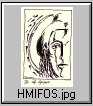
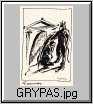
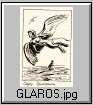
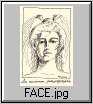
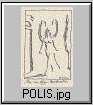
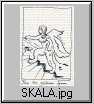
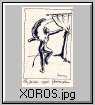
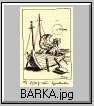
......................................................................................................... It's always a difficult effort for someone who has long studied Chios emblem - the Sphinx - under strict scientific researches, to examine and approach the same subject looking through artist's spirit and eyes, the special gaze, which suggests a totally different aspect. ohe intimacy though, that the long-term occupation has brought and the fascination of Sphinx figure, has been the challenge for me to form this note. The Sphinx has a long term and close relation with Chios Island. As emblem of the ancient state of Chios, has been depicted for over nine hundred years on the main side of Chian species, on the public stamps, and in any case that the state authority should be declared. It was the symbol of the protector-guardian of the island and it seems that has been connected to the island's old settlement myths. Sphinx figure was preserved through the Middle Ages and was revived during the early 19th century when we find its familiar shape again as the symbol of recent Chios, in a great number of representations. It has always been the inspiration for the island artists, many of which have depicted the Sphinx under their own outlook. In the file of 44 designs, titled "Sphinx's Enigma", by Charalabos Kiliaris, the Sphinx has been presented as the protector and the guardian of the island, as well as a familiar being of everyday life, always participating to the grieves and the joys of the place. All these, given in a large alternation of images, with expressiveness, strength and variety through the series of drawings, accompanied by epigrammatic comments. Sovereigns the model of the winged feminine figure with a lions body, just as it was represented in ancient Chian species: leaning on the amphora protecting the wine, the main exported product of the island. In the above drawings of the Sphinx mode, the entirely indispensable elements have been used only, as well as a plain indication of the landscape. The Sphinx always wakeful for the island, sings, dines, recalls, rests, behaves with pride, yet playful goes up on the roofs and steals mastic. There we see the Sphinx with its body in standing position, thus as its lion-form feet transforms to human, allowing her to walk in the city, climb stairs, wander into the fields, collect flowers, to perform dances. Elsewhere the Sphinx's winged- form dominates: flying to the skies patrols seas and imitates the fowls. When the human substance is suggested, we see the Sphinx dressed in a long tunic or naked, searching water, suffering in bonds, falling in love, mediating, worshiping under the form of an angel, a saint. While the Sphinx is usually represented alone in most of the drawings, there are some in which another figure has been added. As a fierce evil spirit, always subjecting the Sphinx in martyrdom and inflicting penitence. As a griffin, struggles with the Sphinx, shooting her with bow and arrow, yet as an idol gets terrorized and annoyed by her. in this way among the thousands of sphinx images, which have been presented through the centuries, from the antiquity to our days, aspiring to underline her relation with the island, the original inspired file of drawings by Charalabos Kiliaris is added. Successfully offering a different aspect of her character, proving that Sphinx's figure, always beloved by Chians, still inspires, enchants, and remains for ever alive. Chios July 1998 DKr. Athena Zaxarou - Loutraris |