|
The Widow Spider
|
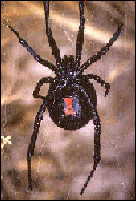
The widow spiders, genus Latrodectus, are among the most recognized spiders on earth; they are the largest of the cobweb weavers, family Theridiidae, and all species are poisonous. The term widow spider originated from the idea that the females devour the males after, or during, mating. This mate devouring behavior is somewhat a myth; while it may
occur in captive situations, where the male cannot escape; it is uncommon in the field. There are five species in the United States, one in southern Europe, and additional species in Australia, the Near East, and South America. Widow spiders build strong, sloppy webs, in which the females usually remain, hanging upside down most of the time. Female widow spiders are bulbous and shiny in appearance, and may have bodies 12-16 mm long. Males are much smaller than the females, with longer legs; they are so different in appearance than females, that they are rarely recognized as widow spiders by the layperson; males are not considered a threat to humans, although they do possess venom and can bite. Juvenile widow spiders are usually light colored, and darken to their adult coloration gradually, with each successive molt of their exoskeleton. |