Artists of the Belle Epoque
Otto Wagner (1841-1918)
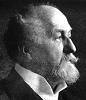 Austrian architect and teacher,
generally held to be a founder and leader of the modern movement
in European architecture. From 1857 to 1860, he studied at the
Vienna National Technical School, from 1860 to 1861 at the Royal
Construction Academy in Berlin and, from 1861 to 1863, he
attended the Architecture School of the Vienna Academy where he
himself was professor from 1904 to 1912.
Austrian architect and teacher,
generally held to be a founder and leader of the modern movement
in European architecture. From 1857 to 1860, he studied at the
Vienna National Technical School, from 1860 to 1861 at the Royal
Construction Academy in Berlin and, from 1861 to 1863, he
attended the Architecture School of the Vienna Academy where he
himself was professor from 1904 to 1912.
Wagner's early work was in the already-established
Neo-Renaissance style. In 1893 Wagner broke with tradition by
insisting on function, material, and structure as the bases of
architectural design.
Among his notable works in the Art Nouveau style are a number of
stations for the elevated and underground City Railway of Vienna
(1894-1901) and the Postal Savings Bank (1904-06). The latter,
which had little decoration, is recognized as a milestone in the
history of modern architecture, particularly for the curving
glass roof of its central hall.
Wagner had a great importance and influence on the development of
construction around the turn of the century towards modern
architecture. His students, amongst them Joseph Maria Olbrich and Josef
Hoffmann and also Josef Plecnik
continued to develop his ideas. Besides his
activities as an architect, especially at the time when he was
member of the Vienna Sezession which he left with the Gustav Klimt group, Wagner also designed for the
decorative arts.
Josef Hoffmann (1870-1956)
 Architect and artisan, born in
Pirnitz/Moravia, studied at the Staatsgewerbeschule (National
Artisan School) in Br�nn, then at the Academy of Fine Arts
in Vienna in the lessons of Otto Wagner and
others after a period of practical training in the military
building authorities in W�rzburg. After the third formation
period, he won the Prix de Rome and spent a year in Italy. After
his return to Vienna, he worked in the Wagner studio. Hoffmann
was a cofounder of the Vienna Sezession. When he was 29 years
old, he became professor at the Kunstgewerbeschule (Arts and
Crafts School) in Vienna. In 1903, he founded the Wiener
Werkst�tte (Vienna Crafts Studio) which he directed until
1931. His first buildings were, in 1902/03, Haus Henneberg, Haus
Moll, Haus Moser and Haus Spitzer, in 1904 to 1906 the Sanatorium
Purkersdorf in collaboration with the Wiener Werkst�tte,
followed by numerous important orders. Being the spiritus rector
of the Wiener Werkst�tte, he participated on all its
expositions and was member or corresponding member of nearly all
artists associations of his time. Since he lived his idea of the
Gesamtkunstwerk (total art work), he created in each branch of
the applied arts like e. g. furniture, metal works, jewels,
leather, glassware, textiles, ceramics, floor coverings. Hoffmann
influenced the development of applied arts in a decisive and
lasting way.
Architect and artisan, born in
Pirnitz/Moravia, studied at the Staatsgewerbeschule (National
Artisan School) in Br�nn, then at the Academy of Fine Arts
in Vienna in the lessons of Otto Wagner and
others after a period of practical training in the military
building authorities in W�rzburg. After the third formation
period, he won the Prix de Rome and spent a year in Italy. After
his return to Vienna, he worked in the Wagner studio. Hoffmann
was a cofounder of the Vienna Sezession. When he was 29 years
old, he became professor at the Kunstgewerbeschule (Arts and
Crafts School) in Vienna. In 1903, he founded the Wiener
Werkst�tte (Vienna Crafts Studio) which he directed until
1931. His first buildings were, in 1902/03, Haus Henneberg, Haus
Moll, Haus Moser and Haus Spitzer, in 1904 to 1906 the Sanatorium
Purkersdorf in collaboration with the Wiener Werkst�tte,
followed by numerous important orders. Being the spiritus rector
of the Wiener Werkst�tte, he participated on all its
expositions and was member or corresponding member of nearly all
artists associations of his time. Since he lived his idea of the
Gesamtkunstwerk (total art work), he created in each branch of
the applied arts like e. g. furniture, metal works, jewels,
leather, glassware, textiles, ceramics, floor coverings. Hoffmann
influenced the development of applied arts in a decisive and
lasting way.
Charles Rennie Mackintosh (1868-1928)
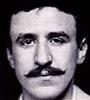 Glaswegian architect and
designer who was prominent in the Arts and Crafts Movement in
Great Britain. He was apprenticed to a local architect, John
Hutchinson, and attended evening classes at the Glasgow School of
Art. In 1889 he joined the firm of Honeyman and Keppie, becoming
a partner in 1904. In collaboration with three other students,
one of whom, Margaret Macdonald, became his wife in 1900,
Mackintosh achieved an international reputation in the 1890s as a
designer of unorthodox posters, craftwork, and furniture. In
contrast to contemporary fashion his work was light, elegant, and
original, as exemplified by four remarkable tearooms he designed
in Glasgow (1896-1904) and other domestic interiors of the early
1900s.
Glaswegian architect and
designer who was prominent in the Arts and Crafts Movement in
Great Britain. He was apprenticed to a local architect, John
Hutchinson, and attended evening classes at the Glasgow School of
Art. In 1889 he joined the firm of Honeyman and Keppie, becoming
a partner in 1904. In collaboration with three other students,
one of whom, Margaret Macdonald, became his wife in 1900,
Mackintosh achieved an international reputation in the 1890s as a
designer of unorthodox posters, craftwork, and furniture. In
contrast to contemporary fashion his work was light, elegant, and
original, as exemplified by four remarkable tearooms he designed
in Glasgow (1896-1904) and other domestic interiors of the early
1900s.
Mackintosh's chief architectural projects were the Glasgow School
of Art (1896-1909), considered the first original example of Art
Nouveau architecture in Great Britain; two unrealized projects:
the 1901 International exhibition, Glasgow (1898), and "Haus
eines Kunstfreundes" (1901); Windyhill, Kilmacolm (1899-1901),
and Hill House, Helensburgh (1902); the Willow Tea Rooms, Glasgow
(1904); and Scotland Street School (1904-06). Although all have
some traditional characteristics, they reveal a mind of
exceptional inventiveness and aesthetic perception. By 1914 he
had virtually ceased to practice and thereafter devoted himself
to watercolour painting.
Joseph Maria Olbrich (1867-1908)
 German architect who was a cofounder of
the Vienna Sezession, the Austrian manifestation of the Art
Nouveau movement. Olbrich was a student of Otto
Wagner, one of the founders of the modern architecture
movement in Europe.
German architect who was a cofounder of
the Vienna Sezession, the Austrian manifestation of the Art
Nouveau movement. Olbrich was a student of Otto
Wagner, one of the founders of the modern architecture
movement in Europe.
Olbrich designed the building in Vienna to house the exhibitions
of the Sezession (1898-99). It has a blocklike simplicity, but
floral Art Nouveau decoration was used on the metal cupola. In
1899 Olbrich was invited to join the artists' colony at Darmstadt
established by Grand Duke Ernest Louis. He designed six of the
houses there, as well as a central hall for meetings and studios,
which shows the influence of the Scottish architect Charles Rennie Mackintosh. He also designed the
Hochzeitsturm (1907; Marriage Tower) at Darmstadt, which had
rounded, fingerlike projections on its roof suggestive of Art
Nouveau but also had bands of windows denoting a distinctly
modern trend. In 1907, Olbrich was cofounder of the Deutscher
Werkbund (German Craftsmen Association) in Munich.
Among Olbrich's last works were a house at Cologne-Marienburg
(1908-09) and the department store Tietz in D�sseldorf
(designed in 1906 and completed after his death; today
Kaufhof).
Josef Plecnik (1872-1951)
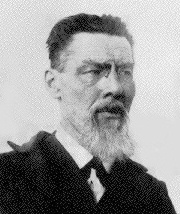 Slovenian architect and mystique,
student of Otto
Wagner, a priest-leader of the modern movement
in Slovenian and Croatian architecture.
Besides the extraordinary high quality of his work Plecnik has also been attributed abroad with a high degree of originality and innovation in the use of historical, regional and even local features, rounding each in new authentic collection containing a multitude of items, from fine details, monuments and architectural motifs to large urban features.
Among his notable works in his own style are Sacher Haus in Vienna, project Hradcani in Praha, latter variaty of different compositions in
architecture and in art and sacral-art.
A milestone in the history of modern architecture, particularly for Slovenia peasant country, Plecnik had a great importance and influence on the development of his own decorative arts, also influenced by ancient Sumerian, Acadian and Egyptian art.
Slovenian architect and mystique,
student of Otto
Wagner, a priest-leader of the modern movement
in Slovenian and Croatian architecture.
Besides the extraordinary high quality of his work Plecnik has also been attributed abroad with a high degree of originality and innovation in the use of historical, regional and even local features, rounding each in new authentic collection containing a multitude of items, from fine details, monuments and architectural motifs to large urban features.
Among his notable works in his own style are Sacher Haus in Vienna, project Hradcani in Praha, latter variaty of different compositions in
architecture and in art and sacral-art.
A milestone in the history of modern architecture, particularly for Slovenia peasant country, Plecnik had a great importance and influence on the development of his own decorative arts, also influenced by ancient Sumerian, Acadian and Egyptian art.
Antoni Gaudi (1852-1926)
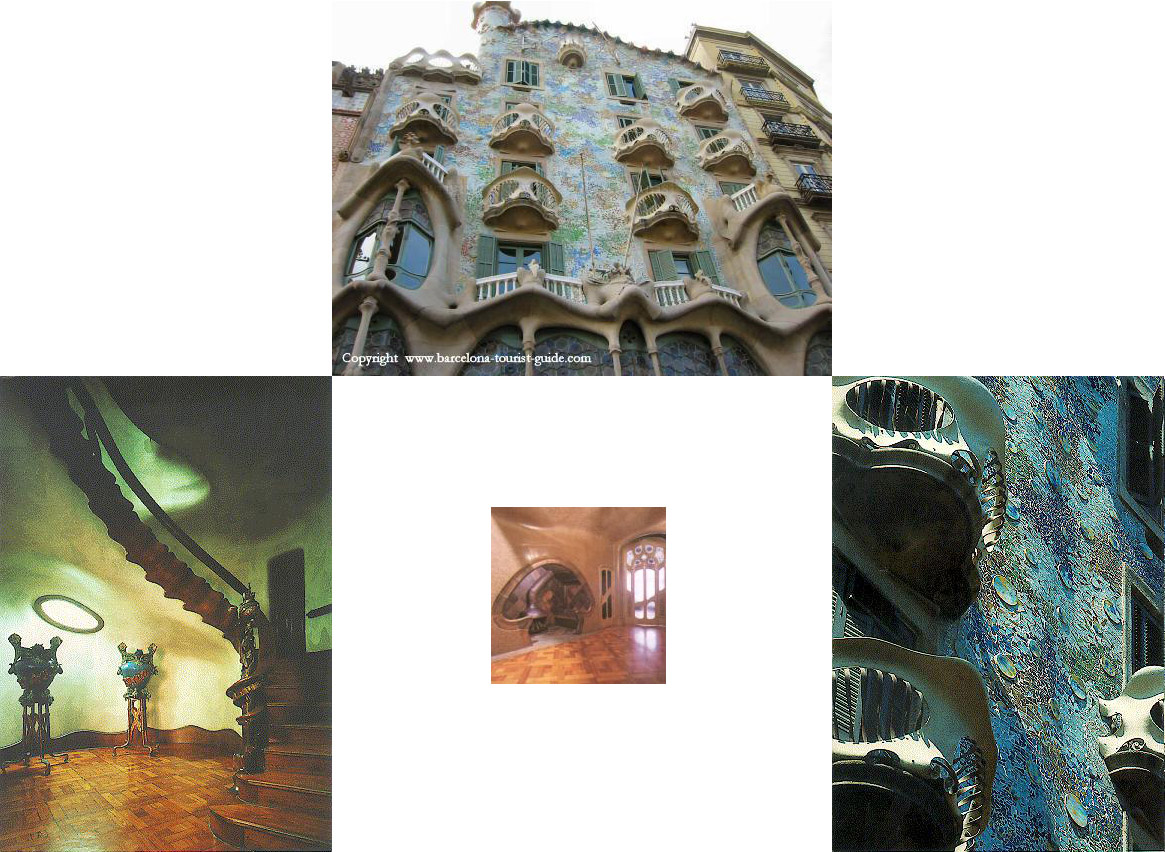
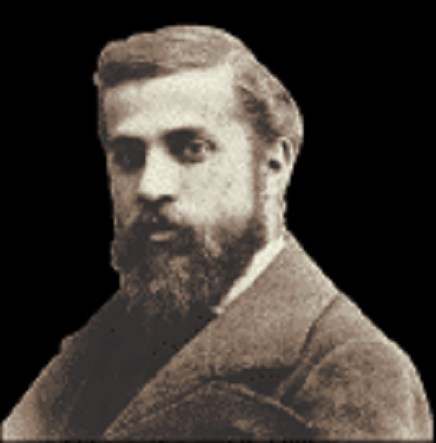 the major influences of Gaudi's work were mauresque, oriental and gothic architecture, all of them traditional Catalonian styles. Although he did not travel around Europe he was aquantanced with French avantgarde movements because of the tight relationships between Barcelona and France.
Count Gu�ll, who travelled a lot in Europe made Gaudi read Viollet-le-Duc's book "Entretients sur l'architecture" which influenced him quite a lot.
Art Nouveau is the movement that influenced Gaudi the most, stimulating him to experiment with new materials and new shapes, thereby helping him to give up imitating historical styles and find his own way.
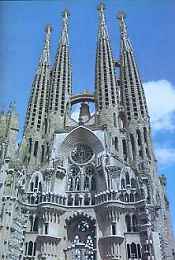
At the end of his life, Gaudi reached through his work a high state of personality and he became more and more isolated, building the work of his life: the "Sagrada Familia". When he was ran over by a trolleybus, nobody recognized this tramp, so no one took care. He died few weeks after the accident in the hospital where he was driven too late.
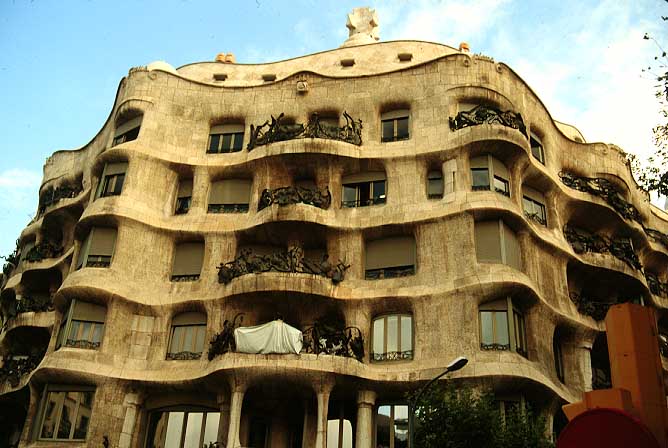
One could caracterize his work by an oriental, mauresc and gothic influence, an effort in plan design, a renewal in structure design, an overwhelming inspiration of organic nature (animals and plants).
For instance, see the tree-columns of House Calvet or Crypte Gu�ll: Gaudi was inspired by the natural tight relationship between shape and structure, decoration and function. See also the highly resistant shell structures.
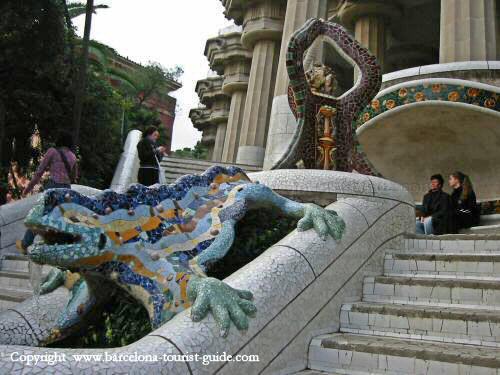
The use of parabolic arch is a result of an efficiency structure research with models. The enhancement of gothic columns to in leaned, self carrying columns avoiding flying buttresses. The materials used by Gaudi ranged from stone, ceramics and tiles to wrought iron, glass and bricks. He invented solutions that proves his genius like for the snaked bench in Gu�ll Park. He used broken tiles for technical and financial reasons: square tiles could not match such a wavy shape and square tiles would have cost to much. It was cheaper to use broken tiles from the ceramics fabrics. The result is an absolute marvel.
Main buildings in Barcelona: Casa Battlo, Sagrada Familia, La Pedrera, Gu�ll park.
His work has been forgotten till the fifties. Most of Gaudi's works are still uncompleted because of their costs. The Sagrada Familia is still under construction. Gaudi left a work that could not let unconcerned.
the major influences of Gaudi's work were mauresque, oriental and gothic architecture, all of them traditional Catalonian styles. Although he did not travel around Europe he was aquantanced with French avantgarde movements because of the tight relationships between Barcelona and France.
Count Gu�ll, who travelled a lot in Europe made Gaudi read Viollet-le-Duc's book "Entretients sur l'architecture" which influenced him quite a lot.
Art Nouveau is the movement that influenced Gaudi the most, stimulating him to experiment with new materials and new shapes, thereby helping him to give up imitating historical styles and find his own way.
At the end of his life, Gaudi reached through his work a high state of personality and he became more and more isolated, building the work of his life: the "Sagrada Familia". When he was ran over by a trolleybus, nobody recognized this tramp, so no one took care. He died few weeks after the accident in the hospital where he was driven too late.
One could caracterize his work by an oriental, mauresc and gothic influence, an effort in plan design, a renewal in structure design, an overwhelming inspiration of organic nature (animals and plants).
For instance, see the tree-columns of House Calvet or Crypte Gu�ll: Gaudi was inspired by the natural tight relationship between shape and structure, decoration and function. See also the highly resistant shell structures.
The use of parabolic arch is a result of an efficiency structure research with models. The enhancement of gothic columns to in leaned, self carrying columns avoiding flying buttresses. The materials used by Gaudi ranged from stone, ceramics and tiles to wrought iron, glass and bricks. He invented solutions that proves his genius like for the snaked bench in Gu�ll Park. He used broken tiles for technical and financial reasons: square tiles could not match such a wavy shape and square tiles would have cost to much. It was cheaper to use broken tiles from the ceramics fabrics. The result is an absolute marvel.
Main buildings in Barcelona: Casa Battlo, Sagrada Familia, La Pedrera, Gu�ll park.
His work has been forgotten till the fifties. Most of Gaudi's works are still uncompleted because of their costs. The Sagrada Familia is still under construction. Gaudi left a work that could not let unconcerned.
Henry van de Velde (1863-1957)
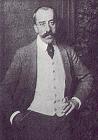 Belgian architect and teacher who
ranks with his compatriot Victor Horta as an
originator of the Art Nouveau style, characterized by long
sinuous lines derived from naturalistic forms. By designing
furniture and interiors for the Paris art galleries of Samuel
Bing in 1896, van de Velde was responsible for bringing the Art
Nouveau style to Paris. But he was interested not so much in the
style as in the philosophy of William Morris and the Arts and
Crafts movement in England. Van de Velde's most vital
contributions to modern design were made as a teacher in Germany,
where his name became known through the exhibition of furnished
interiors at Dresden in 1897.
Belgian architect and teacher who
ranks with his compatriot Victor Horta as an
originator of the Art Nouveau style, characterized by long
sinuous lines derived from naturalistic forms. By designing
furniture and interiors for the Paris art galleries of Samuel
Bing in 1896, van de Velde was responsible for bringing the Art
Nouveau style to Paris. But he was interested not so much in the
style as in the philosophy of William Morris and the Arts and
Crafts movement in England. Van de Velde's most vital
contributions to modern design were made as a teacher in Germany,
where his name became known through the exhibition of furnished
interiors at Dresden in 1897.
In 1902 he went to Weimar as artistic adviser to the grand duke
of Saxe-Weimar. There he reorganized the Kunstgewerbeschule (Arts
and Crafts School) and the academy of fine art and thus laid the
foundations for Walter Gropius' amalgamation of the two bodies
into the Bauhaus in 1919. Like the progressive German designers
at the time, van de Velde was connected with the Deutscher
Werkbund (German Craftsmen Association), and he designed the
theatre for the Werkbund Exposition in Cologne in 1914. More of
his most important works are his own house in Uccle near Brussels
(1895), the interior of the Folkwang Museum in D-Hagen (1900-02),
the Library of the Ghent University (1935-40) and the
Kr�ller-M�ller Museum in B-Otterloo (1936-54).
Gustav Klimt (1862-1918)
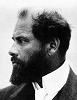 At the age of 14 years already, Klimt,
born in Vienna, went to the Kunstgewerbeschule (Arts and Crafts
School). In 1893, he founded a studio community with his brother
Ernst and his fellow student Franz Matsch. His first important
order was the decoration of the staircase in the new Burgtheater
(Royal Theatre) in 1888. Klimt starts to leave the academic
painting style, and his last important order of that time, the
ceiling frescos of the three secular faculties of the Vienna
university, causes a scandal. Gustav Klimt, by his painting
style, the tension between rough and supple, between hard and
soft shapes, becomes the pioneer of the modern age. In 1897, he
is cofounder of the Vienna Sezession and its first president.
Until his leaving in 1905, he determinates the artistic
development in a decisive manner. He enters the Wiener
Werkst�tte (Vienna Crafts Studio) where the artists follow
his style for many years: The stylization of natural shapes,
mosaics paint by templates, gold and other reflecting colours. He
meets the architect Josef Hoffmann in a
congenial way by building the Stoclet Palace (Brussels) where he
succeeds to create a masterpiece of human figuration in
decorating the dining room with his mosaics. Amongst his most
famous art works are the Beethoven frieze (1902), Judith
(1905-08) and The Kiss (1908).
At the age of 14 years already, Klimt,
born in Vienna, went to the Kunstgewerbeschule (Arts and Crafts
School). In 1893, he founded a studio community with his brother
Ernst and his fellow student Franz Matsch. His first important
order was the decoration of the staircase in the new Burgtheater
(Royal Theatre) in 1888. Klimt starts to leave the academic
painting style, and his last important order of that time, the
ceiling frescos of the three secular faculties of the Vienna
university, causes a scandal. Gustav Klimt, by his painting
style, the tension between rough and supple, between hard and
soft shapes, becomes the pioneer of the modern age. In 1897, he
is cofounder of the Vienna Sezession and its first president.
Until his leaving in 1905, he determinates the artistic
development in a decisive manner. He enters the Wiener
Werkst�tte (Vienna Crafts Studio) where the artists follow
his style for many years: The stylization of natural shapes,
mosaics paint by templates, gold and other reflecting colours. He
meets the architect Josef Hoffmann in a
congenial way by building the Stoclet Palace (Brussels) where he
succeeds to create a masterpiece of human figuration in
decorating the dining room with his mosaics. Amongst his most
famous art works are the Beethoven frieze (1902), Judith
(1905-08) and The Kiss (1908).
Max Hegele (1873-1945)
Born in Vienna, he studied, from 1893 to 1896, at the Academy
of Fine Arts in Vienna under professors Hasenauer and Luntz;
afterwards, he got a scholarship to spend in Italy until 1897.
From 1908 to 1937, besides an interruption during the war, he was
professor at the Federal Technical Research and Teaching
Institute in Vienna. Amongst other works, there are the staircase
Fillgraderstiege (1905-07) in Vienna, the church of Pressbaum
(1906-08) and the decoration of the bridge Aspernbr�cke in
Vienna (1912/13, but never completed because of the war). His
masterpiece, however, were the buildings, especially the church
of Saint Charles Borromew, at the Central Cemetary of Vienna.
Max Fabiani (1865-1962)
Born in Croatia, he was architect and student under Otto Wagner; in Vienna, he built besides others the
business house Portois & Fix (1897-1900), the Artaria House
(1901/02) and the Urania (1909/10). He participated in the
construction of the graceful pavilions for the underground
station on the Karlsplatz and designed the plan for the Gutenberg
monument at the Lugeck (1904).