
Musical Instruments | Updates | Cairo Opera House | Links
| |
Home | Composers Index
| Musical Epochs
| Musical Forms | Contact Musical Instruments | Updates | Cairo Opera House | Links |
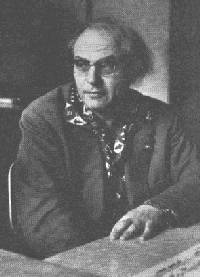 |
He studied at the Paris Conservatoire (1919-30) with Dukas, Emmanuel and Dupr�, and taught there (1941-78) while also serving as organist of La Trinit� in Paris. Right from his first published work, the eight Preludes for piano (1929), he was using his own modal system, with its strong flavouring of tritones, diminished 7ths and augmented triads. During the 1930s he added a taste for rhythmic irregularity and for the rapid changing of intense colours, in both orchestral and organ works. Most of his compositions were explicitly religious and divided between characteristic styles of extremely slow meditation, bounding dance and the objective unfolding of arithmetical systems. They include the orchestral L'ascension (1933), the organ cycles La nativit� du Seigneur (1935) and Les corps glorieux (1939), the song cycles Po�mes pour Mi (1936) and Chants de terre et de ciel (1938), and the culminating work of this period, the Quatuor pour la fin du temps for clarinet, violin, cello and piano (1941).
During the war he found himself surrounded by an eager group of students, including Boulez and Yvonne Loriod, who eventually became his second wife. For her pianistic brilliance he conceived the Visions de l'amen (1943, with a second piano part for himself) and the Vingt regards sur l'enfant J�sus (1944), followed by an exuberant triptych on the theme of erotic love: the song cycle Harawi (1945), the Turangal�la -symphonie with solo piano and ondes martenot (1948) and the Cinq rechants for small chorus (1949). Meanwhile the serial adventures of Boulez and others were also making a mark, and Messiaen produced his most abstract, atonal and irregular music in the Quatre �tudes de rythme for piano (1949) and the Livre d'orgue (1951).
His next works were based largely on his own adaptations of birdsongs: they include R�veil des oiseaux for piano and orchestra (1953), Oiseaux exotiques for piano, wind and percussion (1956), the immense Catalogue d'oiseaux for solo piano (1958) and the orchestral Chronochromie (1960). In these, and in his Japanese postcards Sept ha�ka� for piano and small orchestra (1962), he continued to follow his junior contemporaries, but then returned to religious subjects in works that bring together all aspects of his music. These include another small-scale piano concerto, Couleurs de la cit� c�leste (1963), and the monumental Et exspecto resurrectionem mortuorum for wind and percussion (1964). Thereafter he devoted himself to a sequence of works on the largest scale: the choral-orchestral La Transfiguration (1969), the organ volumes M�ditations sur le myst�re de la Sainte Trinit� (1969), the 12-movement piano concerto Des canyons aux �toiles... (1974) and the opera Saint Fran�ois d'Assise (1983).