
Musical Instruments | Updates | Cairo Opera House | Links
| |
Home | Composers Index
| Musical Epochs
| Musical Forms | Contact Musical Instruments | Updates | Cairo Opera House | Links |
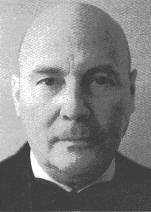 |
He studied at a music school in Brunswick and, after war service, with Fortner at the Institute for Church Music in Heidelberg (1946-8). At first he composed in a Stravinskian neo-classical style (First Symphony, 1947), but lessons with Leibowitz in 1947-8 encouraged his adoption of 12-note serialism. Unlike such contemporaries as Stockhausen, however, he held his music open to a wide range of materials. Occasionally he made his obeisance to Darmstadt (Second Quartet, 1952), but his large, varied output of this period also shows the continuing importance to him of neo-classicism, Sch�nbergian or Bergian expressionism and jazz. Nor was he dismissive of old forms or, in particular, the theatre: he conducted the Wiesbaden ballet (1950-53) and composed ballets (Jack Pudding, 1951; Labyrinth, 1951) and operas (Boulevard Solitude, 1952).
In 1953 he moved to Italy, where his music became more expansive, sensuous and lyrical and he concentrated on a sequence of operas (K�nig Hirsch, 1956; Elegy for Young Lovers, 1961) and cantatas (Kammermusik, 1958; Cantata della fiaba estrema, 1963). The climax to this period came with a rich and elaborate but also dynamic treatment of The Bacchae in the opera The Bassarids (1966), followed by a period of self-searching; that was externalized in the Second Piano Concerto (1967) and eventually gave rise to an outspoken commitment to revolutionary socialism. Henze visited Cuba (1969-70), where he conducted the first performance of his Sixth Symphony, incorporating the tunes of revolutionary songs. He also developed a bold, poster style in music-theatre works (El Cimarr�n, 1970), leading to his dramatization of class conflict in the opera We Come to the River (1976).
But he was also continuing his exploration of an expressionist orchestral sumptuousness in such works as Heliogabalus imperator (1972) and Tristan (1974), and an enjoyment in reinterpreting old musical models (Aria de la fol�a espa�ola for chamber orchestra, 1977). Later works, including the opera The English Cat (1983) and the Seventh Symphony (1984), continue his highly personal synthesis of past and present, lyricism and rigour.