
Musical Instruments | Updates | Cairo Opera House | Links
| |
Home | Composers Index
| Musical Epochs
| Musical Forms | Contact Musical Instruments | Updates | Cairo Opera House | Links |
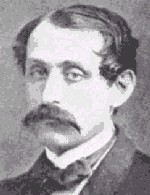 |
Gottschalk was born in New Orleans in 1829 in a house that still stands at the southwest corner of Esplanade and Royal streets. From early in his childhood, he was exposed to the French and African-tinged Caribbean folk music that characterized the music of the Creoles. It was this bombastic music that left the deepest impression on Gottschalk, later permeating his works and eventually spurring him on to international fame.
The musical climate of New Orleans in the 1830s is revealed in the childhood of Gottschalk. Creoles made up about 50 percent of the city at that time, with the majority of the population residing in what was called Old New Orleans, east of Canal. Gottschalk, too, was of Creole descent and was raised primarily by his grandmother and his African-American nurse, both natives of the island of Saint-Dominique. Certainly Creole melodies were a natural part of the Gottschalk household.
In Gottschalk�s 1958 biography, Vernon Loggins, paints a far more romantic picture of the inspiration behind the Creole melodies of Gottschalk�s music. Loggins gives a vivid description of the three story, vine-covered home on Rampart where the Gottschalks resided from 1831-1833. Loggins claims that young Gottschalk would stand on the third floor gallery and listen to the sounds of the street floating on the sultry city breeze. Music filled the streets of New Orleans then, as it still does today, and flowed among the houses which remained open to the street most of the year.
One particularly popular spot for song and dance was Congo Square; well-known to have been the location of Sunday afternoon public dances in the early nineteenth century. Loggins describes the scene: "Always at that hour (Gottschalk) was up on the third-floor gallery listening for the first sound of the drums. As soon as the beats fell into a steady rhythm he began to march. Louder and faster the beats grew, and the boy�s march turned into a dance. . . As the hundreds of (dancers) sang, the dancing boy sang too. Over and over he would repeat the melody, until his mother would come, pick him up, carry him into the nursery, and lay him on his bed. In an instant he would be sound asleep".
Gottschalk was a prodigy at the piano. As a young boy he easily picked up tunes of the many popular French operas premiering in New Orleans and created variations on the well-known arias and themes. Even before his first public performing debut, Gottschalk was in demand as a recitalist in the swanky salons of wealthy New Orleanians. Upon the urging of Felix Miolan, concertmaster of the Theatre d�Orleans, Gottschalk made a less than formal performance debut at the new St. Charles Hotel in 1840. He was identified on the program as "young X, a Creole", but was an instant hit with the audience, performing a series of variations on a popular spicy Latin dance tune.
He quickly learned all that local musicians had to teach and, at the age of 13, left to study piano and composition in Paris. His virtuosic playing and Creole-inspired compositions gained him immediate fame throughout Europe, with a wide-variety of audiences clamoring to see this handsome, young virtuoso with the splendidly outlandish origins.
In 1853, Gottschalk returned to the United States, much to the delight of the young girls who frequented his concerts. He never married, preferring instead to travel the United States and Europe and to trace his Creole history back to the Caribbean region as well as Cuba and South America. Some controversy surrounds the actual cause of his death in 1869, but this extensive touring was certainly a factor.
Gottschalk never returned to his hometown New Orleans for more than a couple weeks at a time following his departure in 1841, nor did he ever settle in the United States. However, Gottschalk was always hailed as an American celebrity and he always considered New Orleans his home. The city, after all, had left the mark on him that he would eventually leave on the musical world.