|
Beauty draws us with a single hair. Alexander Pope |
Treatment for hair loss
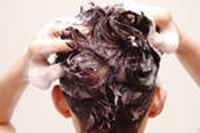
Hair loss: treatment and medicationOne of the primary cause of hair loss is a high amount of the male hormone, dihydrotestosterone (DHT) within the hair follicle. DHT is produced from testosterone in the prostate, various adrenal glands, and the scalp. After a period of time, an over abundance of DHT causes the hair follicle to degrade and shortens the active phase of the hair. Women require 60 grams, men 80 to 90 grams, adolescent boys and girls 80 to 100 grams of protein. It is supplied by milk, buttermilk, yogurt, soyabean, eggs, cheese, meat and fish. A deficiency of some of the B vitamins, of iron, copper and iodine may cause hair disorders like falling of hair and premature greying of hair. Silicon bags are inserted beneath an area of hairy scalp and gradually inflated with saline water over a six-week period. This causes the hair-bearing skin to stretch, thus increasing the amount of hair-bearing scalp. After removing the bags, expanded hair bearing skin is lifted and moved to an adjacent bald area where a similar sized patch of scalp has been excised. Male pattern baldness that is the condition responsible for over 98% of all hair loss in men. It gets its name from the pattern of hair loss, which ultimately results in a horseshoe of hair that resides on the sides and back of the head, while the top of the head is completely bald. Some men begin MPB by losing the hair in their hairline. Others start in the crown. The most familiar hair loss pattern is where the hair begins to recede in the hairline and the crown at roughly the same time. The hair in the mid-scalp or anterior scalp is often the last to go. But go it will, eventually leaving a man with the horseshoe of hair that is the telltale sign of typical male pattern baldness. The chief difference in womens androgenic hair loss from mens (both are hormone related) is that women tend to experience thinning that occurs in no particular pattern or part of the scalp. Unlike men, the scalp may not actually be totally denuded of hair, just thin to the point where the scalp is visible. Like men, however, the resulting hair loss is generally irreversible. The effectiveness of medications used to treat alopecia depends on the cause of hair loss, extent of the loss and individual response. Generally, treatment is less effective for more extensive cases of hair loss. Minoxidil (Rogaine). This over-the-counter medication is approved for the treatment of androgenetic alopecia and alopecia areata. Minoxidil is a liquid that you rub into your scalp twice daily to regrow hair and to prevent further loss. Some people experience some hair regrowth or a slower rate of hair loss or both. Minoxidil is available in a 2 percent solution and in a 5 percent solution. New hair resulting from minoxidil use may be thinner and shorter than previous hair. But there can be enough regrowth for some people to hide their bald spots and have it blend with existing hair. New hair stops growing soon after you discontinue the use of minoxidil. If you experience minimal results within six months, your doctor may recommend discontinuing use. Side effects can include irritation of the scalp. Finasteride (Propecia). This prescription medication to treat male-pattern baldness is taken daily in pill form. Many people taking finasteride experience a slowing of hair loss, and some may show some new hair growth. Positive results may take several months. Finasteride works by inhibiting the conversion of testosterone into dihydrotestosterone (DHT), a hormone that shrinks hair follicles and is an important factor in male hair loss. Rare side effects of finasteride include diminished sex drive and sexual function. As with minoxidil, the benefits of finasteride stop if you stop using it. Corticosteroids. Injections of cortisone into the scalp can treat alopecia areata. Treatment is usually repeated monthly. Doctors sometimes prescribe corticosteroid pills for extensive hair loss due to alopecia areata. Ointments and creams can also be used, but they may be less effective than injections. Restore your hair by hair transplantationHair transplantation has come a long way from the days of "hair plugs" and a pleasing, natural result is now routine. It is an excellent option for treatment of hereditary hair loss in many men and women. The removed hair follicles are then divided into individual grafts of varying sizes. The smallest grafts contain 1-2 hairs and are often referred to as "follicular units" or "micrografts". Larger minigrafts may contain up to 6 hairs and can provide more density per graft. Choice of number and type of graft is made taking into account the patient's hair type, quality, color and the area to be transplanted. Once prepared the grafts (hair and its roots) are then inserted into the thin area. Most people require more than one session, each spaced at least six months apart each to complete the hair restoration in an area. The timing and number of transplants depends on the amount of hair you have when you start, how much is anticipated that you will continue to lose without transplanting and how much hair density you desire. Hair transplantation is a cost-competitive solution for hair loss. Other hair replacement alternatives require additional maintenance over the years. The cost depends on the amount of bald area that will need to be transplanted, and the desired thickness. More grafts are necessary to cover more bald or thin area and to maximize hair density. Because the procedure is individual, costs are usually determined individually. Hair transplantation is universally accepted as a treatment for hair loss. While it was developed and first offered as a hair-loss treatment for men, women have increasingly found hair transplantation a viable option to correct the cosmetic deficit of thinning hair. Advances in hair transplantation techniques and better understanding of the biology of female hair loss contributed to the evolution of hair transplantation got women. A woman who has a family history of hair loss in women may be especially aware of the possibility that she may also begin to lose hair as she matures. And, she would be correct; a family history of hair loss in women is an indication that a woman may be genetically predisposed to lose hair. Hair basicsThe outer layer is called the cuticle and is thin and colorless, its job is to protect the thicker cortex which contains the melanin. Melanin is responsible for the color of your hair and the actual color depends on what kind of melanin you have . There are two kinds, eumelanin which creates brown or black hair, and pheomelanin which makes hair appear red. Blonde hair is a result of very low amounts of melanin, the shade of the blonde again depends upon which type of melanin you have. Gray hair is a result of a lack of melanin which is often caused by age but can also be caused by stress and illness. The physical thickness and length of hair depends on what type of hair it is. Vellus hair is the fine fuzz type of hair that's often called peach fuzz. Its very fine and colorless and often almost invisible to the naked eye. The average Caucasian person has 5 million hairs of which 100,000 - 150,000 are on the head. Blondes not only have more fun, they also have more hair, about 140,000 more than average, Brunettes have slightly higher than average hair about 105,000 hairs, and redheads have a little less than average about 90,000 hairs. Hair loss patternsDo you feel that you are the only one losing hair? You're not! The most common form of hair loss, Androgentic Alopecia, or pattern baldness, is experiences by 50-80% of Caucasian men. The number of Chinese males affected are half of the Caucasian counterparts while African Americans have a lower incidence of the condition as well. For women androgenetic alopecia occurs between 20-40% of the general female population. In summary, it is safe to say that pattern baldness is experienced by the norm of the population, you're not alone, but actually in the majority. Androgenic alopecia develops when the hair follicle (the place under the skin where hair grows from) experiences a reduction in size, as well as a time reduction in the active growth phase. this translates into a simple fact: more and more of the hair follicles will spend time in the resting state where hair is shed once the state is completed. Fortunately, androgenic alopecia does not develop in all hair follicles at the same time. This is why some part of the scalp seems to be losing more hair than the other. Medications - Some prescription drugs may cause temporary hair shedding. Examples include some of the medicines used for the following: gout, arthritis, depression, heart problems, high blood pressure, or blood thinner. High doses of vitamin A may also cause hair shedding. Low Serum Iron - Iron deficiency occasionally produces hair loss. Some people don't have enough iron in their diets or may not fully absorb iron. Women who have heavy menstrual periods may develop iron deficiency. Low iron can be detected by laboratory tests and can be corrected by taking iron pills. Major Surgery/Chronic Illness - Anyone who has a major operation may notice increased hair shedding within one to three months afterwards. The condition reverses itself within a few months but people who have a severe chronic illness may shed hair indefinitely. Fungus Infection (Ringworm) of the Scalp - Caused by a fungus infection, ringworm (which has nothing to do with worms) begins with small patches of scaling that can spread and result in broken hair, redness, swelling, and even oozing. This contagious disease is most common in children and oral medication will cure it. Steps to healthier hairIt is good to shampoo your hair--we recommend at least three times a week. This helps to remove dirt and buildup on the hair that can deteriorate the condition of your scalp. When shampooing, it is very important that you pay attention to cleansing your hair, your scalp and your hair line. Frequently shampooing can dry out your hair and, therefore, must be followed by the use of a moisturizing conditioner. It is very important to work the conditioner through all of your hair and leave it in for three to five minutes. Again, many people misapply and misuse conditioner by not working it through to the ends of the hair and not leaving it on long enough. Nutritionists advise healthy hair seekers to eat well-balanced diets that incorporate healthy proteins along with foods high in vitamins B, C, E, A and K. Hair instantly responds to the addition of protein-rich foods such as meats, eggs, cheese, seeds and nuts. Fish packs a double punch of protein combined with health building essential fatty acids and natural oils. We recommend you discuss your diet with a medical professional.
Terms and definitions on this pageScalp Rejuvenation for feeling good
|