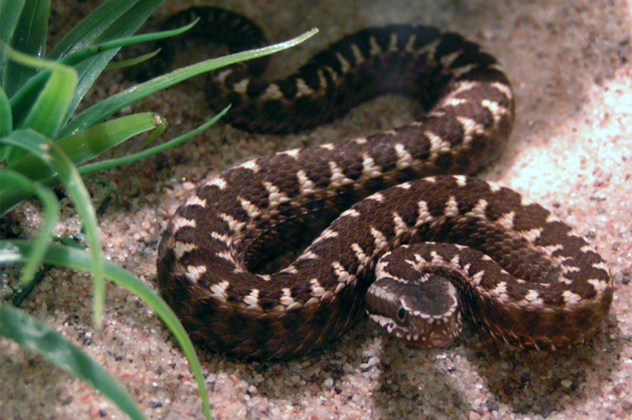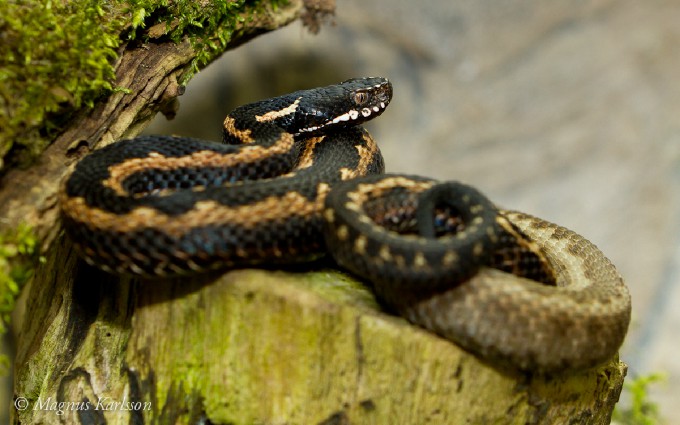
Vipera orlovi is native to the Black Sea region of Russia, where it is endemic to the Caucasus region. It was only in 2001 that Orlov’s viper was separated as a distinct species from the closely related Caucasian viper. This snake has a triangular head and long, venomous fangs which are folded against the roof of the mouth when not in use. Although the colors and patterns of the vipers can change from specimen to specimen, they are usually brown, gray, or yellow-gray with brown or black zigzag bands.
Orlov’s vipers have been shown to eat a wide range of foods such as mice, lizards, frogs, and insects. It’s estimated that there are less than 250 adultsin the wild. The Orlov’s viper suffers from widespread poaching due to its popularity as a pet. With less than 100 square kilometers (38 mi2) of natural habitat remaining, the Orlov’s viper is now listed as critically endangered.