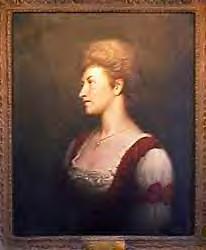
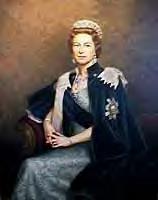
H.R.H. Princess Louise Caroline Alberta
Duchess of Argyll
(1848-1936)
and the
ARGYLL & SUTHERLAND HIGHLANDERS
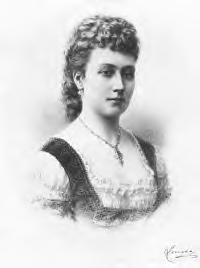
Princess Louise Caroline Alberta, Duchess of Argyll
Daughter of Queen Victoria
(1848-1939)
The sixth child of Queen Victoria, Princess Louise married the Marquis of Lorne in 1871 and spent five years in Canada between 1878 and 1883 where he was Governor-General. A gifted sculptor, she avoided royal protocol as far as possible and dedicated herself to her own work and such issues as the education of women.
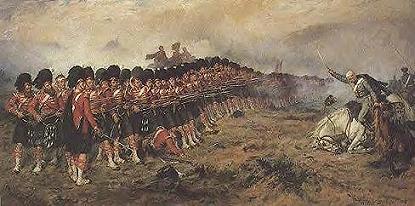
"The Thin Red Line" (93rd Regt)
As a result of the wide-ranging Cardwell reforms of the British Army the 91st (Argyllshire Highlanders) and 93rd (Sutherland Highlanders) were merged in 1881. The 91st became the 1st Battalion and the 93rd the 2nd Battalion.
Territorial regrouping gave Sutherland to the Seaforths as their recruiting area. The counties allotted to The Argyll and Sutherland Highlanders were Argyllshire, Stirling, Clackmannan, Dumbarton, Renfrew and Kinross. Significantly, the recruiting area remains the same today. Stirling Castle became the Depot and the home of the Regiment.
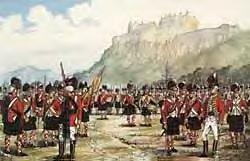
"Raising the 91st Regt" (1794)
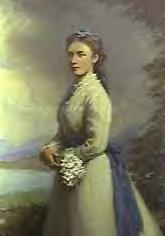
The association with Princess Louise, fourth daughter of Queen Victoria, dates from 1870, when she became engaged to be married to the Marquis of Lorne, the eldest son of the Duke of Argyll, whose ancestor had raised the 91st Highlanders in 1794.
In view of this, the 91st asked to have the honour of forming the guard at St. George's Chapel, Winsdor, on the day of the wedding. Their request was granted and 100 picked men attended the ceremony in March 1871.
H.R.H. Princess Louise 1871
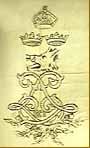
Shortly after the wedding, Queen Victoria asked if she might confer some distinction upon the 91st to celebrate their part in the festivities. The regiment immediately asked to have the kilt restored to them (they wore trews at the time), but the War Office would not agree and a compromise was reached whereby the regiment was entitled 'Princess Louise's Argyllshire Highlanders' and were permitted, in addition, to bear the boar's head, the motto 'Ne Obliviscaris', Princess Louise's coronet and her cypher on their colours.
original sketch by Princess Louise
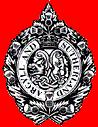
They became 'Princess Louise's Argyll and Sutherland Highlanders' upon amalgamation of the 91st & 93rd regiments in 1881. The Princess took a close interest in Her Regiment which they repaid with respect and very real affection. She designed the new regimental badge herself, elegantly combining the Argyll Boar's Head and the Sutherland Wild Cat, surmounted where suitable by her own cipher and coronet. The motto of the new Regiment was the old 91st "Ne Obliviscaris" (Do Not Forget) and 93rd "Sans Peur" (Fearless).
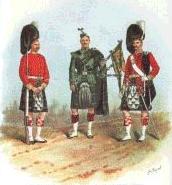
In the matter of uniform the 93rd prevailed: The Sutherland tartan was very similar to the original 'dark green Campbell tartan with the black line' in which Lochnell had first raised the 91st. The Swinging Six sporran with its six white tassels and the feathered bonnet both derived essentially from the 93rd as was the badgerhead sporran worn by the officers and senior NCOs. The Kilmarnock bonnet disappeared and all ranks wore the glengarry whenever they were in trews and for less formal parades.
"Ne Obliviscaris"
The Present Colonel-in-Chief of the Regiment
Her Majesty The Queen
Colonel-in-Chief
Argyll & Sutherland Highlanders
1947 to Present