Ethereal Meandering
Using ambient sounds, Apse digs for something deeper.
by Mike Sembos - January 15, 2004
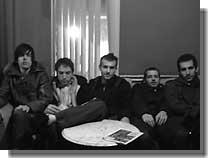 We [strive to create] a place that becomes the focal point for something beyond," explains Aaron Piccirillo. "A place where it's as if a veil is lifted and you feel what is behind things, and you feel that the person next to you is feeling something that they have known for a very long time but somehow forgotten about."
The sonic experiment known as Apse came to realization in the fall of 1999. Ryan Todd, Rob Toher and Ezer Lichtenstein had pursued musical projects together in the past, and after a short break were once again inspired to create, but this time they wanted to explore beyond the structural boundaries of a conventional band. Friends Piccirillo and Michael Gunlach were added to the lineup later on as the group's desire for lush instrumentation increased. They named the group "Apse" after the architectural term for an altar's surroundings in a church or cathedral--not the altar itself, but the empty space left for the altar to fill.
Musically, the sound is textured, atmospheric and ambient--only half of the songs have vocals, and those that do utilize the voice as a true musical instrument, not just a vehicle for lyrics.
"I hate listening to records where you've got the singer's voice stomping about on top of everything else," says Toher. "You want to pull everything that's going on in the background closer so you can hear what's really working and moving and going on."
Effects pedals, vocal processors, a digital 8-track, a 4-track and electronic drums compliment the traditional electric guitar/bass/drums/keyboard rock setup in addition to some more obscure sound-making devices they'd rather keep secret. A close ear must be kept on the dynamics of an Apse performance, as the meshing of all these instruments is led through a series of seemingly loose and improvisational yet somehow structured builds and releases that envelop the room and tingle any spines in attendance.
"Shows have been greatly rewarding because of how much people have told us our music affected them, and how...sincere and open they were with us," Piccirillo says. With instrumental music, he adds, "language has no bearing. It becomes a visceral, emotional response that isn't colored by words."
The search for a fresh sound isn't revolutionary, but Toher can't help noticing that with many current bands, the end product too closely resembles the band's influences. "Influences are important," he says, "and I love, when listening to music, when one can hear a band nodding to another band, or particular form or style of music. However, it can be really disheartening when bands embody the sound of the bands they admire and offer nothing else. There are millions of things to draw influence from, in music history, and current music, in life, and in the imagination."
Not that blazing one's own trail is easy. "We don't have any set way of writing music nor do we want to develop any kind of formulas," says Lichtenstein. "So at times it can become incredibly frustrating. Especially figuring out specific parts for songs and justifying its musical relevance. But all in all, this way of working is far more rewarding."
Source: www.fairfieldweekly.com/gbase/Music/content?oid=oid:50245
www.ApseMusic.com