ART NOTES
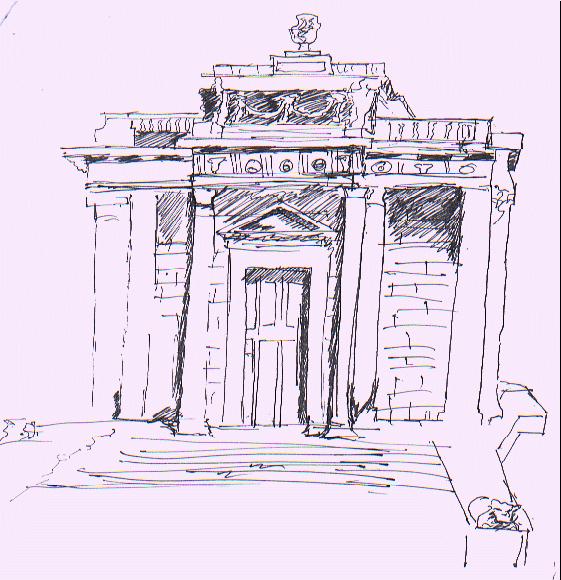
 The Casino at Marino
The
17th century in Ireland was a time of political unrest and
violence. As a result, buildings were
used mainly for defence purposes.
Following William of Orange’s victory in the Battle of the Boyne in 1690,
a new prosperous, Protestant, landed gentry emerged who wished to display their
wealth in building large country houses and public buildings. These were built at first in the Palladian
style, based on the writings of Andrea Palladio. Later, neo-classicism became increasingly popular as more
architects travelled to Rome to study its ancient buildings.
William
Chambers was a prominent London architect of the Georgian period. He was born in Gotëborg and originally
worked for the Swedish East India Company.
He trained as an architect in Paris and later in Italy. While in Italy he met Lord Charlemont for
whom he would design the Casino at Marino and a townhouse. Back in England, he became architectural
tutor to the Prince of Wales and later architect to the King. This royal patronage allowed him to
experiment in small-scale architecture ornament for Kew gardens, which provided
him with experience for the design of the Casino.
The
Casino at Marino was built in the 18th century as a
summerhouse. It has little function and
serves mainly as an expensive architectural exercise. From the outside it appears like a one-storied Greek temple. However it actually contains three storeys
and a basement for servants.
The
building is based on a Greek cross and is inscribed in Doric colonnades. It is richly decorated with sculptural
ornament and decorative carving. Urns
and columns are both decorative and functional. The urns serve to hide chimney pot while the columns hide
drains. The entrance facade has a door
that rises almost to the height of the columns, camouflaging the second
storey. The windows are made of curved
glass that reflects the exterior and hide the interior walls. On the north and south facades are steps, on
the east and west facades are balastrades.
Lions guard each corner.
Inside
on the centre floor are a reception, which faces onto the sea, a living room
and a study. The top floor contains
three ornate bedrooms and stairs to an attic.
One of the doors can be opened and turned into a window to provide extra
ventilation on warm days.
The
Casino contains many parquet floors inlaid with African woods and decorated
with signs from the zodiac and the solar system. The rooms are small but proportional with ceiling stuccowork by
Cipriani. The stucco swags on the
outside of the building were created by Simon Vierpyl.
The
Casino at Marino has been hailed as the most important neo-classical building
in Ireland. It is an architectural gem,
which is a perfect example of Chambers’ work and of the cultural aspirations of
the ruling classes in Ireland.