Australopithecus (Paranthropus) boisei
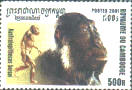
Australopithecus boisei, 1959 Mary Leakey
Paranthropus boisei one is hominidé fossil which lived in Eastern Africa between approximately 2,4 and 1,2 million years before our era, during
Pliocène and lower Pleistocene. It was initially called Zinjanthropus boisei then Australopithecus boisei Today, it is often inclu in the Paranthropus kind of which he is the largest representative. However, the debate concerning its phylogenetic position is not yet closed. Turkana in Kenya.Discovered by the anthropologist Mary Leakey in July 1959 in the Throats of Olduvai (Tanzania), cranium OH 5, called " nut-cracker " is well preserved and goes back to 1,75 million years; it presents features different from those of the Australopithecus graciles. Mary and her husband Louis Leakey called the specimen Zinjanthropus boisei; boisei in homage to Charles Boise, the patron of this team of anthropologists; " zinj " is an old word to indicate Eastern Africa and " anthropos " means man in Greek. Paranthropus boisei acquired a great importance when Richard Leakey, the son of the two anthropologists, estimated that it was the first species of hominidés to have used stone tools. Another cranium was put at the day in 1969 per Richard with Koobi Fora, close to the lake Turkana in Kenya.
