Germany
Germany, officially the Federal Republic of Germany, is a federal parliamentary republic in western-central Europe. The country consists of 16 states, and its capital and largest city is Berlin. Germany covers an area of 357,021 square kilometres (137,847 sq mi) and has a largely temperate seasonal climate. With 80.3 million inhabitants, it is the most populous member state in the European Union. Germany is the major economic and political power of the European continent and a historic leader in many theoretical and technical fields.
Top 5 Biggest Cities
Berlin, Germany
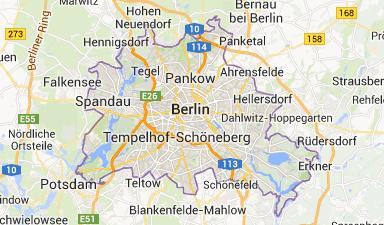
Berlin is the capital city of Germany and one of the 16 states of Germany. With a population of 3.3 million people, Berlin is Germany's largest city and is the second most populous city proper and the seventh most populous urban area in the European Union. Located in northeastern Germany on the River Spree, it is the center of the Berlin-Brandenburg Metropolitan Region, which has about 4� million residents from over 180 nations. Due to its location in the European Plain, Berlin is influenced by a temperate seasonal climate. Around one third of the city's area is composed of forests, parks, gardens, rivers and lakes.
Hamburg, Germany
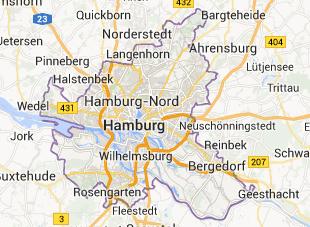
Hamburg, officially Free and Hanseatic City of Hamburg, is the second largest city in Germany and the seventh largest city in the European Union. It is also the thirteenth largest German state. The city is home to over 1.8 million people, while the Hamburg Metropolitan Region (including parts of the neighbouring Federal States of Lower Saxony and Schleswig-Holstein) has more than 5 million inhabitants. Situated on the river Elbe, the port of Hamburg is the second largest port in Europe (after the Port of Rotterdam) and tenth largest worldwide.
Munich, Germany
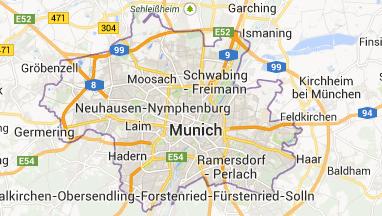
Munich is the capital and the largest city of the German state of Bavaria. It is located on the River Isar north of the Bavarian Alps. Munich is the third largest city in Germany, behind Berlin and Hamburg. About 1.42 million people live within the city limits. Munich was the host city of the 1972 Summer Olympics. Its inhabitants are sometimes called Munichers in English.
Cologne, Germany
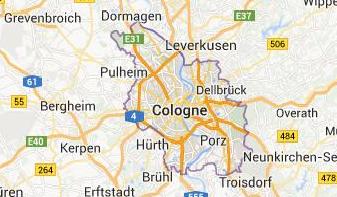
Cologne is Germany's fourth-largest city (after Berlin, Hamburg, and Munich), and is the largest city both in the German Federal State of North Rhine-Westphalia and within the Rhine-Ruhr Metropolitan Area, one of the major European metropolitan areas with more than ten million inhabitants. Cologne is located on both sides of the Rhine River. The city's famous Cologne Cathedral (K�lner Dom) is the seat of the Catholic Archbishop of Cologne. The University of Cologne (Universit�t zu K�ln) is one of Europe's oldest and largest universities.
Frankfurt am Main
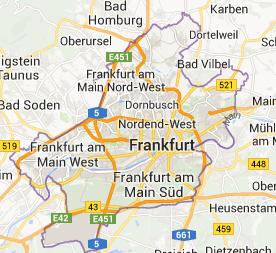
Frankfurt am Main, commonly known as Frankfurt, is the largest city in the German state of Hesse and the fifth-largest city in Germany, with a 2012 population of 704,449. The urban area had an estimated population of 2,300,000 in 2010. The city is at the centre of the larger Frankfurt Rhine-Main Metropolitan Region which has a population of 5,600,000 and is Germany's second-largest metropolitan region. Since the enlargement of the European Union in 2013, the geographic centre of the EU is about 40 kilometres east of Frankfurt.