
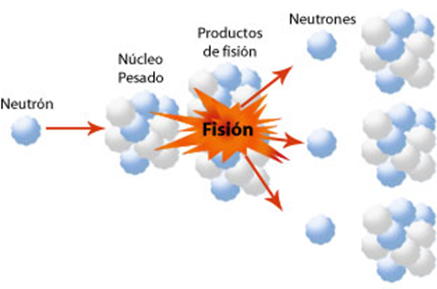
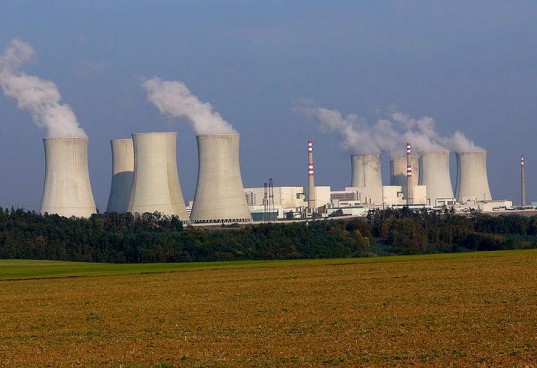
The pursuit of nuclear energy for electricity generation began soon after the discovery in the early 20th century that radioactive elements, such as radium, released immense amounts of energy, according to the principle of mass-energy. However, means of harnessing such energy was impractical, because intensely radioactive elements were, by their very nature, short-lived (high energy release is correlated with short half-five). However, the dream of harnessing "atomic energy" was quite strong, even it was dismissed by such fathers of nuclear physics like Ernest Rutherford as "moonshine." This situation, however, changed in the late 1930s, with the discovery of nuclkear fission.
In 1932, James Chadwick discovered the neutron, which was immediately recognized as a potential tool for nuclear experimentation because of its lack of an electric charge. Experimentation with bombardment of materials with neutrons led Frederic and Irène Joliot-Curie to discover induced radioactivity in 1934, which allowed the creation of radium-like elements at much less the price of natural radium. Further work by Enrico Fermin in the 1930s focused on using slow neutrons to increase the effectiveness of induced radioactivity. Experiments bombarding uranium with neutrons led Fermi to believe he had created a new, transuranic element, which he dubbed hesperium.
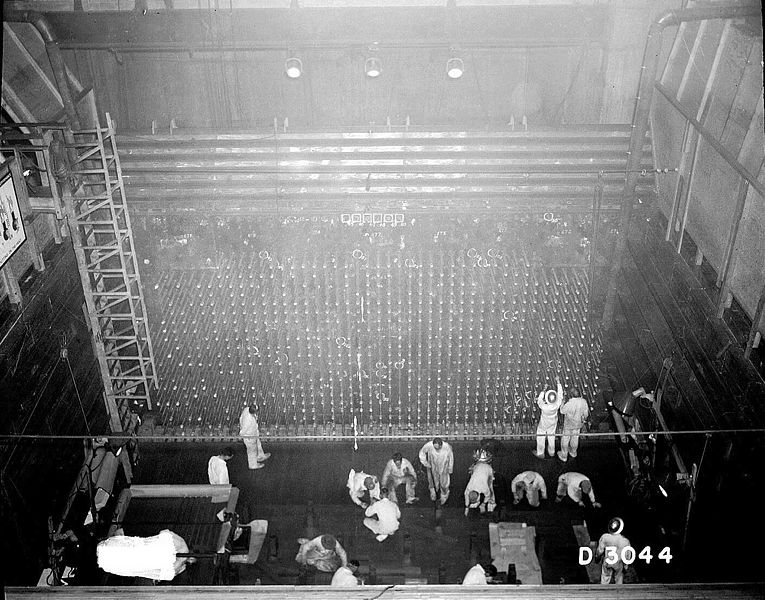
On June 27, 1954, the USSR's Obninsk Nuclear Power Plant became the world's first nuclear power plant to generate electricity for a power grid, and produced around 5 megawatts of electric power.
Later in 1954, Lewis Strauss, then chairman of the United
States Atomic Energy Commission (U.S. AEC, forerunner of the U.S.
Nuclear Regulatory Commission and the United States Department of
Energy) spoke of electricity in the future being "too cheap to meter". Strauss was very likely referring to hydrogen fusion —which was secretly being developed as part of Project Sherwood
at the time—but Strauss's statement was interpreted as a promise of
very cheap energy from nuclear fission. The U.S. AEC itself had issued
far more conservative testimony regarding nuclear fission to the U.S.
Congress only months before, projecting that "costs can be brought
down...about the same as the cost of electricity from
conventional sources..." Significant disappointment would develop later on, when the new nuclear plants did not provide energy "too cheap to meter."
As of 2007, Watts Bar 1
in Tennessee, which came on-line on February 7, 1996, was the last U.S.
commercial nuclear reactor to go on-line. This is often quoted as
evidence of a successful worldwide campaign for nuclear power phase-out.
However, even in the U.S. and throughout Europe, investment in research
and in the nuclear fuel cycle has continued, and some nuclear industry experts predict electricity shortages, fossil fuel price increases, global warming and heavy metal emissions from fossil fuel use, new technology such as passively safe plants, and national energy security will renew the demand for nuclear power plants.
According to the World Nuclear Association,
globally during the 1980s one new nuclear reactor started up every
17 days on average, and by the year 2015 this rate could increase to one
every 5 days. There is a possible impediment to production of nuclear power plants
as only a few companies worldwide have the capacity to forge
single-piece reactor pressure vessels,
which are necessary in the most common reactor designs. Utilities
across the world are submitting orders years in advance of any actual
need for these vessels. Other manufacturers are examining various
options, including making the component themselves, or finding ways to
make a similar item using alternate methods.Other solutions include using designs that do not require single-piece forged pressure vessels such as Canada's Advanced CANDU Reactors or Sodium-cooled Fast Reactors.
The nuclear reactors to be built at Vogtle are new AP1000 third generation reactors, which are said to have safety improvements over older power reactors. However, John Ma, a senior structural engineer at the NRC, is concerned that some parts of the AP1000 steel skin are so brittle that the "impact energy" from a plane strike or storm driven projectile could shatter the wall. Edwin Lyman, a senior staff scientist at the Union of Concerned Scientists, is concerned about the strength of the steel containment vessel and the concrete shield building around the AP1000. Arnold Gundersen, a nuclear engineer commissioned by several anti-nuclear groups, released a report which explored a hazard associated with the possible rusting through of the containment structure steel liner.