 The
Star
The
StarThe
Star
The Official Newspaper of the American University in Kyrgyzstan
September 2000 - Volume 3. Issue 1
The Star Says Hello (Anton)
Orientation 2000 (Kon)
New Student Affairs Coordinator (Deborah)
Ari Has left The Building (Elnura)
Through The Eyes of a Foreigner (Jessica)
AUK on Fire (Anisa)
Assault on AUK (Merdan)
The UNHCR Summer Course (Ahoura)
Latvia (Anna and Yulia)
Гречанка из Англии (Tania)
Смотреть на мир сквозь витражи (Natalia Andreanova)
By Anton Kluchkin
Hello everybody and especially the freshmen! This is the first issue of the year. Our staff hopes that your summer holidays were great. We are glad that you (freshmen) have entered AUK or just came back (all others). The Star hopes that you like this university. Our newspaper will try to be a real star for you in it. If you have any problem connected with the university, we will be glad to help you solving it.
Well, now some information about The Star. Our newspaper will try to be more interesting, informative and funny than it was last year. How we will manage to do it – decision depends on you. We would start some new rubrics and continue some from the previous year. Our staff is planning to inform you about AUK’s life, about politics and so on. Also we’ll make movies reviews and scan-words to entertain you. Certainly, you will be able to find in the newspaper information about summer schools, conferences, meetings with interesting people. The Star still is going to be bilingual. On the whole in English and as it was last year – Russian section.
The Star is the mirror of AUK – and we would try, as far as possible, to reflect its life in all its variety. If you want to join us or you have any bright ideas you are welcome!
New President, New Students, A Whole New Year
By Anisa Afshar
Beginning this academic year AUK has a new president: Dr. David Huwiler. The Star had a special interview with the president to give a chance to all the students to know our new president. Dr. Huwiler came here from Champlain Collage in Burlington where he was working for 15 years as the Vice President. Dr. Huwiler said that he has been interested in NIS countries already for long time. He has organized an experimental distance-learning project between Champlain College and Yaroslavl State University in Russia. He also has written his dissertation on the Nabakov’s novel.
Dr. Huwiler used to teach literature course while he was vice president in Champlain Collage. But unfortunately here he could not manage to teach, because he is very busy and he has to travel a lot and he does not want the students to have their course interrupted by his travels. “As soon as I can I would like to teach a course here, probably on American Literature, I can not wait for that time!”, said Dr. Huwiler. He added that it would be the best undergraduate class that he ever taught.
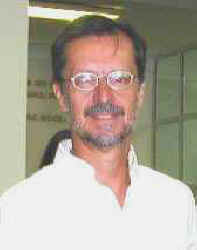 Dr.
Huwiler first time came to AUK on December of 1999. His trip was very short, but
he managed to have a talk with the students. This talk had a big effect on
AUK’s history, because as Mr. Huwiler said: “The main reason that made me to
come back here was the students”. Second time he came to AUK with his wife on
April 19th, when he was officially announced as the new president of
AUK. Dr. Huwiler began his job as our president since the August of this
academic year. He said to The Star that after he started to work here, and got a
chance to know AUK from inside, he was even more impressed with the students and
the way AUK has been run by Camilla and Martha, “They have done a great job
here”.
Dr.
Huwiler first time came to AUK on December of 1999. His trip was very short, but
he managed to have a talk with the students. This talk had a big effect on
AUK’s history, because as Mr. Huwiler said: “The main reason that made me to
come back here was the students”. Second time he came to AUK with his wife on
April 19th, when he was officially announced as the new president of
AUK. Dr. Huwiler began his job as our president since the August of this
academic year. He said to The Star that after he started to work here, and got a
chance to know AUK from inside, he was even more impressed with the students and
the way AUK has been run by Camilla and Martha, “They have done a great job
here”.
Dr. Huwiler was asked by The Star to talk about the changes he would like to make in AUK. “I don’t see any crisis or any big problem here. I would like to start working on the credit system and make it similar to the American credit system, so it will be easy for the students to transfer their grades to US universities, so they will have greater chance to pursue their graduate studies. Another long run project is to organize a Development Office which can find more financial sources; individuals and corporation which would make endowments to AUK. And so AUK won’t be depending on one or two big sponsors and it can decide independently about its future. Dr. Huwiler added that he want to have more international students, more international ties, and connections with lots of other universities in order to exchange students and teachers with them. Also to develop our computer equipments, so there will an easy access for all the students to email and Internet. It would also allow us to organize some courses (for example Kyrgyz Studies) via Internet to outside students.
At the end our dear president welcomes all the freshmen to AUK: “I would like to congratulate you all, the leadership pf the next generation. It is easy for us, the elder, to see how AUK is wonderful and ready for you to make the best use of it. Take advantage of all the classes, teachers, and extracurricular activities. Have fun! Enjoy your time! In future you will look back at all this time and see how did you enjoy it. Do not spend all your time to study only, go and have fun!”
So, dear freshmen, if you want to meet with our president, in person or in groups, do not hesitate, go to the third floor, and Natalia will help you to book a time fro your visit. You won’t regret it, I bet!
Please let me know if you have any questions.
By Konstantin Sudakov
The week from August 14 to August 18 was a student orientation week in our university. The two buildings of AUK were invaded with around 250 new coming freshmen since early morning until 3-4 p.m. They were being “oriented” in an unprecedented manner.
Last year freshmen had a very short orientation, which lasted only two days. Orientation 2000 was definitely a larger project, which involved more organization and planning as well as greater investments.
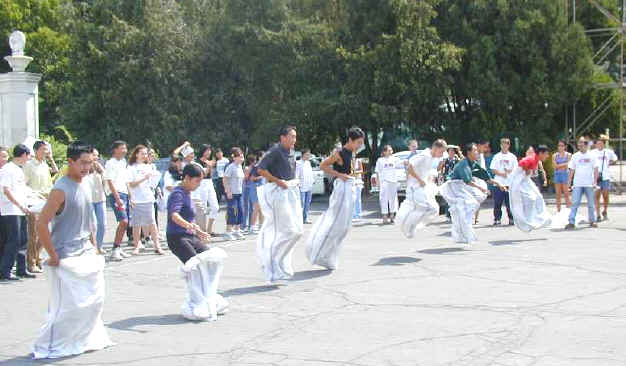
A group of several students and teachers started to elaborate on the idea of extended one-week student orientation in May-June. The real planning and organizing happened in the beginning of August. The purpose of the orientation week was to give students an introduction to the life of AUK, to teach the newcomers to survive in a tough life of the university, to help them to adapt more quickly to the new system of education and new conditions of study.
The program was designed so that all students attended 10 thematic lectures, which would introduce them to AUK life along with some techniques that would ease the process of acquisition of knowledge for the first year students. Some entertaining and perceiving games for students took place outside of the classrooms. There was an olympiad held, a run game, a bingo-type game, and others. Every day was full of activities and students seemed to have fun.
Here is the summary of what several freshmen had noted about the Orientation 2000. “It was unusual because AUK is the only one university that conducts any kind of serious preparation for students. There were also a bunch of useful tips concerning studying and everyday life in the university. They do help me now.” “There is still a room for improvement: sometimes it was kind of exhausting because there were too much of activities. It was also tough to sit for hours in CH/I on the hard surfaced benches or to concentrate after physical activities during lectures.” “Getting to know some people during orientation helped me to feel more confident in the halls when the study had started.” “It was so easy to get around in the university thanks to the orientation.”
Orientation 2000 showed to the freshman that university cares about them and ready to help at any moment. I think that it was made seen that here we study and at the very same time we have a lot of fun.
“I liked those five days a lot. I want to thank the orientation staff for wonderful and helpful experience. Keep up with this tradition to have orientations! I hope nowadays freshmen will contribute to the next orientation and make it even better.”
It seems like everyone should be happy but there is one question that remains unresolved. For those students of AUK, who participated in the organization and realization of Orientation 2000, there was promised an undisclosed amount of money. We are already in September but the official source has refused to pay due to the lack of finances thanks to the recent conflagration in the International and Comparative Politics department office. It is understandable but participated students are still waiting...until when?
New Student Affairs Coordinator, Deborah Eisenberg
By Deborah Eisenberg
Greetings and Salutations! The staff of The Star was kind enough to give me this opportunity to introduce myself. I am indeed replacing Ari Katz, who I understand was well loved here at AUK. I hope to live up to his reputation.
I would like to tell you a little bit about myself. I came to AUK from the International Research and Exchanges Board (IREX), where I was working in Washington DC. While many of you may know IREX for its academic exchange programs, I was working on media assistance programs in the Balkans while I was there. However, I am not a stranger to AUK or to Central Asia. While I have never visited the region previously, in 1995 I interned at the New York office of the Soros Foundation, working on Central Asia programs. In addition, I am familiar with IREX’s previous work with AUK and in Central Asia. But enough of my resume…
 I
am originally from San Francisco, California.
I went to college at New York University (majored in International
Politics and Communication) and I do speak some Russian. I am not very
comfortable in the language yet, so forgive me if I speak to you in English for
a couple months. I have been asking around about what I should include in an
article about myself, so here is a short FAQ (Frequently asked questions) for
all of you.
I
am originally from San Francisco, California.
I went to college at New York University (majored in International
Politics and Communication) and I do speak some Russian. I am not very
comfortable in the language yet, so forgive me if I speak to you in English for
a couple months. I have been asking around about what I should include in an
article about myself, so here is a short FAQ (Frequently asked questions) for
all of you.
Well, that’s it for now. Please feel free to stop by the office and say hello, if we have not met yet.
By Elnura Osmanalieva
Friday night, on 25 August 2000, about 25-30 AUKers came to the Fat Boys' to say good-buy and words of appreciation to Ari Katz, an AUK professor, the Coordinator of the Student's Affairs and the Coordinator of the Amnesty International Club. After spending two and a half years in Kyrgyzstan, Ari Katz, left to England, where he will be studying at Bradford University to get Masters Degree in Conflict Resolution.
 Mr.
Katz came to Kyrgyzstan to experience the life in Central Asia, and more
importantly, life in a post-Soviet country. Previously, he lived and worked in
South Korea for two years teaching English to school kids.
Prior to that, after graduating from the Boston University, Mr. Katz
studied in Hungary and Australia and traveled half the world. His office walls
were filled with maps of different countries and continents, pictures and post
cards from all over the world. When Mr. Katz was coming to Kyrgyzstan, he
planned to stay here for summer, and if he liked it, he thought he'd stay for a
year as most. Nevertheless, like
many other foreigners, he got "stuck" in this country for much longer.
Mr. Katz said, "I love Kyrgyzstan, it's a wonderful country. I hope I will
come back here. Two and a half years spent in Kyrgyzstan are special for me. I
think they would have been so special without AUK. This University made a difference in my life, I am sure it
made a difference in lives of many other people. I will miss it."
Mr.
Katz came to Kyrgyzstan to experience the life in Central Asia, and more
importantly, life in a post-Soviet country. Previously, he lived and worked in
South Korea for two years teaching English to school kids.
Prior to that, after graduating from the Boston University, Mr. Katz
studied in Hungary and Australia and traveled half the world. His office walls
were filled with maps of different countries and continents, pictures and post
cards from all over the world. When Mr. Katz was coming to Kyrgyzstan, he
planned to stay here for summer, and if he liked it, he thought he'd stay for a
year as most. Nevertheless, like
many other foreigners, he got "stuck" in this country for much longer.
Mr. Katz said, "I love Kyrgyzstan, it's a wonderful country. I hope I will
come back here. Two and a half years spent in Kyrgyzstan are special for me. I
think they would have been so special without AUK. This University made a difference in my life, I am sure it
made a difference in lives of many other people. I will miss it."
Mr. Katz taught courses on critical thinking, creative writing, cinema and US history.
Mr. Katz was the one who introduced the idea of the Student Government in AUK. He said, "I think it is important to have Student Government because first of all, students learn a lot from participating in the Student Government, they learn how to run for elections, how to hold campaigns, how to make decisions in democratic way. It is also beneficial for students who are not in the SG, I think elections to SG give them opportunity to exercise their voter skills."
Apart from being a professor, a Student’s Affairs Coordinator, a ‘founder’ of Student Government, Ari organized Amnesty International Club and generally participated in many student’s activities. His office was always open for students and there was hardly a soul in the university who didn’t know ‘Mr. Katz.’ Will he come back? Maybe. For now, you can contact him via regular or e-mail. The addresses are in the Student’s Affairs Office.Through The Eyes of a Foreigner
By Jessica Marie Buckingham
American University you say? Really, well. I can certainly see similarities, many differences though. Students who attend AUK, already think it is a great school, and it is, but a few changes could be made to make it even better.
AUK has adapted some positive American style of education, such as elective courses and the large number of clubs. The pictures of Americas capital in the hall are, in fact, disturbingly American and the over all aesthetic of AUK is American. There are aspects of AUK that could use a western touch, for example, the organization and administrative processes, and mainly the distribution of information to students. The fact that the vast majority of students at AUK speak Russian is also not really American. The number of required courses students take is utterly not America. Sometimes I think to myself “I thought this was supposed to be an American University” forgetting about the “in Kyrgyzstan” part.
I am, in fact, a North American (from Canada, which is entirely independent from The United States of America, contrary to popular belief) and I am a student of the American University of Kyrgyzstan. I first heard of AUK 4 months ago from my mother who works for the Civic Education Project. She told me it was a new School in Kyrgyzstan. My first reaction was “Where on earth is Kyrgyzstan?” and she told me and got out a map... so here I am. You’ve probably seen me wandering the halls, looking lost and very foreign, apparently. Or you have seen me struggling with staff, looking for translators...
Well, let me begin at the beginning. I arrived in Bishkek August 1st. The airport made me nervous and the taxi drivers downright scared me. I visited lake Issyk- Kul (absolutely beautiful)and I settled, finally. On August 14th I made my way through the doors of AUK. I was nervous at first, and got some stares, well, a lot actually, still do. I made my way through the crowds and problem one, a woman told me there was no preparatory course this year. I panicked, trying to think of how to say airport in Russian, and fortunately found my new hero, Olga Bagachova. She assured me that there was, in fact, a preparatory course this year and I was in it. I calmed down and tried to socialize, only to find that If I spoke English out loud It immediately got quiet around me and I was stared at, not common at a university in America.
AUK is a totally unique place that uses both eastern and western ideas of education and student life. Aside from the hassles of administrative confusion, AUK is a great school that offers a learning environment in which students can express their ideas freely and learn in a place where they feel comfortable. Though some aspects of AUK and Kyrgyz culture confuse me, I am glad to be a part of it. So bear with me If I need help buying lunch, or understanding the more subtle details of Kyrgyz etiquette. If I make a mistake let me know,
I am after all a North American in an American University.
By Anisa Afshar
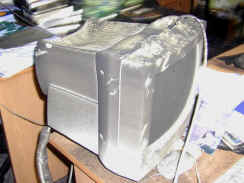
The department of International Comparative Politics was burnt out on 13th of August. The fire is said to be started about 6:30 in the evening, which went on until 8:30 pm, when finally the firemen could put off the fire. August 13th was Sunday and after the last person left the ICP department, there was no body around. It was only about 7 pm when the guard and one of the teachers who happened to stay in university till that time felt the smell of smoke. By this time also some people from outside who saw the dark smoke coming out from the window of ICP department came to inform the university. They immediately called up the fire department, who arrived in about twenty minutes, I was told.
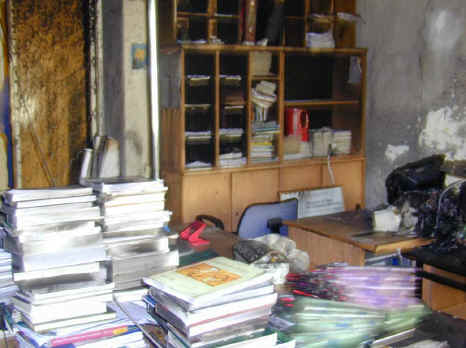 The fire is thought to
be initialized from one of the electric operators. Boris Borisovich said that
was from either secretary’s computer or the copy machine. “ Probably the
copy machine though, because it consumes more electricity, which could have
easily cause the fire”, said Boris Borisovich.
But some people believe that it was caused by the air conditioner. All
these operators were in plug in that day.
The fire is thought to
be initialized from one of the electric operators. Boris Borisovich said that
was from either secretary’s computer or the copy machine. “ Probably the
copy machine though, because it consumes more electricity, which could have
easily cause the fire”, said Boris Borisovich.
But some people believe that it was caused by the air conditioner. All
these operators were in plug in that day.
After the fire the office was closed up for a day and a half so electric experts could work on and investigate the initial cause of the fire. The office was opened on 16 of August, when we could manage to take some pictures of what was left from the ICP department. For us, students of ICP, what we saw of our office was extremely sad; all our books were half burnt, furniture was destroyed, and the computers were melted. The office that we all used to see few times each day, the chairs we used to sit while chatting to our teachers, our pictures on the walls, all were turned to a back thing. The scenery was very dismaying.
As soon as we could, those books which were not completely burnt were removed and cleaned. On the same day Boris Borisovich sent his people there to clean up first and then repair the office. The office started to function again on 28th of August, having the half burnt books and no computer.
 But is there any
guarantee that such catastrophes will not happen again? “Fire alarms are being
installed already on the ceilings of every room in AUK where there are some
electric operators, computers, copy machines, etc. And there is another plan to
change the setting of the electricity in AUK, so every day after school ends the
guard can switch off the whole electricity from the xxxx. This plan requires
that there will be two xxxx, one for the operators that must be unplugs very day
(computers, copy machines, air conditioners) and one for the stuff that must not
be disconnected (such as modem, fax, and alarms)”, explained Boris Borisovich.
But is there any
guarantee that such catastrophes will not happen again? “Fire alarms are being
installed already on the ceilings of every room in AUK where there are some
electric operators, computers, copy machines, etc. And there is another plan to
change the setting of the electricity in AUK, so every day after school ends the
guard can switch off the whole electricity from the xxxx. This plan requires
that there will be two xxxx, one for the operators that must be unplugs very day
(computers, copy machines, air conditioners) and one for the stuff that must not
be disconnected (such as modem, fax, and alarms)”, explained Boris Borisovich.
We can all hope that these plans will be applied some where in near future, because as one of our foreign teachers mentioned, AUK is a fire-trap. All the windows have bars on, and each building has one exit (the second exit is always locked). Why can’t we remove the window’s bars? “If we remove the bars AUK will be emptied in one night!”, said Boris Borisovich. So how students can get out in the case of fire is a puzzle that no one still could solve it properly. Have any ideas? Come and share!
EURASIA FOUNDATION GRANTS AUK NEW TV STUDIO
By Kadyr Toktogulov
On Thursday, September 7, the new AUK’s TV studio was officially opened. Its presentation was planned for more than 3 months after the equipment was received.
At the presentation the second year journalism students showed the first TV program about AUK and its community life produced in the brand new TV studio.
The guests from Eurasia and local TV stations came to the presentation as well.
The TV studio project was fully financed by the Eurasia Foundation.
After the presentation, guests had a chance to talk to each other and AUK representatives during a banquet.
By Merdan Halilov
Today is the 18th of August, and in three days my sophomore year starts. During the past year there have been many changes at AUK, which made it more “user-friendly” for students. But at the same time we faced problems, problems, and problems. Some of them were taken up by the Student Government, by the AUK Faculty and dealt with, but most remained. The main one was, is, and will be connected with the Computer Department. I will return to this later, as there have been some attempts already, but with less productive results. Let it be a little “chewing-gum” for the decision-makers of this university for a while…
 The
Orientation Week began on the 14th, and I was helping out with the
other students. I would say that AUK’s new 2000 team is very good, and I
believe that everyone here must be provided with good service. Why? I would call
ridiculous anyone, who might have thought about it. Because STUDENTS pay, AUK
does. If the latter does not provide good service, then the student should leave
and choose another place to study. Right? Well, no, the student will not do
that. There is no university to challenge the service of this one. So, is AUK
making use of that? On the first hand it does not look like that. Two days ago,
I was walking in the corridor of the first building with another student. Our
main reporter was standing in the burnt hall. My friend asked if we can check
out the new “media center”, which was opened during the summer. Well, guess
what that person did? He went down to the vakhta, got the key, opened the room,
showed us everything there, then took us to another room, and showed all the new
equipment that they have got, explained how it works, etc. But why did he do
that? Doesn’t he have something else to do? Wasn’t he afraid that we might
steal something, as some VIP’s at AUK do, and ask for written permission all
the time? He did not tell me why he did that, but my first guess would be the
following: he wanted us to encourage learning about it, using the journalistic
services that the university provides, even though I was not a journalism
student.
The
Orientation Week began on the 14th, and I was helping out with the
other students. I would say that AUK’s new 2000 team is very good, and I
believe that everyone here must be provided with good service. Why? I would call
ridiculous anyone, who might have thought about it. Because STUDENTS pay, AUK
does. If the latter does not provide good service, then the student should leave
and choose another place to study. Right? Well, no, the student will not do
that. There is no university to challenge the service of this one. So, is AUK
making use of that? On the first hand it does not look like that. Two days ago,
I was walking in the corridor of the first building with another student. Our
main reporter was standing in the burnt hall. My friend asked if we can check
out the new “media center”, which was opened during the summer. Well, guess
what that person did? He went down to the vakhta, got the key, opened the room,
showed us everything there, then took us to another room, and showed all the new
equipment that they have got, explained how it works, etc. But why did he do
that? Doesn’t he have something else to do? Wasn’t he afraid that we might
steal something, as some VIP’s at AUK do, and ask for written permission all
the time? He did not tell me why he did that, but my first guess would be the
following: he wanted us to encourage learning about it, using the journalistic
services that the university provides, even though I was not a journalism
student.
When I meet such people at AUK, I always calm down, and tell myself “yes”, there are still people who do care about AUK and about the students! And even if I was about to run up to the third floor and “bark out” all what I think about AUK’s management of some things, I do not do that. The reason is that I feel not comfortable telling it, as there are still the ones who care!
Now I want to return to the latest thing that bothers all the incoming students and all the students who study here already. Hell knows why, but the registrar’s office decided not to let the student to take more than 24 classes per week (21! for freshmen). I have talked to about 10 students today, and every one of them complains about it. I want to take 26 classes too, to tell the truth. Why me, or someone else cannot take if I want to study? Do you know that at other “Soviet-style” universities of Kyrgyzstan, students take about 25, sometimes up to 30 classes per week, and they are doing fine. Oh, sorry, I shouldn’t have compared AUK with the others. It is the One, isn’t it? If someone doesn’t like, then go to another place. But once again, there is none to compete with it here, and it looks like as if the “third floor” is taking advantage of it.
If the student wants to take 45 classes per week, then WHY NOT? Does it bother anyone? If he or she cannot study well, it is solely his or her OWN PROBLEM. Are the teachers that uneducated not to understand this? May be the student wants to take a couple of electives, and he/she has already 18 or 20 required classes. Then why should he or she take, if the time schedule is suitable for him or her? What a heck is the add/drop period for? Don’t tell me that it is just for showing off in front of the other universities in Bishkek or somewhere else! You just explain the students that there is such a thing as an elective course, and the students go and take it. It is not the business of someone who does not take the class. Aren’t we taught to think critically at this place, and have choice, choose ourselves, and without the consent of our decision-making “moms & dads”, make a decision what we are going to study, how long we are going to do that, how much time and who we are going to become.
If there is someone who is unable to understand this, I would suggest going and seeing the doctor in the first floor of the new building, at room 106. If it is that difficult to find the Place, I can help you out any time you want. They are very nice people. Well, if our “power elite” grasps the idea, then they must not limit the number of the courses that the student wants to take. It is one of the main reasons why this place is so unique. We have a freedom to choose, and it is guarded by the four walls of AUK from the outside world, which has become very “un-free”, as there are presidential elections coming up soon…
THE UNHCR SUMMER COURSE, PROMOTES HUMAN RIGHTS IN CIS
By Ahoura Afshar, IR junior
The summer course on international law and human rights is an annual event organized by UNHCR, and coordinated by OSCE, ICRC and YLA. The course gives the participants the ability to deal with human rights issues and intensify their interest and knowledge to work in the field, thereby, practically supporting human rights through local actors.
The fifth annual regional summer course began on August 14th in Bishkek and ended on August 27th at Issyk-Kul. Participants were mainly from Central Asian states but there were also participants from some other CIS countries including Belarus, Georgia, and The Russian Federation. Naturally, at first there were some cultural barriers amongst the participants and even in the conference hall they were sitting by delegation! It was not until August 28th when they sadly said goodbye to each other.
Ms. Isabelle Mihoubi, the Senior Regional Legal Advisor and the organizer of the course says that this is a crucial time for Central Asia when the countries are becoming more closed up and disintegrated; and such events should promote the spirit of tolerance and understanding in the region. She says that it is essential to the nature of the course that no one is here to criticize his own government. She says, “The main point is not accumulation of knowledge but rather to provide the participants with a methodology, which they can always use.” Nevertheless it is very difficult to evaluate the influence of the course on the participants because if human rights were respected then by definition there will be no violation to be reported.
As a five-year-old tradition the course takes place in Bishkek each year. This will be continued in the future in honor of the first coordinator of the course Mr. Abdelmajeed Fawzi. Although the organization of the course in Bishkek is not very easy especially when the participants come form the Caucasus, or for example Tajikistan.
Great effort was made to keep the balance among the instructors. There were experts from Central Asian countries and some western states including France, USA, Austria and Italy. This automatically balanced the spoken language: Russian and English. Also a lot of work has been done on the materials delivered to the participants: material for each single lecture and complementary documents including many international conventions and declarations. Also students were given a lot of books that lecturers brought, which had to do with the mandate and activities of their organizations. Slides, films, activities and mock trials were used as assisting teaching instruments.There were three mock trials. The preparation for the third one lasted for almost two whole days. The trial was supposed to last for about two and half hours but it lasted for 4 hours and still there was not enough time to listen to the testimony of two of the witnesses! The trial was about a refugee who had been arrested in the host country. This last mock trial was a kind of exam in which participants showed the knowledge and capacity that they had acquired during the course. The judges were the head of the UNHCR office in Bishkek Mr. Abdelrahim Mohamed, the head of the UNHCR office in Almaty Mr. Ghuol Kerim, and three of the experts who taught in the course, including Ms. Mihoubi of course.
This was the first time that it lasted only two weeks against one month in previous years. This was the main critic of the course because there were classes from 9 to 5:30 everyday including weekends. Ms. Mihoubi says that for the next year course probably the period of the course should be a bit longer and there should be more attention focused on the selecting procedure.
The ambassador of the OSCE in Bishkek, Mr. Jerzy Wieclaw said that cooperation in the work of organizations helped them succeed since one single organization cannot cope with all the difficult tasks. He said that the principles of the course are very close to the mandate of OSCE and he showed great hope that in course of years the participants would use their knowledge in practice and promote international principles in the region. Ms. Mihoubi appreciated support of OSCE in funding and sending experts to teach. She also said that for the next year there should be more experts to provide as many points of view as possible. The summer course is a process that will show its effect in time.
And of course AUK was not absent there. Alina Karimova, the third year IR student was present who was working as an assistant. But there was only one person from AUK as a participant. So AUK did rather poorly in that for all the AUKers (at least except freshmen) know how it shone in the CEP conference in Budapest. So we hope to see AUK students more active in the next UNHCR summer course as well.
By Anna Kirey and Yulia Balybina
“Priecajos Iepazities! Mes ir no Kirgizstanas!” (Nice to meet you! We are from Kyrgyzstan) “Bravo BISS! Bravo BISS!” that’s what you could hear on a cold evening of August 12th in a peaceful town of Valmiera, Latvia. You might think it was a Latvian holiday or some kind of demonstration. Well, you are partly right!It was a farewell party, the last evening of the international family named BISS 2000. What is BISS? The Baltic International Summer School- 3 weeks of well-balanced studying, partying, activities, breaking stereotypes and excursions. And … we are going to tell you about everything… starting from the most important.
We came there to study. We are: Yulia Balybina and Anna Kirey, from MM199. That useful activity made us busy from 9:15 am to 4:00 pm but it was not boring. Our desperate minds were being filled with Latvian language (Ka jums iet?), Baltic Folklore (La, la, la- Ruata! Ligua!) and Baltic Politics (Did you know that Latvia is a Parliament dictatorship?). Other, more PhD- oriented people took courses of economics (you know how much a loaf of bread costs there--- half a dollar!) and history (Latvia was under Sweden for a long time…).
After a small “lunch” break we had a group, where Latvian students helped us to discover the mysteries of their land. And then… comes his majesty – the Evening, with parties and fun. Every day, was so well planed with activities, that we could not feel the boredom. We had folkdance instruction with mad dancing around the circle in couples and shouting “Oira-Oira”. We still don’t know what does this “Oira-oira” mean, because we were too excited with the dancing, to ask. “ Baltic folk dances have a special influence on people”, we decided, because everyone was in such a condition when you start to do things you never did before, because of some specific features of your personality. We had an example with one Finnish guy, who was standing and watching us dancing, but suddenly he jumped in the circle, where we were dancing and started to make incredible things with his hands and legs and sang something like: “Tru-la-la, tri-la-la…” Can you imagine that, with Finnish calmness and immobility? Trust us, that was something special! Actually, that’s how we started to break our stereotypes, concerning nations.
During these three weeks, step-by-step, not conspicuous for our-selves, we were doing a great job – we were breaking our stereotypes! And we made some significant discoveries in this sphere. Like: most of you, might have heard about “the Swedish family” stereotype, haven’t you? Guys, we probably will disappoint some of you, but Swedish family, according to our BISS student Per Bolin – professor of Swedish University, is:” Mother, father, daughter, son, dog and… Volvo.” And when we asked:” What about famous Swedish ‘sleeping around ’? ” “The only one who can ‘sleep around’ in Swedish family, is a DOG”, was the answer from Per. Now you know it all about Swedes! And what about the stereotype about Latvians, that they hate Russian people? Have you heard about it? If you have, please, forget about it! We lived in Latvian society for pretty long time and had a chance to make sure, that this is not right. We never heard a bad word about Russians from Latvians, not only in the University, but also in shops and on the streets. Most of them are very friendly and will always help you, if you need some help. By the way, their level of English is not very good, so, after some attempts to talk with you in English, they will gladly switch to Russian (of course, if you know it).
Do you want to know, what kind of stereotype European people have about Kyrgyzstan? Well, it’s very interesting! They think that we live in the desert, ride the camels, live in wigwams and always eat horsemeat! (no comments…) But, there is one stereotype we achieved in BISS. This one was about Lithuanians: when Lithuanian people sing – it always rains. This is an absolute truth and every day gave us a chance to make sure in it. We had one Lithuanian girl – Vaiva (means rainbow. Funny, isn’t it?) and she was singing every day. We guess there is no need to explain, that rain was the most common weather forecast for us.
We were praying hard to have a normal weather on our sports day. Also, we “kindly” explained to Vaiva, that any attempt to sing in this day, would end up badly for her. Luckily, we were heard by God and understood by Vaiva! The weather was good enough, so our planned before “rezinochka” came true. What is rezinochka? Do you remember that game, girls, with the laundry rubber on your feet and you were jumping there, making different figures? If you do, then you know what is rezinochka! If not – sorry, for impossibility to describe this game. So, with joint Swedish-soviet efforts we made this rubber – “rezinochka” and started to remember our childhood. Our strange kind of sport attracted many people on the stadium and when we explained the rules, our team of “jumping ladies ” rapidly increased. We had a lot of fun with it. If only you could see us – representatives of post-soviet countries (Byelorussia, Lithuania, Ukraine, Kyrgyzstan, Estonia), teaching Swedes, Norwegians and Latvians to play in “rezinochka”, you would laugh with us too.
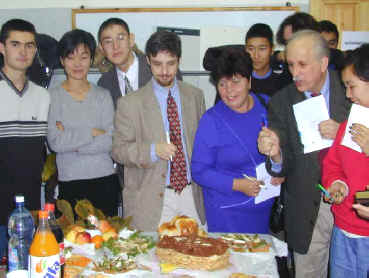
There is one thing we just have to mention. That was our International Food Party.
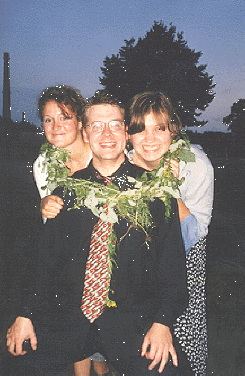 Anna, as
a representative of Ukraine and Kyrgyzstan both, had to cook something Ukrainian because there was nobody else from her home country. So,
Yulia had a wonderful opportunity to demonstrate her cooking “talents”,
which were equal to zero. After 4 hours spent in a kitchen a real masterpiece
was presented to the whole BISS community. It was a national Kyrgyz dish –
borsok. Our
international community liked it just as much as we enjoyed Moldavian wine,
Latvian samsas, Norwegian milk soup and French sandwiches. After the party we
sat on the stairs of the dorm and sang Beatles songs.
Anna, as
a representative of Ukraine and Kyrgyzstan both, had to cook something Ukrainian because there was nobody else from her home country. So,
Yulia had a wonderful opportunity to demonstrate her cooking “talents”,
which were equal to zero. After 4 hours spent in a kitchen a real masterpiece
was presented to the whole BISS community. It was a national Kyrgyz dish –
borsok. Our
international community liked it just as much as we enjoyed Moldavian wine,
Latvian samsas, Norwegian milk soup and French sandwiches. After the party we
sat on the stairs of the dorm and sang Beatles songs.
During the, a bus took us all over Latvia and Estonia. As for the sightseeing, both of these countries are just perfect. Beautiful nature, buildings with flowers on the windows, ruins of the ancient castles with ghosts inside, stork colony in the north of Latvia and Oscar Wilde’s monument in Tartu, Estonia, and of course Jurmala- the place of KVN.
Not to bore you with all our impressions we will just write the most fascinating things.
On the border of Latvia and Estonia there is a city called Valga/Valka. Half of it is Estonian and half Latvian and there is a customs patrol in the middle. To catch the feeling: you put your hand over the fence and it is in the other country.
Estonia, a country of hot guys, met us with road signs understood only by Estonians -STOPP!
The highest hill in Estonia is 300 meters high. Of course, we had to stop by and say hello from our mountains. Anna even challenged to go down the hill for the sake of Ukraine, Kyrgyzstan and USA (our Americans didn’t dare) and the female part of the mankind.
Baltic sea, with which we could get acquainted first in Parnu, Estonia, turned out to be not that white (Balt means white in Latvian) and cold, especially for those, who swam in the Black Sea. Jurmala was exciting, too. We saw the place where KVN shots its concerts – Dzinteri concert hall and built a BISS castle out of sand on the beach.
In Riga we went shopping to the mall (Veikals Centralis), which exploded in a week. That was shocking for us! We heard about it on the second day we left Latvia. So many people died there and such a beautiful place was ruined. Also we went to an occupation museum. As they call it, Baltic countries were occupied by Soviet Union in 1939 under Molotov-Ribbentrop Act. Occupation Museum was meant to inform about these times the way Latvian historians interpret it not Soviet ones. The most impressing thing there was a real Soviet barrack like in Gulag concentration camps, we laid on the nary and the famous historian told us about the conditions in which deported Latvians lived.
On our farewell party, we were saying bye to our BISS friends. There were so many tears and swears not to forget each other, beautiful moments of recalling our adventures, parties and fun. We were not sleeping that night, because we didn’t want to miss last hours and minutes together. Bravo BISS! We will never forget you!
To finish our story about Baltic Summer School, we want to express our huge gratitude to budget committee of AUK, for helping us to go there! And we want to give some information to you about Vidzeme University College and about BISS. If you are interested in applying to BISS next year, contact BISS secretariat at [email protected]. and here is the addrss of Vidzeme University College, where we were studying, Vidzames augstskola, Cesu iela 41N-4200 Valmiera, Latvija.And if you want to see us with crazy faces in crazy places, visit our web page www.va.lv/biss/newspaper, there you will find lots of our photos and information about BISS.
Я НИКОГДА НЕ ЗАГОВОРЮ НА КЫРГЫЗСКОМ!
By Anna Kirey
—Мен украиналыкмын. Кыргыз тилин жакшы кором.
Я часто повторяла эту фразу в разговорах с кыргызами. Так хотелось увидеть улыбки на их лицах: ведь почему-то в Кыргызстане редко встретишь «русского» (собирательный термин для всех нетюркоязычных народностей Кыргызстана), пытающегося говорит на кыргызском. На базаре, в магазине, в библиотеке кыргызы мгновенно переключаются на русский, увидев светлые русские глаза. За год в АУКе я научилась чуть-чуть говорить по-кыргызски и чуть-чуть понимать.Почему «чуть-чуть»? Сейчас объясню.
Иностранные языки с детства легко мне давались. В школе я с удовольствием учила английский по MTV, французский по МСМ и «родной» украинский. Когда я приехала в Кыргызстан, конечно, не было сомнений в том, что я буду учить столь необычный для моего слуха кыргызский. Я считаю изучение языка данью народу, приютившему меня, и его культуре.
Но всё оказалось не так-то просто. На первых же двух парах выяснилось, что несвойственные славянским языкам сочетания звуков я запомнить без зазубривания не могу («сулуулук», «сонун» для меня до сих пор звучат одинаково). Было обидно до слёз. Сердобольные одногруппники уговаривали бросать кыргызский, с которым они мучались со школьной скамьи, пока не поздно, но я твёрдо решила научиться хотя бы объясняться в повседневных ситуациях.
Первые два месяца обучения шли нормально, а потом пришла пора учить тексты наизусть (а это для меня самый неэффективный способ изучения языков). Мои «русские» друзья, закончившие школу в Центральной Азии, жаловались на полное отсутствие какой-либо методики или тупое зазубривание текстов чуть ли не из научной литературы. Даже после пяти-семи лет такой каторги всё, что они могли сказать, было «Я Вася, живу в Казахстане».
Из интереса попробуйте выучить наизусть кусок из финской «Калевалы», причём для верности переведите каждое слово со словарём и выучите отдельно. Вот так проходило моё обучение кыргызскому. На первой паре в этом году, получив задание выучить наизусть песню в трёх куплетах (из неё я знала слова четыре) и пересказать текст о древнекыргызских памятниках (тот самый лучший соросовский учебник), я решила, что пора перестать мучить себя и преподавателя (кто не знает, я всегда требую соответствия методов обучения с моими интеллектуальными и физическими возможностями), и ушла.
Кстати, в АУКе лучшая методика обучению государственному языку, которым почему-то так плохо владеют все, кроме Акаева. Я даже не хочу думать, что зубрят в других вузах и школах. Наши преподаватели стараются изо всех сил, не спорю, но (факт!) из всех наших иностранных студентов кыргызский не дропнул только Мердан Халилов из Туркменистана (его родной язык - тюркский).
А мы удивляемся, почему в СНГ царствует русский язык, а национальные (успешно искоренённые советским режимом) находятся на грани вымирания. В Латвии с 2005 года ни в одном вузе страны не будет русского языка и это с 32% русскоязычного населения. А как же другие республики?
Кстати, комментарий к статье про Латвию: за 3 недели интенсивного изучения латышского по методике «Корпуса Мира», наша группа начала более или менее объяснятся по-латышски в магазинах и даже понимать кое-что из новостей, особенно касающихся нас, в местных газетах. Там некоторые латыши даже если вопрос был задан по-русски, отвечают на единственном государственном языке! Есть стимул его учить!
By Tatiana Pesina
Ничто, как известно, не вечно под луной. Исключений нет. Бегут дни, меняются листья на деревьях, сменяют друг друга семестры и курсы. И преподаватели тоже меняются. Особенно те, кто появился здесь благодаря программе СЕР. Эй, фрешмены, вы еще не знаете, что такое СЕР? СЕР – это Civic Education Project. И по нему к нам сюда, в АУК, приезжают преподаватели из самых разных стран. Так появилась Валя, Евангелия Папуцаки, гречанка из Англии; она профессор нашей родной кафедры, кафедры журналистики.
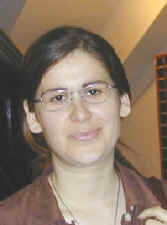 Валя
(хотя можно и
Ева, а можно и
Лия) приехала
совсем
недавно, но
уже успела
перезнакомиться
с доброй
половиной
АУКа (или АУК
с ней?),
развить
очень бурную
деятельность,
открыла несколько
курсов и
застать ее в
состоянии
покоя и хотя
бы
относительной
неподвижности
почти
невозможно.
Но
журналисты (пусть
даже и только
будущие) –
народ
упрямый и
настырный. И
вот
результат.
Валя
(хотя можно и
Ева, а можно и
Лия) приехала
совсем
недавно, но
уже успела
перезнакомиться
с доброй
половиной
АУКа (или АУК
с ней?),
развить
очень бурную
деятельность,
открыла несколько
курсов и
застать ее в
состоянии
покоя и хотя
бы
относительной
неподвижности
почти
невозможно.
Но
журналисты (пусть
даже и только
будущие) –
народ
упрямый и
настырный. И
вот
результат.
- Валя, что подтолкнуло Вас ехать в нашу маленькую Киргизию? Это было Ваше решение или решили за Вас?
- Нет, решение было сугубо мое. А подтолкнуло меня к нему желание путешествовать. Эта работа – возможность побывать в Азии, где раньше я никогда не бывала.
- Валя, Вы любите путешествовать; а в каких странах Вы бывали и жили?
- Где я только не была! А жила в Бельгии, во Франции, вИспании, в Шотландии, в Англии, В Уэльсе и, конечно, в Греции.
- А кем Вы работали в Греции до приезда в нашу республику? Тоже профессором?
- Я работала не в Греции (смеется), оттуда я уехала в 20 лет, а работала в Шотландии, в университете Стерлинга и в Уэльсе, в Кардиффском университете, а еще я была зарубежным репортером для Греции из Великобритании.
Валя взялась вести три курса: “Intro to journalism”,”Writing skills”, и “ Teaching newspaper lab”, то есть является куратором нашей газеты.
- Валя, а какова вообще цель Ваших курсов, кроме академических знаний? Что Вы думаете, будет необходимо нашим студентам?
- Практика, практика и еще раз практика (снова смех). Я постараюсь научить их быть хорошими журналистами, независимыми и умеющими мыслить критически.
- А Вы не хотите начать вести еще один предмет: “Критическое мышление”?
- Нет! Я вообще считаю, что этот предмет не нужен, как отдельный курс, его может давать любой профессор, ну, или почти любой. Критически мыслить можно всегда и на любую тему.
- Валя, Вы не работаете больше ни в каких вузах?
- Нет. Я думаю, АУК – лучший вуз в регионе, а вы – лучшие студенты, какие у меня были,- Валя неприкрыто льстит, но все равно приятно. – С вами очень интересно работать, каждая пара не похожа на предыдущую, потому что вы очень непосредственны.
- Валя, и последнее: пожелайте что-нибудь фрешменам.
- Фрешменам... (задумывается). Что им можно пожелать... Успехов в учебе, наверное.
Едва успев закончить разговор, Валя убежала. Ее ждал кто-то еще...
СМОТРЕТЬ НА МИР СКВОЗЬ ВИТРАЖИ
By Natalia A. Andrianova, Designer
Есть здания, возбужда-ющие любопытство; есть здания, вид которых рождает только жалость, есть просто «никакие» и, наконец, есть здания, вызывающие уважение. Поговорим о последних.
Корпус №1. Одна из самых первых резиденций правительства Киргизии (арх.Ю.Дубов 1936г.). Это здание пережило многое и многих. Смены правительств и вытекающие из этого перестройки меняли его облик. Самый первый его вариант был в стиле конструктивизма – прямые углы, ясные линии. В воспоминание об этом остался несимметричный план и окна-щели актового зала.
Окончательный облик здания сформировался в стиле раннего сталинского классицизма, но, впрочем, не без некого налета провинциальности - нет то𘦧о подавляющего величия, свойственного рафинированным московским образцам. Актовый зал, расписанный в этом же стиле знаменитыми венгерскими художниками Б.Уитцем и Л.Месарошем, уникален как одна из ранних удачных попыток совместить национальный и классические стили. Портреты вождей мирового пролетариата (Ленин, Маркс, Энгельс) написаны в суровой реалистической манере. Пробел в ряду фресок объясняется просто – изображение Сталина было замазано в 1956 году.
У плафона (живописи на потолке) есть одна странность- очень сложно определить направление звезды из центральной розетки. А если двигаться по кругу, то создается иллюзия вращения звездочки, несколько разрушающая строгость композиции зала.
Какие благородные пропорции, какие «породистые» цвета в СН! Какие возвышенные мысли должны приходить в голову под этими высокими потолками, как должны расправляться плечи и даже с языка слетать только возвышенная проза!
Корпус №2. Первоначально это была школа для детей тех, кто руководил народом из корпуса №1. В значительной степени это его противоположность. Он совсем не помпезен, даже прост. Если пользоваться музыкальной лексикой, то главный корпус – это несомненная претензия на ораторию, а второе здание - скорее изящная сюита.
«Изюминка» этого здания – конечно, витражи. Многочисленные опросы среди студентов показали - практически никто не знает , что же там изображено. То есть, каждый день топчут мраморные ступеньки и ничего не замечают! Не видят «древа жизни», слонов, изысканного жирафа, замка, всадника на золотом коне и многого другого. Ничего!
А теперь скажите – много ли в этом славном городе зданий с фресками и витражами? А сколько из них учебных заведений?
Нашим студентам повезло в этой жизни больше, чем всем остальным: у них лучшие преподаватели, лучшая библиотека, лучшие виды на будущее… им просто повезло, они могут учиться в этих стенах, касаться перил из мореного дуба и карельской березы, смотреть на мир сквозь витражи.
Имеющий глаза, да узрит прекрасное! Аминь.
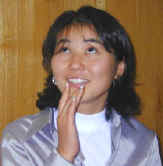 |
DURING THE BREAK
|
|
| Zarina Chekirbaeva, Chair of the Student Senate | Name and Position: |
David Huwiler, President of AUK |
| Taurus | Horoscope Sign: | Cancer |
| Let's put it "home" pet, then, my 5 month old niece | Home Pet: | In The US we have had both cats and dogs. We don't yet have pets in Bishkek. |
| Too busy person. No time to watch TV. | Favorite TV program: | Watch TV? When?! |
| Velvet beer | Favorite alcoholic drink(s): | Humm. Usually cognac-although I am developing a taste for Steinbrau. |
|
Seize the day |
Life Motto: | Here it is - and I'll buy a pizza for the first student to identify source of this: "Toilers of the world, disband! The old books are wrong. The world was made on Sunday." |
| I feel that I am loved by close friends | I love myself because | What a Q! I suppose what I like most about myself is an ability to empathize with others. (This should really be balanced with a question regarding what I hate about myself. But since you don't ask...) |
| My charactor allows me to be | I am an interesting opponent in discussion because | I rarely play by the rules. |
| Another summer gone by | Summer of 2000 was... | The best ever. I moved to Bishkek and AUK. |
| I'd donate it to our soldiers in Batken, who are protecting all of us. I am pretty sure that they'd find a better use of it. | If I had a machine gun... | Well, I'm tempted to say that I'd start looking for the author of this questionnaire. But I'd probably melt it down in order to replace soem of the missing plaques on Bishkek statuary. |
| I have one of my "favorite" seminars | I hate Mondays because | I used to hate Mondays, but no longer do. I honestly look forward to returning to AUK after the long weekend. |
| A professional who: knows and understands what and how he/she teaches, eliminates favorism, doesn't build barrier between him and students. | The ideal teacher is | The ideal teacher is one who learns from his/her students. |
| A group of optimistic and overly critical people, who are trying to learn from their young newspaper. | The Star is: | Bishkek's brightest and best... |
| Who would you choose as a future spouse-veryhandsome, but stupid or smart with unpleasant appearance? | Q for the next interviewee: | When you depart from AUK, what will you leave behind? How will AUK be a better place when you leave? |
| Just working on my future! | Bonus Question: What am I doing here? | Truthfully? Loving every minute at AUK, enjoying this island of intelligent and integrity. |
Editor-in-chief - Efim "Zima" Filipov
University Editor - Anisa Afshar
Political Editor - Anna Kirey
Russian Editor - Almaz Rysaliev
Photo Editor – Anton Kluchkin
Adviser - Evangelia Papoutsaki, Deborah Eisenberg
Staff who contributed to this issue: Konstantin Sudakov, Tatiana Pesina, Anton Klyuchin, Julia Balybina, Jessica Buckingham.