
OFFICIAL NEWSPAPER OF AMERICAN UNIVERSITY IN KYRGYZSTAN
APRIL 11 2002, VOLUME 3, ISSUE 6
In this issue you read:
Letter to the Editor (D. Huwiler)
Letter to the Editor (Kostya)
Letter to the Editor (Aza)
AUK Guard Served in Afghanistan
Is it Possible not to Cheat? (Veta)
From Student Council (Kyial)
French Soldiers: "We are all Elites."
Film (in Russian)
Poetry (in Rissuan)
Oh God, What Mistakes (in Russian)
Q & A (Galia and Baktygul)
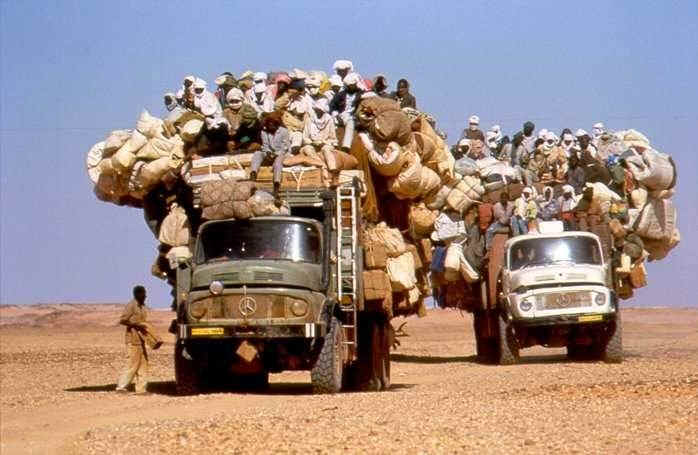
These days Afghanistan is a hot topic among students of International Comparative Politics (ICP) and Journalism (MM) departments. Some very brave students are willing to go there. For what you may ask? Some to volunteer, some to report, some to do a research. But they all have one common goal – to help to establish the new Afghani state. Yes, we know what you are thinking now. We agree – it is dangerous. On every news program there is at least one report from or about Afghanistan. Among volunteers from AUK there are both guys and girls.
Sure, it is easy to say but hard to achieve. A big amount of money is needed for the trip to Afghanistan. Just to get there you have to fly about 2,5 hours (Bishkek – Dushanbe – Khoroq) and then drive to Taloqan, Kunduz, Feyzabad and further. Our heroes all have different reasons and motivations about Afghanistan. We’ll tell you this: none of our brave volunteers have found a sponsor or an organization that could take them to the destination point. So, if you know someone looking for volunteers contact [email protected]. The final decision is not made yet.
Sure, many may think that they are crazy but we are all diverse and have different views on different matters. Our fearless students of Mass Media program share with us these things: “We don’t care what people will think about us. Some of us has seen the Osh Events and felt the fundamentalist invasion in Jalal–Abad. Sure, there can’t be a comparison of the Osh and Batken events with those in Afghanistan. Our families know that it is a risk but we are taking that risk. There is nothing useless. Afghanistan will be a priority for mass media at least for the next five years and we, as journalists, will benefit from the Afghani experience that we can utilize it in our future profession”. Marina Ivanova: “My friend already picked up an Arabic name for me – Maksuda. I know it is dangerous but if a person has to die he’d die anywhere. I am not afraid to go there. Plus, I am a future journalist”.
The only British-American Studies student among these volunteers Kseniya Grigoryeva says, “Currently, I am doing a research about Afghani–Kyrgyz relations, and going there would be a good opportunity to help them and do a research. I just can’t see those refugees, my heart aches when I see them”. Many refugees will arrive to Kyrgyzstan. What rights do they have and who will protect them? Law students Kanykei and Zarina Omorovas: “We are future lawyers. Many refugees will arrive to Kyrgyzstan and it is important to know both Kyrgyz and Afghani laws. We’ll help Afghani refugees to deal with judicial questions and also we want to see the situation with our own eyes and feel it. Our father is a military man. So, there is really nothing to be afraid of”. Yes, freedom – sweet and holy word for those who know the value of it.
Chyngyz Shermatov shares: “We all live in Kyrgyzstan. I love my country but I really don’t know its value – value or Freedom. Maybe if I go to Afghanistan then I will know the real value and meaning of the Freedom”. Below is the list of AUK volunteers.
|
AAS |
Kseniya Grigoryeva |
|
ICP |
Azamat Ababakirov |
|
ICP |
Erica Keldibek kyzy |
|
ICP |
Bakyt Orozov |
|
LAW |
Kanykei Omorova |
|
LAW |
Zarina Omorova |
|
LAW |
Chyngyz Shermatov |
|
MM |
Bakyt Azimkanov |
|
MM |
Aziz Hasanov |
|
MM |
Marina Ivanova |
|
MM |
Marina Kim |
|
MM |
Saida Malaeva |
|
MM |
Voldemar Mukharinov |
We wish them good luck, strong health, fresh mind, success in everything they do and start. God bless you and if they find a sponsor and go to Afghanistan – bon voyage!
The American University in Kyrgyzstan hosts representatives of eighteen countries from all over the world. It turned to a happy home for thirty-eight different ethnic groups. Next academic year of 2002–2003 our university will have an addition to its multiethnic community – fifteen young talented Afghan students will study here and share the house that is called AUK.
The East–West Center for Cultural Dialogue that opened at American University in Kyrgyzstan is in charge of the process of bringing Afghan students and placing them in Bishkek. AUK will sponsor five Afghan students and the Open Society Institute (OSI) will sponsor ten future AUKers. Irina Mozuleva, Center’s Coordinator tells that Afghan refugees in Kyrgyzstan already called and were interested. “His Excellency Mr. Habib ur-Rahman, Pakistani Ambassador to Kyrgyzstan promised to help us with the selection process. Pakistani authorities will go to refugee camps that are located near Afghani–Pakistani border, and bring talented young men and women to Kyrgyzstan” – said Irina Mozuleva.
As we all know women were prohibited from school during the Taliban regime. “Sure, our center is more interested in bringing young female students,” comments Center’s coordinator. Democratic Republic of Afghanistan and its citizens are Shiite Moslems: the East–West Center for Cultural Dialogue has thought about that and currently thinking about creating a special room for Muslim prayers – namaz. It is not all: Arabic symbols will be installed in AUK Computer labs, apartments will be rented, and for those Afghan students who have spouses their babies will be taken care of. “But that are all future plans” – said Irina Mozuleva.
Fifteen students from big country like Afghanistan in reality is a small number. “If more than fifteen students will apply and be successful, I am pretty sure we will be able to find sponsors. I know that Afghan students are eager to study – we will give them that opportunity” – added Mozuleva at the end. It is great that our friendly, cosmopolitan, beautiful and our common house – Kyrgyzstan will host young students from Afghanistan, future leaders of new Afghan state.
By D. Huwiler, President of AUK
March 27, 2002
c/o The Star
American University
Dear Constantine:
I want to respond in writing to some of the issues you raised at our interview last Monday. You may share this with anyone you like, and you may print it in the Star if you like, as long as it is printed in its entirety. I would be more than happy to participate in a public discussion of what you have been doing of late.
Certainly you have a right to ask whatever questions and raise whatever issues you like. You may also write whatever stories you like, and the Star will be free to publish whatever your editors approve. The administration will not interfere. But freedom of expression cuts both ways, so I have a right to reply and to express my opinion of the professionalism—or lack of thereof—that I witnessed this week.
You walked into the meeting and challenged the honesty and the integrity of the Academic Senate, of the Board of Trustees, of the administration, and of AUK department heads. You misrepresented the views of other students, as I learned the next day when I asked Anya Kirey about the Amnesty International issue (She was puzzled about why you said what you did, since she had no complaints about the space that AI was offered. I, however, know exactly why you did it). You also misrepresented facts, claiming, for example, that the Academic Senate could not be objective because it consisted of a bunch of locals. Aside from the apparent racism, the comment is insulting to the many honest and intelligent local people that I know and work with every day at AUK. Do you really think that people like Camilla Dushebaevna or Gulnara Amanovna or Askat Dukenbaev or any of many, many others that I could mention are corrupt? I will tell you something, Con. You could learn something about integrity from any of them. The accusation is also factually incorrect, as you would know if you had ever read the University Charter, which specifies that the Academic Senate include foreign faculty.
 Particularly interesting was the accusation, raised in
connection with the issue of creating an AUK hiring policy, that people here
have allowed personal feelings and relationships to interfere with their
professional judgment. Do you
really fail to see the irony here? Do
you expect me, or anyone else on this campus, to believe that the entire
interview, both tone and content, was not entirely the result of your personal
feelings and personal relationships? Do
you really believe that your performance as a journalist at the interview Monday
reflected either ethical behavior or professional objectivity?
Particularly interesting was the accusation, raised in
connection with the issue of creating an AUK hiring policy, that people here
have allowed personal feelings and relationships to interfere with their
professional judgment. Do you
really fail to see the irony here? Do
you expect me, or anyone else on this campus, to believe that the entire
interview, both tone and content, was not entirely the result of your personal
feelings and personal relationships? Do
you really believe that your performance as a journalist at the interview Monday
reflected either ethical behavior or professional objectivity?
I don’t know what you have been told in your journalism classes about ethics, but I’m going to give you my opinion. A real journalist does not choose topics, ask questions, and write stories based personal interest or personal relationships. Objectivity is easy when there are no personal issues involved, where there is nothing at stake. But the real difference between a pro and a hack shows up when there are personal issues. The professional journalist puts aside personal feelings and looks objectively at the facts. The hack exploits his or her position as a writer in order to “axe grind.” Whatever you may think, I was not angered by the interview Monday. But I was certainly disappointed. I expected better of you. There was a time when I expected that AUK might one day be proud of the work you would do as a graduate of our University.
I was further disappointed to hear (from six people at this point, including four students) about your remarks to a visitor from OSI last week. Once again, at AUK you will always be free to express your views. I was not there to hear what you said, but you should know that your fellow students and others in the University community were both appalled and embarrassed for you. Do you really expect that anyone believes that your newfound contempt for the University has nothing to do with your personal relationships? Regardless of what you may think you are accomplishing, you are not hurting me, and you are not hurting the University. You are hurting yourself and your reputation. You are undermining the respect that others on campus have had for you in the past. You are damaging the credibility of every story you will ever write as a journalist, because people will never be certain of your honesty or your objectivity. Journalism is a tough business. Those with both skill and integrity achieve success. The others end up working as third-rate hacks for their-rate media outlets. That’s your fate, Con, unless you can do a whole lot better that what I have witnessed recently.
I suppose that you are telling yourself that this is a special case, that the next time you face an ethical dilemma you will do the right thing. Well, I have news for you. That is what every unethical professional tells himself. It is just this once. Beginning next time I will do the right thing. Do you believe that? You are not dumb. It is time to start acknowledging the truth, at least to yourself. You are on track to be part of the problem in this part of the world rather that part of the solution. You will fit right in with the good old boy network of journalists who are bought and sold, who sell their opinions to the highest bidder, who write for reasons other than the truth—and who are respected by no one.
OK, Con, now it is my turn to ask a question. At what point in your career will you develop a sense of professional ethics? If not now, when?
Warm regards,
David Huwiler
President
American University
By Constantin Sudakov
On Monday, March 25th, 2002, I went and talked with AUK president Dr. Huwiler during his open hours when he meets with students. I had a number of questions about AUK that interested me. It took us about one and half hours to talk and I did get answers to most of questions I had.
The most important issue that concerns me at the moment is how people are getting hired at AUK.To get the highest quality education, AUK should ensure that it has the employees with the best qualifications. The only way to make sure we get the highest qualified personnel is to provide open competition for positions at AUK and to have an independent selection committee set up. The most common practice is to advertise positions in mass media for a certain period of time and have the applications reviewed by and voted on by the members of the independent committee.
At the moment to become an AUK employee one has to apply at AUK departments. Once approved by the department, a request is being sent to the administration and it’s Dr. Huwiler who makes the final decision on hiring someone with his signature. This procedure leaves a lot of room for influenced or biased decisions, even though I do not assert that this is necessarily the case.
David Huwiler said that procedures providing equal opportunities have not been introduced yet because we have hundreds and hundreds of other important things to work on at the Academic Senate. Indeed, over the past year and a half there have been quite a number of various policies adopted at the Senate. Are most those policies aimed to provide the highest quality of education? Indirectly. Open competition, in contrast, directly influences the quality of education we receive.
Dr. Huwiler also expressed his doubt on necessity of creation of open competition. He said that according to his experience “positions are advertised but they are not legitimate offers in reality and the whole process of open competition is just a formality because it is already known who will be hired.” Of course, if we try to establish the tradition of open competition at AUK and we actually doubt that it will work, then there’s no point in wasting our time. But, hopefully, we do want to use our resources most efficiently and provide students with the best education we can. There’s no more time to waste. And we have to push our administration to work on this issue. Otherwise, don’t complain about a teacher that you don’t like—because there are possibly others that you would like and who would be more qualified but you made no effort to ensure that AUK looks at all of the options while selecting that teacher.
**********
One day after the meeting with Dr. Huwiler, I have received a letter from him. It is printed in this issue of the newspaper.
I personally was shocked by the tone and content of the letter. Validity of claims and accusations of mine presented in the letter of the president can be questioned since many of them are to a large extent based on his personal interpretation. I just went to ask several sensitive questions about AUK during the open hours of the president, which, as I see it, in no way could impart my personal feelings and relationships. The major questions I had for AUK president concerned open competition for positions at AUK, new system of dealing with money at AUK, and distribution of space in relation to the recent reception of the second part of the main building.
I also do not understand Dr. Huwiler’s consistent accusation of my “personal feelings and personal relationships” interfering with my professional work. I would imagine that having written in such a detail about my integrity, objectivity, and ethics, Dr Huwiler could at least reveal what he means by “personal feelings” and “personal relationships.” Otherwise, many of his claims remain unsupported.Does he mean my relationship with Barrie Hebb who was a lecturer at AUK and who was fired recently? Was he also accused of personal feelings and relationships when fired? Yes, I have been in a relationship with Mr. Hebb but there’ve been many cases of teachers getting involved in intimate relationships with their students and I don’t understand why Dr. Huwiler is so concerned about my personal life in this context. But there were, and there are, student-teacher relationships at AUK. Moreover, I wasn’t even a student of Barrie Hebb.
Letter to the Editor: Response, Die "Cooperation"
By Azamat Ababakirov, ICP
The most logicless article I have ever read. The author of the letter entitled “Cheating: Vivat, Cooperation!” (The Star, section “Letter To The Editor,” March 19, 2002) missed the whole idea and purpose of academic honesty and the principle that students work for themselves and not for grades. The author made so many flaws in reasoning and logic, besides, s/he contradicts herself in every other sentence.
The author starts off saying “less diligent and successful students can be caught in various ways of cheating” and discusses those various ways of cheating and how professors condone instances of cheating, because either they are “kind-hearted” or they have “favorite students.”
Then, the author suddenly accuses professors, and only them, of “non-qualified knowledge of students in some disciplines.” First of all, professors have little and minuscule to do with the failure/success of a student. Professors guide and direct, and only students are responsible whether they succeed or fail. The author blames professors of some students’ being losers and continues by saying “...if teacher cannot give fine education, he should at least not spoil the student’s life with low grades....” Does it mean that if only one of the 15 students is a loser, than the teacher “cannot give a fine education”? Also, it is strange that the rest of the 14 students of the teacher, who cannot give a fine education, are pretty much successful. I thought that they were supposed to receive a bad education as that loser. It is all about students!
“Cheating is art, skill, and hard work.” What a tasteless statement!!! It never was, never is, and never will be art. What is the point in preparing shpargalkas? Instead, you could spend the same amount of time reading and preparing for the test? Also, the author contradicts in many places, but I cannot omit one of them. In the forth paragraph the author says teacher “should not spoil the student’s life with low grades....” Then the author starts the very next paragraph by saying “purpose of the education is Knowledge, but not Grade.” Why cheat, if you do not care about your grade? Students cheat not to get their life spoiled by low grades, right?
The author also coined a new word, or rather gave a new meaning to the word cheating – cooperation. Cooperation!!!??? BS. Cooperation during exams should not be tolerated and every attempt must be punished (e.g. getting kicked out of the university right away, lifelong shame, etc.). You have four months during the semester to cooperate, and forget about “cooperating” during the exam. You study for yourself, not your teacher, parents, etc. Why does your friend have to “give you a hand.” To me, it seems that you are using and abusing your “friend.” S/he works hard, and you get the grade? BS. If you think so, you do not deserve to study. You can go to another place and “cooperate as much as you want. It seems to be a fair deal.
To people, who have power: Don’t you tolerate cheating!!! You have already made a precedent by allowing cheater-students to rewrite the exam and stay in AUK. You should have kicked them out, all of them. It was the biggest mistake to let students go away with it. I call people, who have power and might, to adhere to the principles nailed in the kitchenette.
AUK Guard Served in Afghanistan
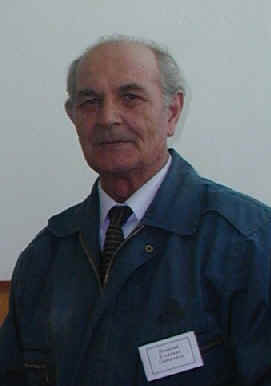
You would be surprised to hear but one of such specialists was actually Nikolay Egorovichh Sidorenko, our current “vakhtyor”. The Star was pleased to share his wonderful five days experience in Afghanistan.
In 1962 a groups of Soviet aviation specialists, including Nikolay Egorovich Sidorenko were sent to Afghanistan. They has a special appointment to promote advance methods of training for Afghan pilots to do “Round flights” during the parade in Khanabad. Air-parades were almost similar to those that were held during the Anniversary of November 7 and May 1 in Soviet Union.
 In a small landing space for
plains, both Soviet and Afghan pilots were putting all their strength making
hundreds of flights per day, so to create a colorish parade.
This scene reminded a sort of dance choreography in the air. Nikolay
Egorovich at that time was a chief engineer in military squadron, who had
professional experience in recovering the flying machines from tiny damages.
Therefore, before each flight, he
was responsible to check the conditions of plains, whether the system is set up
and contains enough fuel. Airport was far from the city and transport was not
available. During the hot days, among the four sides Gigantic Mountainous desert
the young Afghan males had to deliver the fuel for plains on donkeys. Obviously,
filling pipes were not available as well and pilots filled the fuel tank on
their own, with buckets. Although sometimes, they were too exhausted and tired,
still no one left any work behind.
In a small landing space for
plains, both Soviet and Afghan pilots were putting all their strength making
hundreds of flights per day, so to create a colorish parade.
This scene reminded a sort of dance choreography in the air. Nikolay
Egorovich at that time was a chief engineer in military squadron, who had
professional experience in recovering the flying machines from tiny damages.
Therefore, before each flight, he
was responsible to check the conditions of plains, whether the system is set up
and contains enough fuel. Airport was far from the city and transport was not
available. During the hot days, among the four sides Gigantic Mountainous desert
the young Afghan males had to deliver the fuel for plains on donkeys. Obviously,
filling pipes were not available as well and pilots filled the fuel tank on
their own, with buckets. Although sometimes, they were too exhausted and tired,
still no one left any work behind.
Nevertheless, a day before the occasion, it was decided that air-parade would be held by Russian pilots. Unfortunately, the young Afghan pilots have not obtained early proper trainings. They had merely flown in open space, while doing their studies at Bishkek Aviation School and mountainous space scared them a little bit. However, during the parade, these pilots were assisting Nikolay Egorovich with technical restraints.
Parade eventually was remarkable. Afghan people were amazed to see the air performance and after the whole event held an honored dinner for Soviet pilots.“ There were beautiful singing and dancing. Afghans were very hospitable and sociable. And it was pity that we were not allowed to take any pictures with our Afghan colleagues. Strict rules of Soviet times, no picture while being in special appointments” – said Nikolay Egorovich.
The most clear memory of Nikolay Egorovich Sidorenko about Afghanistan is the impression of rich markets in Mazori Sharif overloaded with all sorts of commodity , that weren’t available even in Bishkek. Before returning home, Nikolay Egorovich bought a small handmade Indian knife with colorful decoration on it and still keeping it as a memory of old-times peaceful Afghanistan.
By Veta Shapkina, the Student Affairs Coordinator
This time the story has a completely new perception on copying, cheating and fazing on the exams. Read what professors and the students have to say on the process of taking exams. You will be surprised to find out the kind of techniques they use to achieve their goals to persuade each other. I have collected a number of comments from the side of the students about professor during whose exams they think it is easier to get a chance to cheat. The article does not include all of the professors, but are those whom I did interview. Professors were told the information told by the students and you see the answers that they gave in response. I would ask the reader to be very careful observing how the rules and the polices of our university work in practice.
‘It is possible to cheat at the class of any teacher, except for professor Konstanz, an accounting class’, acknowledged one student, once at the class of professor Murzabaeva (economics department) he sought to cheat but could not accomplish his task for simply psychological reasons. After these words the academic discipline should really consider revising at least for my imagination.
Now look at the stories and think whether the issue of academic honesty is still important for AUK.
First, I approached professor Brudnyi (psychology department) wondering about his policies of behavior during the exams at his class. He, in his turn, politely explained that he rarely leaves the class during the exam and if he does it is only to call for an assistant. As professor Brudnyi told me two people controlling the exam create more psychological pressure on the person and thus students have less intention to cheat. At the same time he said ‘ it is very hard to cheat on any psychology exam’, and he rarely caught anyone cheating. When asked what he does if such a case occurs responded that in AUK he does not remember such cases and that is why he never imposed any penalties on anyone. On the whole process of cheating Mr. Brudnyi reflects: ‘ if the person does not know the subject than “shpargalka” will not help’.
Interestingly the information that became available from the students about this professor are much different. Unfortunately they preferred to be incognito due to the atmosphere in the wall of the university. One student from 2nd year confirms that at the class of Psychology of Communication this professor openly gave a chance to cheat at the final. At some other class, already a different student in his 3rd year told a story. During exam one student was noticed by Brudnyi with open book on the front desk. Professor asked whether the student was copying the information, and the student responded that he only consulted the book. Brudnyi was reported to be saying: “Look at this smart guy, he is consulting the book”.
Mr. Turdaliev (Law) is a part time professor. From the words of the students taking his “Intro to Law”, it seems that he is not quiet familiar with the university traditions and customs on academic honesty. Many students talk at his exams and classes, leave the room and he seems not to impose any penalties on such students. Once the professor cut one student for cheating, but at the end, this same student received a top grade for an exam anyway. QUESTION: is it that he does not know our culture in AUK? Or what?
Professor Turdaliev himself seemed a very strict teacher during the interview. He was frankly surprised that his students could provide such information on his account. First, he said that he puts his requirement in his syllabus and students should be aware of them as he also repeats them at the oral examination, where students draw tickets and then prepare for some time. If he tries to eliminate any attempts of talking or using cheating material before the class, as he extracts any papers under the table before the exam begins. After giving notice for not talking for 3 times he simply gives “F” to the student as Mr. Turdaliev sees that the student is not prepared for the exam. In other terms, the professor creates all the possible conditions to avoid students from cheating: one student per desk, keeping the distance, observing the class from behind.
Shivaza, professor from Business Administration department, stresses that ‘it is a responsibility of teacher to explain the rules of Academic Honesty and remind them before the exam”. He believes that “if the students are sure about the knowledge they will never cheat at the exam”. The majority of the students do not cheat, as all of them know his strategies how to handle those who do disobey at the exam.
While listening to the students I figured out that Mr. Shivaza has his own method of dealing with students. I even gave it a name “Shivaza method” even though Mr. Shivaza kindly asked me not to. Several students reported that it is possible to copy material from the notebook and then write it down on the exam sheet during his exam. BUT! If he notices this, he does not say anything, later, however, he makes an oral examination for those whom he noticed violating the academic honesty. Sometimes he tells them to leave the room without accepting an exam sheet.
Well, it is a very effective way of checking knowledge of the student.
Bermet Karabekova, 2nd year Business Administration, also Department Representative at the Student Government, suggests a way to prevent cheating and a more valuable source of studying a creative work, such as projects for computer classes, HTML-creation websites, where you cannot help but do most of the job. Another example is the ‘Marketing Research and Financial Accounting’ semester project where the students have individual works, which are both interesting and useful. She sees such individual creative work as exciting and most valuable in the process of understanding the subject. However, there is a serious problem in managing all of these projects if the student has 18-20 classes per week, even in credit system there is not much access to computer, it is much easier to prepare for a simple exam and is a creative method of checking the knowledge but does not work much in such a situation. Also, Bermet gave example of professor Alenkina, Marketing teacher, who prepares special tasks, which are impossible to discuss with neighbors and often they are individual for every single student. She suggested another way was a type of system where placement of students for all types of exams is with one student per desk, and in chess order.
Ismalilova Aidai, 2nd year Business Administration, told me about professor Hardin. She and couple of other students shared that at his class it is very uncomfortable to cheat because of the nice attitude that professor shows toward students. A person feels to be ashamed to use any of cheating material during his exam as in their words he himself tries to be open and honest, somehow encourages students to avoid cheating.
Jyldyz Sultanmuratova, 2nd year Economics, shared her opinion about leave of Barry Hebb. From her words ‘he is a very good professor, it is a pity to lose such a teacher’. Jyldyz finds it is to be fair to give grade “ F” for cheating at the exam. Boris Pilipenko, 3rd year International and Comparative Politics, offers his own way of solving the problem. He addressed the students saying: ‘JUST NEVER START’.
So, here we see that there are many methods to avoid cheating and prevent academic dishonesty. At times we have to agree that for now it is hard to make it possible to change the student cheating spirit, thus maybe we should ask our professors to help us in this, or ask our student to assist the professors.From Student Student Council (SC)
By Kyialbek
Hello and welcome to the AUK Student Council (SC). The SC would like to inform you of its recent activities.
On February 27, 2002 the SC held a meeting with the representatives of the Computer Department. The meeting was prompted by the numerous concerns of the students over some computer related issues. Thus, the possibility of extending the current print limit up to 300 pages to freshmen, sophomores and juniors and 400 pages for seniors writing BA theses (that is adding 100 and 200 more pages to the existing print limit of 200 pages) was discussed. Additionally, the SC wrote a memo to the President asking for the extension of the print limit. Unfortunately, due to budget constraints there is no way the university could afford the extension of the print limit.
The problems with the sole printer were discussed as well. One basically could not print for hours whenever the printer would run out of toner as there wasn’t a spare one. In order to prevent such problems in the future it was suggested to have a spare toner that could be replaced anytime the working toner would run out. If the problem with the main printer persists, students are advised to talk to lab administrators and print from the 208-lab printer. The computer department personnel said it would be better to have the second big printer, which would make things better, but again as with the print limit it requires additional funds that the university lacks.
 It was also agreed that any complaints about the work of lab
administrators have to be addressed to the Computer Dept. office and resolved
immediately with the chief administrator or department head. If it is the fault
of the lab administrator then corresponding punishment will follow. The lab
administrators were asked to either wear badges with their names or put their
nameplates. We believe the meeting was fruitful as we observe few but still some
changes; to name a few subjects introduced following the discussion: stable
working printer, lab administrators’ nameplates; lab 211 with seniors-friendly
hours and no limit on computer.
It was also agreed that any complaints about the work of lab
administrators have to be addressed to the Computer Dept. office and resolved
immediately with the chief administrator or department head. If it is the fault
of the lab administrator then corresponding punishment will follow. The lab
administrators were asked to either wear badges with their names or put their
nameplates. We believe the meeting was fruitful as we observe few but still some
changes; to name a few subjects introduced following the discussion: stable
working printer, lab administrators’ nameplates; lab 211 with seniors-friendly
hours and no limit on computer.
On March 4, 2002 the Councilors met with President Huwiler and discussed campus-related issues. As usual, computer problems dominated the agenda. Lately the Internet speed is terribly slow, especially during the day and gets quicker only around 7 or 8pm. When asked whether the university could buy more channels to speed the Internet, the President informed that currently it is impossible due to, again, financial constraints.
There is a university backyard clean-up or subbotnik for Student Councilors planned on March 31, 2002 at 10 am. We decided to clean the yard, which is behind and between the AUK new building and the Foreign Ministry as we realized that with the weather getting warmer we could do some studying outside. Perhaps we could have some benches placed in the shade to chill on in the summer heat between taking final exams.
We always welcome your ideas and suggestions on any of the campus-related issues. You can either personally talk to us; come to our Wednesday 5pm meetings or e-mail [email protected]
French Soldiers: "We are All Elites."
Many people are worried about foreign air forces at Manas International Airport. American, French, South Korean, Danish, Australian, and Spanish air forces have located their camps near Manas village. Every day we see many army men and women in downtown Bishkek buying Kyrgyz souvenirs and walking in groups. Every week there are reports about foreign air forces on television, radio, the web, and newspapers. To find out how guests (foreign forces) live and spend their time I went to Manas International Airport and met with American, French, and South Korean officers. Unfortunately, there was no opportunity to meet with the Spanish officer.
As a student of AUK and alumnus of an American high school, first, I asked Captain Richard Essary, Public Affairs Officer of the U.S. Air Forces in Kyrgyzstan to answer some questions.
- How many American soldiers are in Kyrgyzstan?
- Well, approximately 1400.
- We all know the purpose of your stay here, what are they exactly?
- There are three main reasons: first to fight the Taliban and al-Qaida. Second to reinforce, and the third to help to send humanitarian aid to Afghanistan.
- There was information on KOOPT News about drunk American soldier running in Manas village. How can you comment on that?
- Well, I’ve heard that and checked. It didn’t happen.
- In Manas village many people say that they are afraid of the military men with weapons. How do you deal with that?
- Sure, it is unusual for them to see us with weapons. But we talk and try to communicate with them. We do our best.
- What about the language barriers?
- We have our own interpreter Aigul. I learned some words like spasibo, etc.
- Have you thought to go to the local universities and meet with the students?
- We will do that: go to schools and talk with students. Maybe in form of a question and answer.
- How about entertainment?
- On base we have a special squad for recreation. We call them our airmen. We watch latest releases on DVD and play games, cards, and monopoly. We have a ping-pong table, library and armed forces network channel, plus local television channels. Our soldiers e-mail their families and have 15 minutes of a free talk time with their families once in two weeks. There are also cultural exchange tours to downtown where we go to restaurants and shops. By the way my daughter Caty Jo (second grade) and her class now are learning about Kyrgyzstan.
- Is it a special class or school?
- No. It was a surprise for me too. They learn history of Kyrgyzstan.
- Thank you for your time and interview.
On March 1, 2002 many domestic flights were delayed and some were canceled due to bad weather conditions. Mr. Tom Hale, an Osh NGO Director shares his opinion about antiterrorist coalition while waiting the flight #K2 144 to Osh: “I think the French are really relaxed and very free. Seems like they are special elite division. Americans seem to be just ordinary soldiers”. Flight #GI 019 to Jalal-Abad was canceled; here what Egamberdy Kabulov, a Jalal-Abad newspaper journalist thinks: “I don’t understand why there are six Mi-2000 planes. From my Soviet Army experience only Mi-2000Ns (Mirage-2000Nuclear=Mi-2000N) were special for bombing. Some uniforms just irritate me. I guess having the Russian Air Forces would be better than having these four”.
I was looking for the French officers and saw a French soldier annoyed by the Kyrgyz Telecom taxophone, and other Jacque Barraud smoking outside. I couldn’t understand any French, except monsieur, bonjour, merci, and madame. Finally, at 12.20 am I met Lieutenant-Colonel Bertrand Bon, Public Affairs Officer of the French Air Forces in Kyrgyzstan.
- Can you tell us how many French soldiers are on the soil of Kyrgyzstan?
- Approximately about 300-400.
- What can you comment about those military Mi-2000 planes? Why they are here?
- Well, for defense reasons.
- Are you planning to visit a local school?
- Sure, we’d love to visit your university someday.
- Is it true that French soldiers are from an elite division or foreign legion?
- In aviation we are all elite. Everyone knows his or her job. We are all elite.
- Merci, monsieur.
All four air forces are free and open to the public and press. They are more than happy to talk and share their thoughts with us. All rumors about drunk soldier and others ought to be false or exaggerated. So, there is nothing to be afraid of. Sure, some of our fellow countrymen will think the opposite. We are all different. But what unifies us all – we all belong to a human race and we want Peace on earth.\
Начало
С начала февраля готовится к выходу фильм комедия на английском языке о жизни студентов. Актеры – ученики курса “Основы Драматического Искусства”, режиссер и руководитель проекта – Николай Шульгин, сорежиссер и переводчик – Ефим Филлипов.
Понедельник, 3 часа дня, СН первого корпуса, Шульгин командует: Уборщицы пошли!
За кулисами звучит задорная песня, на сцене появляются две распевающие девушки с вениками и тряпками в руках.
- Стоп! Вы уборщицы или интеллигентки? – Шульгин вскакивает, подбегает к одной из играющих. – Запомни, ты не играешь уборщицу, ты – она и есть. Дальше!
С начала февраля 2002 года студенты, занятые в постановке, учат и репетируют свои роли, отыгрывая затем каждый эпизод. Словом, постигают тайны актерского ремесла.
- Честно говоря, - рассказывает одна из студенток, - я не ожидала, что будет так трудно играть. Конечно, у нас была некоторая подготовка в самом начале семестра: Николай Григорьевич учил нас приемам самоконцентрации, постановке голоса, внимательности и качественной работе друг с другом. Но то, что мы делаем сейчас, гораздо сложнее, чем те этюды – короткие эпизоды, где мы играли персонаж на 2 минуты. В фильме у каждого несколько ролей и в каждую надо вжиться полностью, принять характер героя, почти стать другим человеком. В общем, задачка та еще.
Через тернии к звездам
А кто сказал, что будет легко? Ведь фильм обещает стать результатом серьезной работы целой команды. В составе четырнадцать актеров, два режиссера, оператор. За полтора месяца роли несколько раз меняли своих хозяев, оттачивались некоторые фрагменты. С 11 марта Филлипов решил начать первые кинопробы. “Мне нужно посмотреть, как вы будете держаться перед камерой, и, если понадобится, поработать над поведением на съемках”. Оказалось, что “поработать” придется не меньше, чем на репетициях ролей. Оно неудивительно – ведь все не только не профессиональные актеры, но и многие оказались перед камерой впервые. Атмосфера театра, вживание в образ и красный глазок камеры будоражат нервы, заставляют чувствовать себя по-иному – оттого и волнение, и забывчивость. Как на любых съемках, здесь случаются смешные эпизоды, курьезы. В одной из сцен, те же уборщицы разошлись не на шутку, и, в процессе уборки, выбрасывая все ненужное из комнаты, “выбросили” стул прямо в оператора. Тот отделался легким испугом, а актерский состав дружным хохотом.
Фильм и спектакль
Фильм – не единственный проект, который разрабатывается в данное время. У него есть родственник. Шульгин написал пьесу и по ней снимается не только телесериал, но и ставится спектакль. Над спектаклем работает другая группа “Драмы”, более старшая. И самое интересное - версия спектакля русскоязычная. Этот факт, по словам самого Шульгина, “делает фильм и спектакль совершенно разными вещами, несмотря на один и тот же сценарий”. Поэтому в постановке фильма понадобилась помощь Ефима Филлипова в качестве помощника режиссера и переводчика. С группой, играющей в спектакле, Шульгин занимается в одиночку, ведь у него большой опыт театральных постановок. Кто же не видел праздников Посвящения в Студенты, Президентского Бала, КВН и другие концерты?
Когда мы это увидим?
Продвижение пьесы к финалу зависит от того, как быстро студенты учат текст. Недавний Нооруз и Президентский Бал сильно задержали время выхода, так как Шульгин сам занимался праздничным концертом. Николай Шульгин уверен, что во время спектакля зрительский зал будет забит до отказа. Предположительно, это будет СН первого корпуса. Но если желающих будет больше, чем количество мест, то АУК, возможно, арендует юношеский центр Сейтек. В этом случае цену на билеты придется увеличить, а в АУКе она будет чисто символической.
Приблизительные даты выходов фильма и спектакля разные. Спектакль намереваются поставить в начале мая. А фильм закончат снимать к концу этого года.
- Фильм будет только для АУКа?
- Зависит от его качества. Первым делом он, конечно, будет показан в АУКе, но потом, если сериал станет удачным, то его смогут посмотреть все, кто понимает английский язык, в том числе, его смогут показать в передаче “Салам Би”.
В обеих постановках задействовано около 28 актеров из обеих групп “Драмы”, количество серий от 5 и больше, время одной серии приблизительно 5 минут. Всего сериал рассчитан на 45 минут. Это время и для фильма и для спектакля.
Нам же остается только пожелать успеха актерам и руководителям и ждать премьеры.Актан Абдыкалыков родился в 1957 году в селе Кунтуу, Сокулукского района Чуйской области. Народный артист КР, лауреат государственной премии имени Токтогула, лауреат премии союза молодежи. В 1990 году состоялся дебют в качестве режиссера-постановщика документального фильма «Бежала Собака», получившего Гран-при в Баку. В период с 1991 по 2001 гг созданы фильмы: «Где твой дом, улитка?», «Селкинчек», «Бекет», «Асан-Усен», «Бешкемпир», «Маймыл» и социальные ролики «Ырыс алды - ынтымак», «Алакандай элибиз, ынтымактуу бололу», «Не сожги себя».
Если попросить представителей кыргызстанской молодежи перечислить имена современных отечественных кинорежиссеров, то, в основоном, можно услышать только одно имя – Актан Абдыкалыков. С его именем связывают возрождение «кыргызского чуда» - так называли период рассвета кыргызского кинематографа в 50-70 годах.
 Так уж
повелось с
самого
начала
профессиональной
карьеры
Актана
Абдыкалыкова
, что ни один
его фильм не
оставался не
отмеченным.
Новая
работа
Актана
завершает
кинотрилогию,
две первые
ленты «Селкинчек»
и «Бешкемпир»
в частности,
который
получил
международное
признание,
завоевав вторую
премию
международного
фестиваля в
Локарно (Швейцария),
Гран-при в
Алматы (Казахстан)
и еще около 20
различных
призов на
фестивалях
Европы и Азии.
Во Франции и
Японии, а
также в Нью-Йорке
картина шла в
широком
прокате.
Так уж
повелось с
самого
начала
профессиональной
карьеры
Актана
Абдыкалыкова
, что ни один
его фильм не
оставался не
отмеченным.
Новая
работа
Актана
завершает
кинотрилогию,
две первые
ленты «Селкинчек»
и «Бешкемпир»
в частности,
который
получил
международное
признание,
завоевав вторую
премию
международного
фестиваля в
Локарно (Швейцария),
Гран-при в
Алматы (Казахстан)
и еще около 20
различных
призов на
фестивалях
Европы и Азии.
Во Франции и
Японии, а
также в Нью-Йорке
картина шла в
широком
прокате.
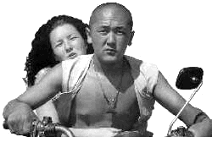
Фильм «Маймыл» наполучал еще больше призов, перечисление которых занимает слишком много драгоценного места на полосе. Главную роль исполняет сын Актана – Мирлан Абдыкалыков. Внешность юноши соответствует его кличке, отсюда и название фильма. Премьера, на которой собрался весь творческий и не очень бомонд столицы, прошла на «ура» в кинотеатре «Россия» еще в октябре прошлого года. «Маймыл» - второй фильм режиссёра, получивший право на участие в "оскаровской гонке". В 1998 году фильм его нашумевшая картина "Бешкемпир" также становилась претендентом, но не сумела попасть в заветное число 5 кандидатов.
В нынешнем "Оскаре-2002" приняли участие 51 картина со всего мира, что является своеобразным рекордом по числу участников. По условиям Киноакадемии, в номинации "Лучший иностранный фильм" каждая страна может представить только по одному фильму. Еще в феврале этого года АКИpress сообщало о том, что кинофильм «Маймыл» в числе претендентов на «Оскар-2002». Странное чувство несправедливости охватило многих поклонников творчества Актана Абдыкалыкова, когда организаторы «Оскара» объявили претендентов на золотую статуэтку за лучший иностранный фильм. Ими стали: французская «Амели» (Amelie), норвежский фильм «Эллинг» (Elling), повествующий о том, как два бывших пациента психической лечебницы пытаются помочь друг другу наладить жизнь в нормальном мире, индийская картина «Лагаан» (Lagaan), фильм боснийских кинематографистов «Ничья земля» (No Man’s Land), и аргентинская лента «Сын невесты» (Son of the Bride).
В прошлых годах в этой номинации призы получили фильм итальянского режиссера Роберто Бениньи "Жизнь прекрасна" (1999 г.) и "Крадущийся тигр" (2000 г.) китайского постановщика Энга Ли.
Чолпонай Назарбаева
Самое Дорогое
Спасибо тебе судьба,
Боже, я тебя благодарю!
За то, что у меня есть семья,
Которую я так сильно люблю.
У меня есть и папа, и мама
И сестренку имею я,
Ничего мне в жизни не надо,
Одного только прошу у тебя:
Дай здоровья близким моим,
Прошу, не разлучай их со мной,
Потому что так трудно в этом мире
Жить без семьи, жить одной.
Ак – Талаа
Прошлой ночью видела прекрасный сон:
Я опять в родном своем селе,
Захожу в родной свой дом,
И бабушка видится мне.
И в душе так радостно и вольно,
Вспоминаются детские дни.
А проснувшись, становится больно,
Оттого что были только сны.
Зимним утром на дорогу выходя,
С наслаждением свежий воздух вздыхая,
Вспоминается мне запах села,
Вспоминается мне запах сарая.
Бабушка вы мне снились,
Вы были радостной и бодрой,
Вокруг ребятишки резвились,
Веяло счастьем, свободой.
Бабушка, я вам так благодарна,
Всем сердцем, всей душой любя,
А так же благодарна своим снам
За то, что в них вижу тебя, Ак–Талаа!
Исчерпано душевное свечение,
Быть может, наступил тот час,
Когда теряю я святое увлечение;
Быть может, изменяется душа,
А может, изменяется разум.
И сидя, размышляя не спеша,
Я вспоминаю фразу:
“Человек рождается поэтом”
У поэта душа чиста,
Так как в мире божьем этом
Не прожить поэту без добра.
И если угасает стремление
Сотворить и писать стихи,
Значит в сердце у тебя изменение,
За душою значит грехи.
Бог создал душу сначала,
А затем только тело для души
И все, что о чем я мечтала –
Было в жизни больше не грешить.
Пускай душа душою остается
Искренней, светлой, лучистой.
И пускай мне стихи не даются,
Но чтоб разум на веки был чистый.
Душа Кыргызстана
Иссык-Куль, я восхищаюсь тобой
Столь необъятна, искренна, свята,
Под чистою прозрачною водой
Скрывается столь добрая душа.
Ты столько лет нам служишь всем опорой,
Столь тяжкий груз выносишь на плечах,
А для народа ты являешься дорогой –
- Дорогой в беззаботный, светлый Рай.
Когда я окунаюсь в эту воду
И чувствую твой нежный вздох,
Тогда превозношу природу,
Благодарю за то, что создал Бог.
Теперь я знаю, есть у Кыргызстана
Священная, безгрешная душа.
Теперь я знаю, вот она награда –
- Лечебная прозрачная вода.
Великое чувство – Любовь
Такое чувство возникает иногда,
Что, как будто они были чужими
Не знали друг друга никогда,
И никогда друг друга не любили.
Однажды заглянула я в их души,
Их мысли попыталась прочитать.
И вдруг, поняла я тут же,
Что когда-то ошибалась.
В сердцах у них пылала любовь
Неугасимая, сильная, страстная,
В жилах текла уже единая кровь
Алая, горячая, но все же опасная.
Друг без друга они бы не прожили,
Потеря была бы велика
Ведь друг друга они сильно любили
Любовь эта неповторима и крепка.
Не зря же две жизни, Богом сведенные,
Слились в тропинку единую,
Не зря же когда-то влюбленные
Стали парой неповторимою.
Все мы учили предмет географии в школе: некоторые с 5-го, а некоторые с 6-го класса. По программе, утвержденной Министерством образования, науки и культуры Кыргызской Республики, во всех школах страны в 9-м классе преподается предмет «География Кыргызстана». Помню, когда я учился в 9 классе, в стране было шесть областей, а сейчас семь.
18 марта этого года в 19.00 по «Новостям» ТРК «Пирамида» Кирилл С. комментируя инцидент по делу депутата Азимбека Бекназарова сказал: «В селе Кербен Ак–Суйского района Джалал–Абадской области…». Эти же ошибки он повторил 19 и 20 марта. Вдруг, что-то щелкнуло в моей памяти: «Как это так? Вроде по географии у меня была «5». Ак–СУйский район вообще-то в Иссык–Кульской области. Село Кербен – районный центр АксЫйского района, который находится в Джалал–Абадской области. Странно». В 20.00 того же дня диктор передачи «Вести» РТР Мария С. также сказала: «В Ак–Суйском районе Джалал–Абадской области…» На следующий день она повторила эту же ошибку: 19 марта в то же время – 20.00. «Вести» - росси❡ская передача, и в какой-то мере им простительно. Но, это не значит, что журналист должен допускать такие грубые ошибки, которые могут вызвать недоумение зрителей и слушателей. Это вызвало недоумение у жителей Иссык–Кульской и трех южных областей страны.
19 марта 2002 года по «Новостям» ОРТ в 18.00 передавали официальное заявление министра внутренних дел Кыргызской Республики Темирбека Акматалиева по поводу народных восстаний в Джалал–Абадской области. В титрах значилось: «Таштемир Айтбаев, министр внутренних дел Киргизии». Насколько я помню, у нас до сих пор Т. Акматалиев является министров внутренних дел, и заявление по ОРТ давал он. Тогда кто такой Т. Айтбаев – или его назначил Аскар Акаев убрав Акматалиева за несколько секунд, как он это сделал с акимом Аксыйской районной государственной администрации Шермаматом Осмоновым?
Напомню, 18 марта этого года в 20.30 по передаче «Ала-Тоо» КТР диктор зачитала постановление Президента Акаева: «Шермамат Осмонов освобождается от занимаемой должности. Причина тому переход на другую работу...». Почему именно в тот день Ш. Осмонов перешел на другую работу? Его перевели или он сам перевелся? Если второе, то куда?
Очень часто англоязычные масс медиа путают города Джелалабад (Афганистан) и Джалал–Абад (Кыргызстан). В одной из них была статья о политической голодовке и автор написала: «…Jalalabad electorate…». Азимбек Бекназаров является депутатом Жогорку Кенеша Кыргызской Республики. Причем тут джелалабадский электорат Демократической Республики Афганистан? В Кыргызстане нет города Jalalabad (Джелалабад), есть Jalal–Abad (Джалал–Абад); а Jalalabad является столицей провинции Джелалабад, которая находиться в Афганистане.
Даже маленькая, иногда не значительная запятая, которая неправильно поставлена может изменить многое. Я это говорю, потому что в мировой практике были такие явления.
 |
|
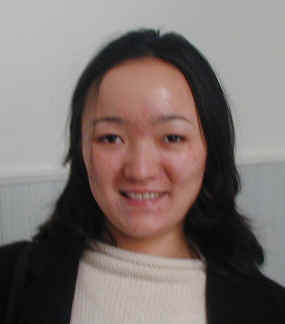 |
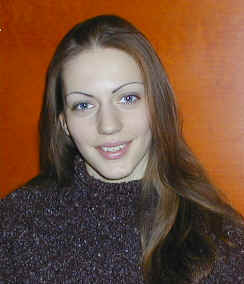
| Harlamenko Galina Yurevna, instructor of vocal instrumental band | Name and position: | Baktygul Turdubekova, ECO 198 |
| Virgo | Horoscope sign | Aquarius |
| Always excellent!!! | What is your GPA? | OK |
| Something that you can somehow eat. | What is in your fridge? | Edible and inedible stuff (inedible used to be edible long ago) |
| I do study what I want but unfortunately in our country it is poorly paid. | Are you really studying what you want? | I sometimes ask myself, hope I'm not the only one. |
| I wish there were no war. | What do you want? | This question narrowed down. |
| Normal | What is your orientation? | Now if I said "males" you wouldn't believe me :-) |
| I remember the dream I had last night because I always have interesting dreams. | What is the first thing you think of when you wake up? | Five more minutes to sleep... |
| Life matters. | What really matters? | My friend says "life" |
| I hate treason and loneliness. | What do you hate? | COUNTER STRIKE |
| With the sky: it always changes and is never the same. | What do you associate yourself with? | Have never thought of it... tends to think that "bird" is the standard answer |
| Yes, but the salary should be higher. | Would you enter AUK if given a second chance? | Given there is no AUK yet, yes. |
| Won't tell you! | What is wrong with you? | I have to listen to my 15-year-old brother's favorite "заколебал ты" and "сойти с ума" every morning and night before going to bed. |
| Poverty... material poverty, I hope poor spirit is not my problem anymore. | What do you want to escape from? | Kanybek Konokbaev's mysterious questions. |
| Elnura Djenish's Q: There are exchange students. What about exchange presidents? I think if there were exchange presidents, it would be absolute chaos. | Q from previous issue: | Daniel O’Connor's Q: What piece of advice should all new foreign lecturers at AUK be given? Enjoy. Make sure to see the most beautiful places of Kyrgyzstan |
| Is it possible to stop global warming? | Your Q for nest issue | How come some of the boys at AUK get browner at the senior year although in freshman year they were yellowier? |
Editor-in-chief: Botagoz Kassymbekova
New Design: Natalia Andrianova
Advisor: Baktygul Aliev
Address: The Star, Room 105, AUK Abdumomunova 205, 720000, Kyrgyzstan
Web manager: Ahoura Afshar
Staff who contributed to this issue: Saikal Chokubaeva, Saida Malaeva, Bakyt Azimkanov, Saodat Asanova, Alla Voevodina