Xerox PARC
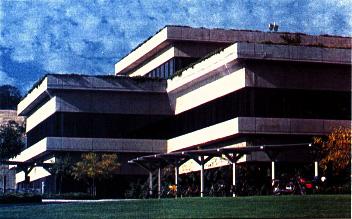
Xerox PARC - Source: http://henson.cc.kzoo.edu 27/09/00
|
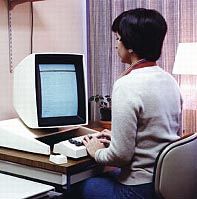
In 1970, Xerox decided they needed to think of new directions for their successful photocopying business, in light of forecasts of a 'paperless' future. They brought together a group of promising young scientists to work at their newly opened Xerox Palo Alto Research Centre (Xerox PARC) with an assignment to create the computer of the future. Although the researchers were given a goal, no restrictions were put on how they achieved it and a significant amount of capital was put at their disposal. This basic research and a more informal method of working, allowed several major technological breakthroughs which have contributed significantly to the PC of today.
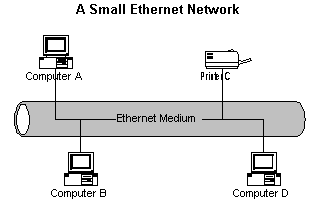
Xerox, unfortunately, decided that the Alto was not commercial and decided not to market it or its successor the Star. The GUI was first used in an commercial PC by Apple, after the Alto was demonstrated to Steve Jobs, one of its founders, and several of the engineers working at Xerox left to join the fledgling Company. Although it is alleged Jobs stole the idea Apple have their own history. This practice is typical of both the PC industry and Internet development, where people leave large organisations and set up small start-ups, commercialising a technology they had worked on elsewhere. This was particularly true at ARPA which, although government funded, had other similarities to Xerox PARC. It was also involved in basic research and did not commercially adapt any of the technologies it developed such as packet switching, which the Internet is dependent on. Another of PARCs important research areas was the design of networks to allow their Alto to connect to other machines. PARC researcher, Bob Metcalfe developed Ethernet, a local area network (LAN) protocol whilst trying to find a method of connecting the Alto to Xerox's new development, the laser printer.
Ethernet was unique in that it addressed messages and allowed several transmissions to be sent simultaneously on the same cable. The Ethernet eventually became the global LAN standard for connecting computers and peripherals. Although Xerox never became a commercial success as PC manufacturer, the technologies they developed defined the structure of the following generations of personal computers. Further resources: |