"Internet in the Sky"
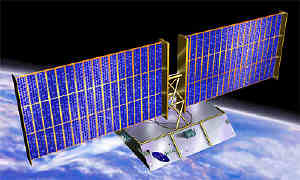
A Teledesic Satellite - Source Teledesic 2/10/00
|
Satellite Internet access is already available to some, through their satellite television service, but this mainly relies on the ordinary telephone line, with its inherent problems, for its uplink. Most two-way satellite services, currently offered, require very powerful transmitting dishes, to reach the satellites deep in space, and the cost of these are prohibitive to the general user. This, however, will change over the next few years. The satellites, commonly used for broadcasting, have been geostationary and stationed thousands of miles from the Earth's surface. Several companies including Teledesic and SkyBridge, starting launching a series of low orbit satellites during the second half of the 1990s. These are much closer to the Earth and therefore the signal reaching home users is stronger and less likely to suffer transmission latency. When this deployment is complete small, low-power equipment, mounted on a rooftop, will be sufficient to both send and receive data, although many more satellites will be required for World coverage.
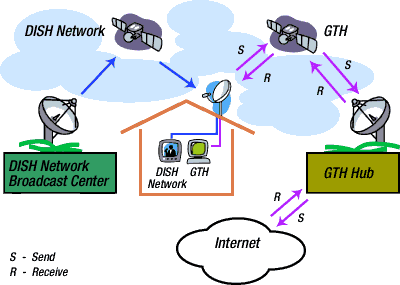
Diagram showing how the Gilat-To-Home satellite system works - Source: Gilat 1/10/00 The Chairman of Teledesic, of which Bill Gates is a major shareholder, promises a great future for Satellite Internet access and the benefits it will bring when it goes live in 2004. He states that not only will satellite offer competitively priced, high-speed Internet access but that it will also bridge the information gap between first and third world countries, by giving coverage to almost 100% of the World's population. This ideology, however, is questionable. Although almost 50% of the World's Internet users are in the USA there is still a digital divide there between users there. This is based more on age, gender and income, rather than actual availability of the Internet. Some experts suggest that Internet availability alone will not help the information poor of the Third World. They suggest this would also require intervention and a re-education policy by their own governments. back to topOther home broadband connectivity optionsAsymmetric Digital Subscriber Line (ADSL)
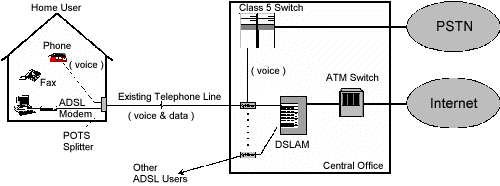
ADSL uses standard telephone lines to deliver high-speed data communications.
Diagram showing how ADSL is delivered to the home - Source: APC UK 1/10/00 Advantages:
Disadvantages:
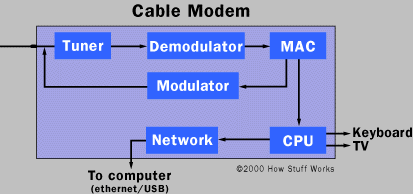
Resources: back to topCable Internet access can be made through a cable modem using cable television lines.
Diagram showing how a cable modem works - Source: How Stuff Works 1/10/00
Advantages:
Disadvantages:
Resources: back to topFurther Resources: back to top |
 |