
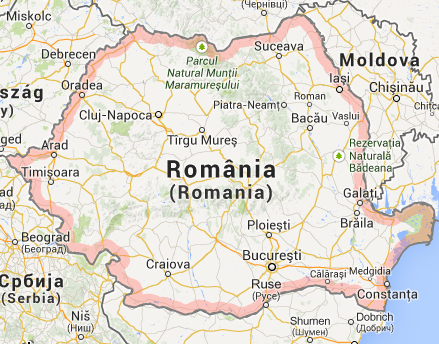
Romania, in southeast Europe, is mountainous in the north while the main feature in the south is the vast Danube valley. The river forms a delta as it approaches the Black Sea, which is a wildlife reserve for countless native and migratory birds.
The Romanian parliament consists of two chambers, the Senat (Senate) and the Camera Deputatilor (Chamber of Deputies). The members of both are chosen in elections held every four years.
Ethnically, the population is 90% Romanian and 7% Hungarian. The Romanian language, like a number of others in southern Europe, is directly descended from Latin, although Romania is separated from other Romance-language countries by Slav speakers. Romania has considerable natural resources oil, natural gas, coal, iron, copper and bauxite. Metal-working, petrochemicals and mechanical engineering are the main industries.
Romanian speciality dishes include grilled meatballs, meat wrapped in cabbage leaves, pork stew with garlic and onions and doughnuts made with cream and cheese.
The spine-chilling tale of Dracula was inspired by the 15 th century Romanian Count Vlad Dracul whose son was famous in wartime for impaling captured enemies. Less notorious Romanians include the writer Eugene Ionesco, the gymnast Nadia Comaneci and the composer George Enescu.
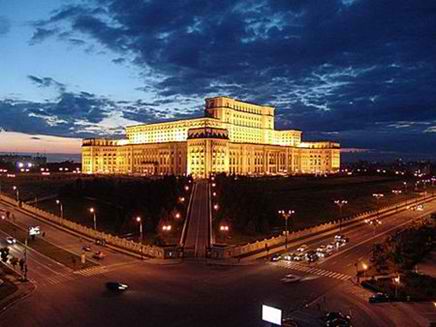
Bucharest, is the capital municipality, cultural, industrial, and financial centre of Romania. It is the largest city in Romania, located in the southeast of the country, lies on the banks of the Dambovi?a River, less than 70 kilometres (43 mi) north of the Danube.
Bucharest was first mentioned in documents in 1459. It became the capital of Romania in 1862 and is the centre of Romanian media, culture and art. Its architecture is a mix of historical (neo-classical), interbellum (Bauhaus and Art Deco), Communist-era and modern. In the period between the two World Wars, the city's elegant architecture and the sophistication of its elite earned Bucharest the nickname of "Little Paris" (Micul Paris).Although buildings and districts in the historic city centre were heavily damaged or destroyed by war, earthquakes, and above all Ceau?escu's program of systematization, many survived. In recent years, the city has been experiencing an economic and cultural boom.
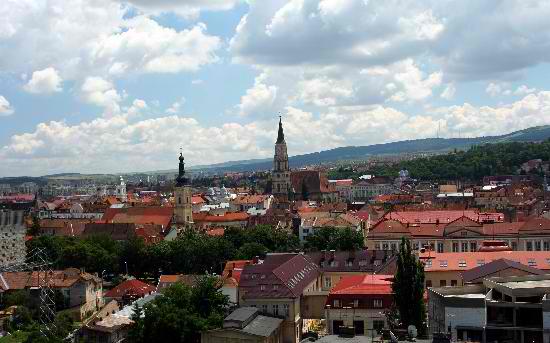
Cluj-Napoca, commonly known as Cluj, is the second most populous city in Romania, behind the national capital Bucharest, and is the seat of Cluj County in the northwestern part of the country. Geographically, it is roughly equidistant from Bucharest (324 km / 201 mi), Budapest (351 km / 218 mi) and Belgrade (322 km / 200 mi). Located in the Somesul Mic River valley, the city is considered the unofficial capital to the historical province of Transylvania. Between 1790 and 1848 and between 1861 and 1867, it was the official capital of the Grand Principality of Transylvania.
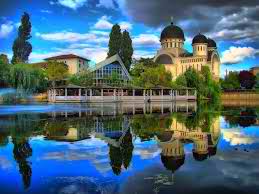
Arad is the capital city of Arad County, historically situated in the regions of Crisana, and having recently extended on the right bank of the Mures river, in Banat region of western Romania.
An important industrial center and transportation hub on the Mures River, Arad is also the seat of a Romanian Orthodox archbishop and features two universities, a Romanian Orthodox theological seminary and a training school for teachers. It had one of the first music conservatories in Europe.The city has a population of 147,992, making it the 13th largest city in Romania. Arad is the third largest city in the western part of the country, behind Timisoara and Oradea.
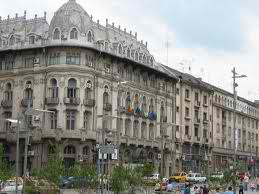
Craiova, Romania's 6th largest city and capital of Dolj County, is situated near the east bank of the river Jiu in central Oltenia. It is a longstanding political center, and is located at approximately equal distances from the Southern Carpathians (north) and the River Danube (south). Craiova is the chief commercial city west of Bucharest and the most important city of Oltenia. The city prospered as a regional trading centre despite an earthquake in 1790, a plague in 1795, and a Turkish assault in 1802 during which it was burned.
Eight villages are administered by the city: Facai, Mofleni, Popoveni, Simnicu de Jos, Cernele, Cernelele de Sus, Izvoru Rece and Rovine. The last four were a separate commune called Cernele until 1996, when they were merged into the city.
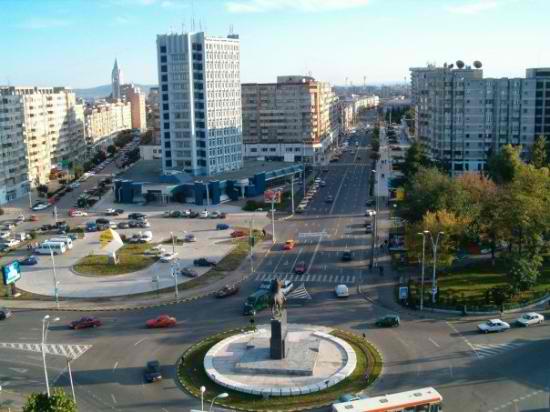
Bacau is the main city in Bacau County, Romania. As of 2011 census, it has a population of 144,307, making it the 15th largest city in Romania. The city is situated in the historical region of Moldavia, at the foothills of the Carpathian Mountains, and on the Bistrita River (which meets the Siret River about 8 kilometres (5.0 mi) to the south of Bacau). The Ghimes Pass links Bacau to Transylvania.
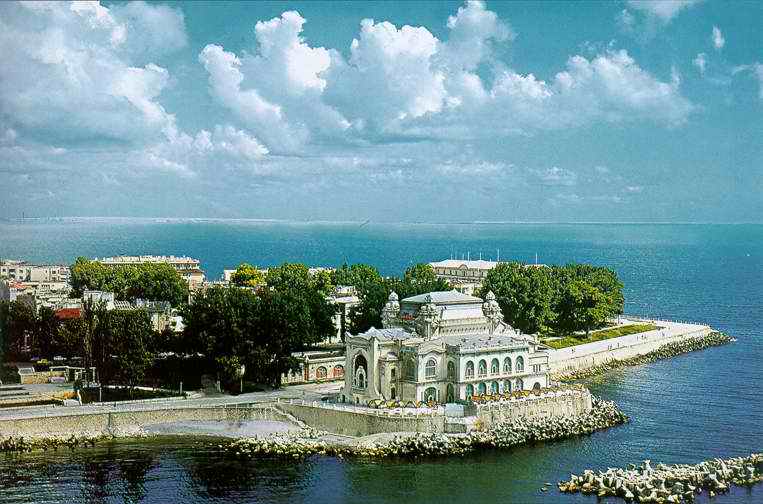
Constanta, historically known as Tomis, is the oldest extant city[clarification needed] in Romania. It was founded around 600 BC. The city is located in the Dobruja region of Romania, on the Black Sea coast. It is the capital of Constanta County and the largest city in the region.
Constanta is the fifth most populous city in Romania. The Constan?a metropolitan area, includes 14 localities within 30 km (19 mi) of the city, and, with 425,916 inhabitants, it is the second largest metropolitan area in Romania.
The Port of Constanta has an area of 39.26 km2 (15.16 sq mi) and a length of about 30 km (19 mi). It is the largest port on the Black Sea, and one of the largest ports in Europe.
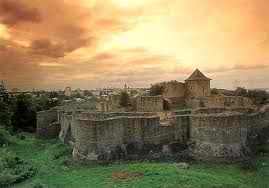
Suceava is the Suceava County seat, in Bukovina region, in north-eastern Romania. The city was the capital of the Principality of Moldavia from 1388 to 1565.
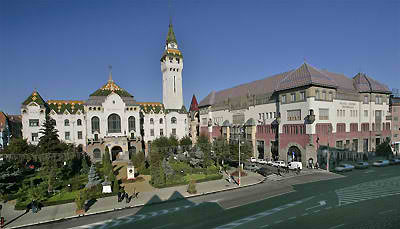
Targu Mures - Culture PalaceThe town was first documented as "Novum Forum Sicolorum" (The New Market of the Seklars) in 1322. Beginning with the 16th century, Targu Mures excels as an important cultural and education centre. The first school appears in 1492. In 1786, the first printing shop is established and in 1802 count Teleki Samuel, chancellor of Transylvania, lays the foundations of the documentary library that bears his name to this day. The city received a major boost to its social and economic life in 1754 when it became the seat of the supreme court of justice of the Principality of Transylvania.