
|

|
| Web site created by Erik |
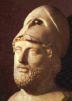 |
| P E R I C L E S The Persuasive Speaker |
| Though Pericles was a man of few friends, that does not mean he didn�t have supporters. Pericles was a strong man of character, a persuasive speaker, orator and a man of wisdom who took Athens through every bit of Athens� Golden Age, and beautifying Athens to every extent. Pericles was a man who gave the people of Athens the opposite feeling of a Tyranny, and more like a Democracy. Pericles was born in 493 B.C. in Athens to a rich and high-ranking family, during the Peloponnesian war. He must have had memories about running away from Athens with his family. He had a philosopher-teacher called Zeno. Zeno influenced Pericles and made him a great persuasive man. Zeno was really good at this that he even practiced Sophistry. Zeno was so good that �so adapt was Zeno at sophistry that it was said Zeno could prove any proposition to be false.� (http://www.e-classics.com/pericles.htm PERICLES "The Olympian" by Plutarch.) Pericles used his persuasion powers to convince others of what he did was right. Once the king of Sparta asked a wrestler who was a better wrestler, Pericles or him, and the wrestler responded: �If I wrestle him to the ground he will deny this and deny it so vigorously that he will convince even those who witnessed the fight.� (http://www.pbs.org/empires/thegreeks/htmlver/characters/f_pericles.html) This is but an example of Pericles� well known persuasive powers. Pericles at first had a main rival, an aristocrat named Cimon. He was wealthier than Pericles. Pericles was a democrat and his party would try to get popular support and lead the Athenian government, while the other party, the Aristocrats did the same. Cimon was the leader of these while Pericles lead the Democrats. Cimon was admired and respected by the Spartans who formed another city-state. When peace treaties or diplomatic reunions were made, Cimon would be sent. Pericles needed to get rid of this opponent in order to have more control and no have to worry about being ostracized. So Cimon was ostracized and left as an exile for some time. Now Pericles was without a Rival, but only for a short while. Thucydides (not the historian) became Pericles new rival. But Thucydides also became ostracized. Pericles had great ideas for Athens. Pericles dreamed of an Athenian empire. He dreamed of Athens conquering Sicily, and Egypt. But Pericles saw the danger of Sparta. He also saw the far threat of Persia and warned the council not to go and try to conquer other places too quickly. He rid Persians from near by lands. Pericles instead convinced them to construct the wall that would go around Athens and all the way to the port Piraeus. Now no army could attack Athens without Athens getting deprived of recourses. When this was done and a thirty-year peace treaty signed with Sparta, and Persian rule around northern areas in Greece were removed, Pericles started to beautify Athens. Pericles started to get the approval of the assembly to get huge amounts of money to build statues and monuments in Athens. �The most ambitious building program in Greek history, the building of the Parthenon was Pericles' greatest triumph and he oversaw the project personally.� (http://www.pbs.org/empires/thegreeks/htmlver/characters/f_pericles.html) The Parthenon was built under Phidias, a friend of Pericles. Pericles �was by now far too popular for his rivals to topple him as the city's leader. So instead, they attacked his close associates in the courts.� (http://www.pbs.org/empires/thegreeks/htmlver/characters/f_pericles.html) Phidias was later poisoned and killed as one of these results, and Pericles tutor was exiled. Then Pericles encouraged the Athenian Assembly to declare war against Sparta and its allies. Athens did and Sparta even gave them a chance to take their declaration back. Athens did not. Pericles told the assembly to keep the people behind the walls, and to let the Spartans come. He said the Athenians should attack Sparta�s allies through the sea using the Navy and avoiding Sparta�s superior infantry force. Athens got a terrible blow when in the second year of the war Athens got a plague. This off course spelled Athens doom, and the crumble of its empire. Then Pericles fell sick. He started to forget things and not to think well. He slowly died, meanwhile Athenians blamed Pericles for the disaster and took away all his power, but later the Athenians recognized all Pericles had done to them and he got back to power. He died in 429B.C. Pericles was a great man who lead Athens into glory using his oral and persuasive powers, he beautified Athens and built the Parthenon, and kept popular support for more than thirty years. He got rid of his opponents and exiled them without himself being exiled. He got the great wall built, and kept Athens empire together. He got Athens into fighting Sparta and that resulted as his big and only mistake. Without Pericles Athens would not have entered into it�s golden age and Athens might have been destroyed long ago. We owe him a lot and so do all those other Greeks who lived back then. |
| BIBLIOGRAPHY http://www.e-classics.com/pericles.htm PERICLES "The Olympian" by Plutarch. http://www.pbs.org/empires/thegreeks/htmlver/characters/f_pericles.html |
