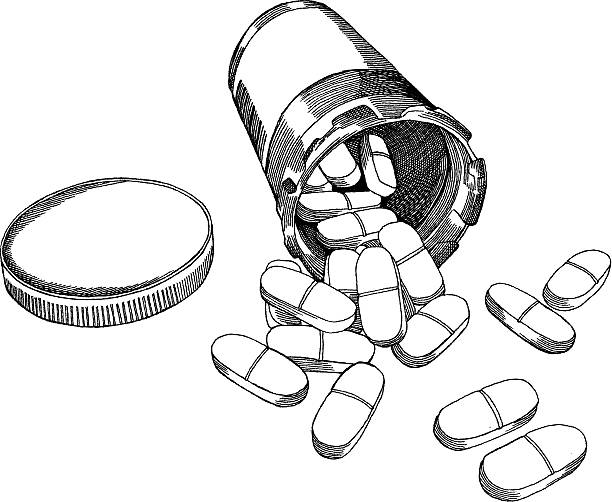
A Case of Birth Control in the Fearian Era
The Morning After
It costs Athena thirty pounds to alter God’s plan. Fertilisation, reproduction, everything the female body was made for until Sanger came along in the 1950’s with the first contraceptive pill to stop the ‘unfit’ from breeding. And then what? Sexual individualism? Climatic bliss? For many women like Athena living in the Fearian era, women’s liberation can feel as simple dropping your pants.
But despite the possibility of controlling her organs, Athena doesn’t usually enjoy sex. Sometimes she finds it fun but usually a hug feels kinder. She works part-time at a food stall, selling fancy French cheeses to West Londoners. In the winter, all she would really like is someone to warm her hands.
So Athena, standing outside of the pharmacist, swallows it. Her hope of trusting her own instinct and the carcinogenic pill. And she does so because she herself feels unfit to create a new life and anyway, that’s just what most women do these days. They swallow anti-baby-making medicine because they are unaware of their own rhythm. And who’s is to blame for this? The doctor who claims to know Athena better than herself? Athena lacking in bodily-exploration? Or Baz, that bonehead from college who was too heedless to pull himself out?
‘ You might experience irregular bleeding and nausea. If you do vomit you will need to come back to buy another one.’
The pharmacist passes Athena the white paper bag, the packaging crumples between her painted fingernails. Sterile fear and detachment, the positive correlation, the ultimate carcinogen.
Athena nods at the pharmacist, smiles, then steps outside into the spring daylight.
The Era After
The recording is paused and, with a few clicks, the PowerPoint returns onto the screen. The lecturer, tall and slim, shuffles her papers.
‘ The pill that Athena bought that sunny afternoon contained the highest concentration of Cenestin, a combination of nine synthetic estrogens and, as we know now, a grade-A carcinogen. The amount that one pill contained was enough to alter Athena’s mood and natural menstrual flow for the next seven months. However, more remarkably and as the findings from Professor David Hill have shown, these large-scale interventions upon women’s natural cycles have significantly disrupted the patterns of moon and the general ordering of the cosmos.
Furthermore, as Athena’s case equally proves, there is now evidence that few women in the Fearian era experienced enlightening sexual encounters. Instead, as we will later realise on Athena’s return home, women instead gained greater pleasure from solitary masturbation. This claim has been further supported by recent studies that have discovered that several small companies, founded during the Fearian era, had advocated for practical ways to increase female sexual pleasure. Such examples include ‘clitoright’, a paid online platform which educated both sexes on how to simulate the clitoris, and ‘G-Eggs’, a small store based in London that profited from selling mineral rocks which, if inserted into the uterus, could apparently increase a woman’s libido.
However, what I argue in my latest thesis, is also what I find the most disappointing aspect above all. I argue that the reason why so many women remained detached from their sexual organs for the next three-hundred years is because, despite such obvious dangers to nature and their psychological health, women like Athena, living in the Fearian era believed that these medical contraceptives were a kind of progress.
Now let us return to the recording, to witness just how Athena’s body responded to what was more casually named as the morning after pill…’
Page 7: List of Carcinogenic Hazards to Humans