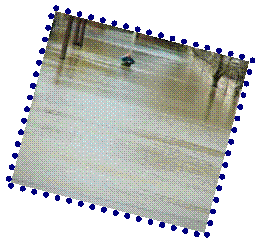
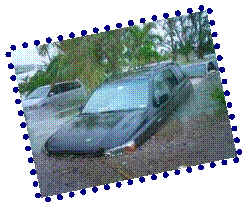
A flood is an overflow of an
expanse of water that submerges land, a deluge. In the sense of "flowing
water", the word is applied to the inflow of the tide, as opposed to the
outflow or "ebb".
It is usually due to the mass of water within a body of water, such as a
river or lake, exceeding the total capacity of the body, and as a result some
of the water flows or sits outside of the normal perimeter of the body. It can
also occur in rivers, when the strength of the river is so high it flows right
out of the river channel , usually at corners or
meanders. These of course, are not applicable in such instances as sea
flooding.
The word comes from the Old English flod,
a word common to Teutonic languages, compare German Flut, Dutch vloed
from the same root as is seen in flow,
float.
The term "The Flood" usually refers to the great Universal Deluge
described in Genesis and is treated at Deluge.
Floods from the sea can cause overflow or overtopping of flood defences
like dikes as well as flattening of dunes or bluffs. Land behind the coastal
defence may be inundated or experience damage. A flood from sea may be caused
by a heavy storm (storm surge), a high tide, a tsunami, or a combination
thereof. As many urban communities are located near the coast this is a major
threat around the world. Many rivers flow over relatively flat land border on
broad flood plains. When heavy the deposition of silt on the rich farmlands and
can result in their eventual depletion. The annual cycle of flood and farming
was of great significance to many early farming cultures, most famously to the
ancient Egyptians of the Nile river and to the
Mesopotamians of the Tigris and
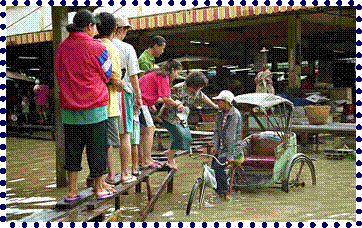
A flood occurs when an area of land, usually low-lying, is covered with
water. The worst floods usually occur when a river overflows its banks. An
example of this is the January 1999
Periodic floods occur naturally on many rivers, forming an area known as
the flood plain. These river floods usually result from heavy rain, sometimes
combined with melting snow, which causes the rivers to overflow their banks. A
flood that rises and falls rapidly with little or no advance warning is called
a flash flood. Flash floods usually result from intense rainfall over a
relatively small area, as happened in 2007 with the
Monsoon rainfalls can cause disastrous flooding in some equatorial
countries, such as
Under some rare conditions associated with heat waves, flash floods from
quickly melting mountain snow have caused loss of property and life.
Undersea earthquakes, eruptions of island volcanos that form a caldera,
(such as Thera or
Floods are the most frequent type of disaster worldwide. Thus, it is often
difficult or impossible to obtain insurance policies which cover destruction of
property due to flooding, since floods are a relatively predictable risk. A
flood can also be caused by blocked sewage pipes and waterways, such as the
Primary
effects
- Physical damage- Structures such as
buildings get damaged due to flood water. Landslides can also take place.
- Casualties- People and livestock
die due to drowning. It can also lead to epidemics and diseases.
Secondary effects
- Water supplies- Contamination of
water. Clean drinking water becomes scarce.
- Diseases- Unhygienic conditions.
Spread of water-bourne diseases
- Crops and food supplies- Shortage of food crops can be caused due to loss of entire harvest.
Tertiary/long-term effects
- Economic- Economic hardship, due
to e.g. temporary decline in tourism, rebuilding costs, food shortage
leading to price increase etc, especially to the poor.
- Psychological- Loss of loved ones
etc.
Widespread
flooding occurred throughout the
homes and further
affected up to a million people. Estimated damages on 23 July 2007 were over 2
billion
The most severe flooding occurred across Northern Ireland on 12 June; East
Yorkshire and The Midlands on 15 June; Yorkshire, The Midlands, Gloucestershire
and Worcestershire on 25 June; and Gloucestershire, Worcestershire,
Oxfordshire, Berkshire and South Wales on 20 July.
June was one of the wettest months on record in
Civil and military authorities described the June and July rescue efforts
as the biggest in peacetime

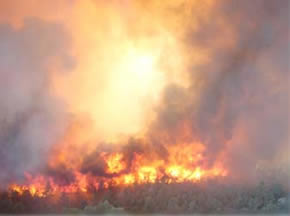
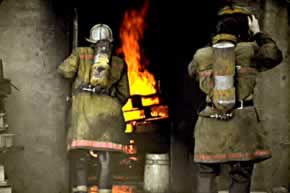
are any large fire
that spreads rapidly and are hard to extinguish
Wildfires are some of the most dangerous of all natural disasters.
Wildfires can kill humans, plants, and animal life. Wildfires have consumed
millions of acres in the