|
 |
CONTENTE - GOULÃO
New bearings
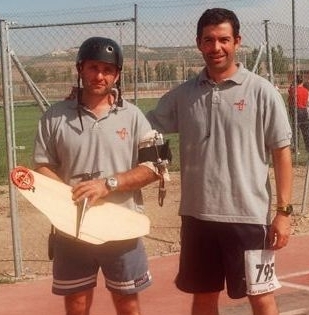
Specification now available Build by Bocaberings under the F2C Portuguese
Team Support |
 |
|
|
|
SPECIAL F2C HYBRID CERAMIC BEARINGS |
|
Product |
Characteristics |
Spec.to order the bearing
|
|
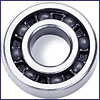 |
Rear Ceramic
bearing
MR6900(10x22x6)
Ceramic
Hybrid bearings using ceramic balls (Si3N4) meet and exceed today’s high
tech requirements, offering a long list of characteristics far superior to
that of conventional all-steel bearings
|
Bearing Material
|
Stainless
Steel 440C |
|
Rolling Element Mat. |
Ceramic
SI3N4 |
|
Radial Play
|
Between C3
and C4 |
|
Retainer Material
|
Polymite
Plastic |
|
Hybrid ceramic
bearing
MR6900(10x22x6)
Used by the F2C team
Control Line Team Contente-Goulão
|
|
|
Front Ceramic
bearing
MR696-ZZ(6x15x5)
Ceramic Hybrid
bearings using ceramic balls (Si3N4) meet and exceed today’s high tech
requirements, offering a long list of characteristics far superior to that
of conventional all-steel bearings.(Metal shields should be removed)
|
Rolling Element Mat. |
Ceramic
SI3N4 |
|
Bearing Material
|
Stainless
Steel 440C |
|
Retainer Material
|
Polymite
Plastic |
|
Radial Play
|
Between C3
and C4 |
|
Hybrid ceramic
bearing
MR696-ZZ(6x15x5)
Used by the F2C team
Control Line Team Contente-Goulão
|
|
SPECIAL F2C CERAMIC BALL's |
|
Product
|
Ball Technical Characteristics |
Advantages of
ceramic ball's |
|
|
Front Ball bearing size
3.170mm
Dimension
- mm
Diameter
-
3.170mm
Rolling Element
Mat. - Si3N4 Ceramic
Grade/Sphericity
- 0,00012718 mm
Diameter
Tolerance - 0.001271 mm
Tensile
Strength - Si3N4-341,000psi
Density
- Si3N4-.116 lb/cu in
Hardness
- Si3N4-1500-2000 Vick
Elasticity
- Si3N4-47,000,000psi
Max Use
Temperature - Si3N4 - 1400 ºC. |
Rear
Ball bearing size
2.365mm
Dimension
- mm
Diameter
-
2.365 mm
Rolling Element
Mat. - Si3N4 Ceramic
Grade/Sphericity
- 0,00012718 mm
Diameter
Tolerance - 0.001271 mm
Tensile
Strength - Si3N4-341,000psi
Density
- Si3N4-.116 lb/cu in
Hardness
- Si3N4-1500-2000 Vick
Elasticity
- Si3N4-47,000,000psi
Max Use
Temperature - Si3N4 - 1400 ºC. |
LIGHTER. The ceramic bearings are
lighter then the steel ball.
HARDER.
Ceramic bearings are harder then the steel ball.
SMOOTHER. Ceramic bearings have
smoother surface properties then the steel ball.
THERMAL.
Ceramic bearings have better thermal properties
then the steel ball.
LUBRICATION. Ceramic bearings are
impervious to oxidation, chemicals, and require essentially no lubricant.
NON MAGNETIC
MATERIAL.
Si3N4 Ceramic is not magnetic as the stell
balls are.
WORKING
TEMPERATURE. They can
work at higher temperatures
without being affected.
|
__________________________________________________________
Hybrid Ceramic
Bearings....!!??
Question
: Why are this bearings called
Hybrid Ceramic bearings?
Answer
: Hybrid Ceramic bearings have the normal steel balls replaced by ceramic balls
(Si3N4).
The ceramic balls are made of a very
Hard material - Si3N4-1500-2000 Vick. They are called
ceramic
because it's easier calling them ceramic then silicon nitride. The ceramic
silicon nitride
ball is by far, smoother, harder, lighter and stronger than one made off steel.
__________________________________________________________
Why Ceramic Bearings in
the actual F2C engines :
Here is a list of benefits of the ceramic
bearings
The following is a list of benefits of
the ceramic ball bearings -
-
LIGHTER.
The ceramic ball is lighter then the steel ball.
This means that
the ball exerts less force outward against the outer race grove as the bearing
spins. This reduction in outward force reduces the friction and rolling
resistance.
The lighter ball allows the bearing to rev up faster,
and uses less energy
to maintain it speed.
-
HARDER.
The ceramic ball is harder then the steel ball. This gives you a
bearing that will last up to 10 times longer
then the steel ball bearing
because it holds it's finish better.
-
SMOOTHER.
The ceramic ball has smoother surface properties
then the steel ball. This means less friction between the ball and bearing
tracks
giving you a
faster spinning
bearing.
-
THERMAL.
The ceramic ball has better thermal properties
then the steel
ball. The ceramic ball will not heat up
like a steel ball. This helps avoid heat build up in the bearing, a primary
culprit in engine performance degradation.
-
LUBRICATION. The ceramic balls are
impervious to oxidation, chemicals,
and require essentially no lubricant. The bearings are lubricated
with a
very, very small amount of oil.
-
NON MAGNETIC MATERIAL.
Si3N4 Ceramic is not magnetic as the stell
balls are, this means less friction giving you a
faster spinning
bearing.
-
LOW COEFFICIENTE OF LINEAR EXPANSION
In
applications involving high speed operation, although the temperature
of the bearing is high, this low coefficient results in lower preload
and lower heat generation.
-
LOW FRICTION The
slip of the rolling element during operation is reduced, resulting in
less heat being generated.
- All this theories will not be visible by the
chronometer, or during one F2C Team Race if, the precision, and selection
of the materials used in the construction of the bearing, will not be
considered. This was the reason why the Team " Contente-Goulão " together
with Bocabearings developed this high precision bearing. Build with high
precision ceramic balls. Also with a different selection process of balls,
to guarantee balls of the same size inside each bearing. A very good
polished surface in the rings track.
This are some examples of the new characteristics of
these new bearings,and the result of 4 year's of tests made by the Team
Contente-Goulao building and testing prototypes. And also one year more of
developments with Bocabearings.The result are special bearings build by people
from Team Racing available to everybody because we have one goal,
since the beginning of this project
that is,"to
allow
technology available to all
competitors".
After this year European Championship more
information will be prepared and presented to you,(Because,
at this moment
we don’t have the time to prepare that information) to explain how good these
bearings really are, as well as the correct assembly process in the engine.
Because this bearing have a special precision for Aluminum F2C engines ( with a
radial play between C3 and C4 ).
-
Stay alert for the next report, about this new
bearings,
the assembly process in the engine,
as well as the maintenance to be considered to increase
the
bearing
life time
and performance.
 Additional Report
" Adjustments "
Additional Report
" Adjustments "
The first law
- "
Is not only the Ceramic bearings that will make the
difference " They will help, and they give us big improvements, but they
are not the magical solution .
Until now a lot of people already make some tests with this new technology, but
with no good results the first reason is : the balls break. We start to use
normal standard ceramic balls at the beginning of 2003, and never break a ball
since then ! However, ceramic balls can break but only, if we have different dimension of
balls in the same bearing. So in this case we recommend " 0 microns " zero
microns of amplitude between balls.
Since the
beginning we start hearing other teams tell , "yes we try but they break, and
after a few runs they get damage inside the rings", so the answer for us was
obviously ,why ??
We
discover that is impossible to completely solve this problem, and even in some
standard bearings they get similar problem, however we prefer a ceramic with
marks inside the ring, then a normal steel bearing.
In
the beginning and when we start to use ceramic bearings in the yugov engine, the
most important problem was not all the crankcases accept ceramic bearings, the
problem is related with the measure of the shaft and the pressing that the
crankcase make when is cold !
So we can not
say measures very
accuracy ! You need to try and test.
Bearings assembly
The first
thing to do is:
Get
the ceramic bearings, or buy balls for both front and rear bearing, and start to
work on the measures of the balls. Or you buy the balls and make the
measurements or you request that to the manufacture to do that for you. At the
beginning we discover that the first bearings from boca bearings, where very bad
in terms of tolerance between the balls, some times more than 7 microns
difference. At the moment Boca bearings have solve this problem as long as you
order the same bearings or balls that are being supplied to us
(Contente-Goulão).
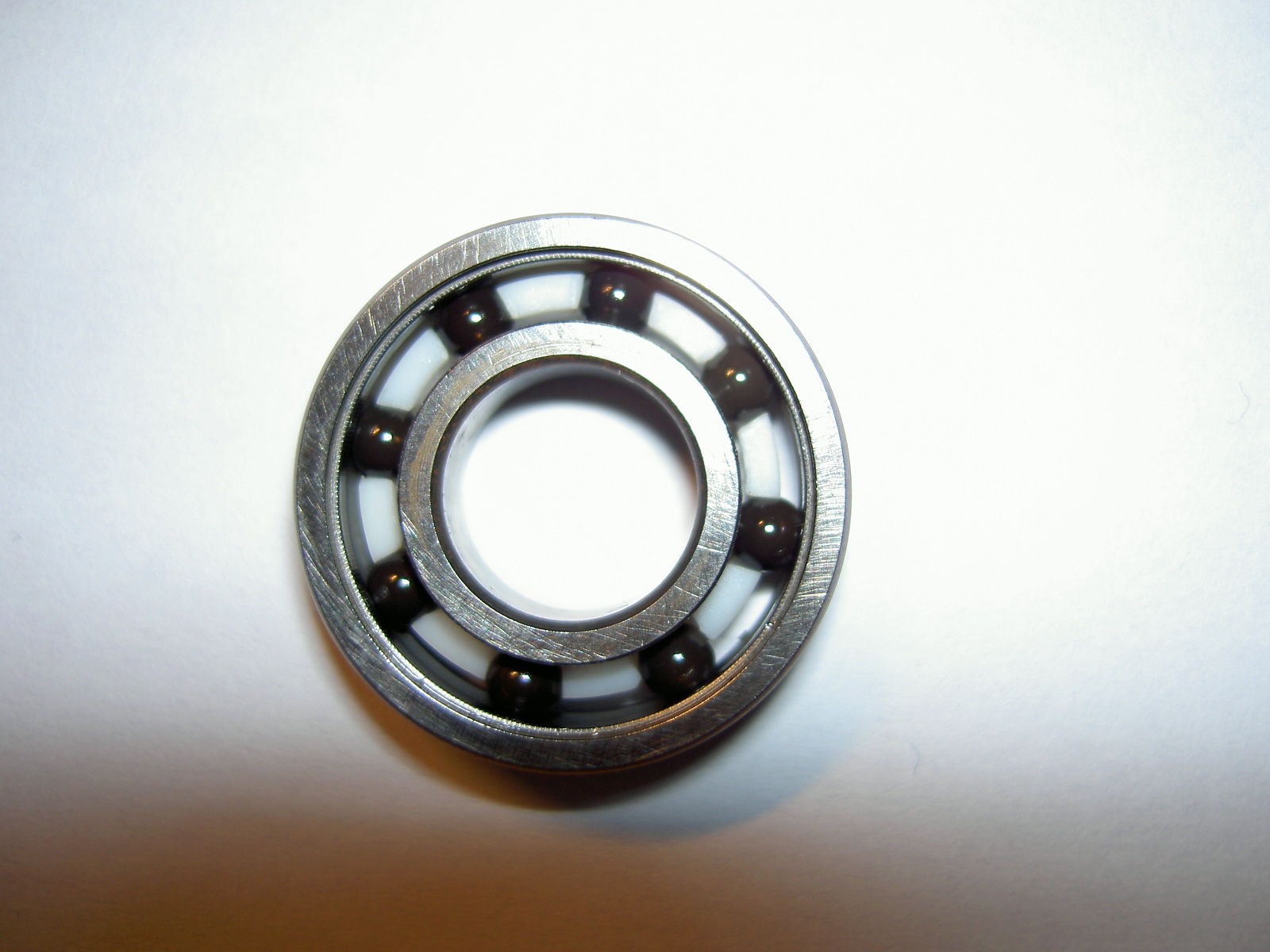
Photo of the Contente - Goulão rear Bearing
The
retainer
We
are using a different material. We have chose Teflon retainer, for many reasons,
but the principals are: they don't heat up, they polish the balls when the
bearing is running and very important don't glue dirt, that always appear after
the engine run's. The retainer is only to keep the balls separated at the same
distance nothing else.
The
Celeron
retainer or plastic are also good (they give the same airspeed) but get dirty
after a short run, the Celeron retainer, is very
porous and gets very dirty, the same for the plastic, because the surface of contact
is much higher and dirt apears on the back of the retainer.
Also gets deformed, after the engine gets too hot in a race, increasing the
attrition and decrease performance.
Regarding the
Teflon retainer we have made our on Teflon retainer, but there is to much work
involved. Its necessary to work about 2 or 3 hours after the construction, with
a very
potent lens to remove wall the small parts, because Teflon is a soft material
and very difficult to achieved a good surface finish. But at the end we will get
a retainer that will last forever. At the moment Boca Bearing is already with a
similar retainer material and can produce that for you... it’s a question of money.
Photo
of the Contente - Goulão
Retainer

The rings
We know that,
at the beginning the quality of Boca bearing rings was not good, however boca bearings as improve
a lot, and
at the moment they have an acceptable Quality.
They need
some times to be polish (in both ring tracks), the surface most be analyse,
because serial production same times does not allow extreme quality, and we need
that.
The problems
that appears more often is damage tracks cause by the accumulated dirt, and by
the bad quality or different size of the balls. So from time to time or when we
watch variations in the regime of the engine, or luck of power, maintenance is necessary ( new
polishment or a new ring(s).
We start to do this with “ WIB bearings “ rear bearing and “ yugov “ front bearing.
We get balls
and some complete bearings from boca bearings,
WIB (the same as lerner engine),
and front standard bearing from yugov engine.(c3 from boca ,c4 from
WIB).
we chose the
balls , make the rings in Teflon,
chose the rings, and assemble.
The
balls
The
ideal is
no tolerance,” 0 microns “ no more then 1 micron is acceptable, to
allow good assembly process in the
shaft. This bearings don't like to be tight !!
So
if your shaft is tight in the inside ring you must chose another ring, work the
ring inside, or you drill the shaft (it's better to beguine with the inside
ring). Use diamond paste with a toll specifically manufacture to do that.
We can not
give measures, you need to go by attempts some times this process can go for
hours and hours of work, because we to achieve a proper tight/adjustment, the
bearing must enter in the shaft by
hand but with no big effort, its the only thing we cant say. It is not
measurable there is no standard measures. Each part is one part, and the
measures need to be adapted, to each case. Even the
front bearing we have the same situation.
An
interesting fact to know, is that only +/- 40% of the rings of standard yugov
engine was possible to put in the crankcase without doing nothing, all the rest
need to be adjusted.
And only half
of the crankcase accept this assembles without repairs.
You need to
go by attempts, and to get the normal and standard bearing tolerance, (as the
normal bearings), don’t forget that this balls don't increase diameter in a hot
condition like the steel balls do. So proper adjustment is necessary.
Photo
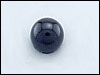
of the Contente - Goulão ceramic ball
An important
symptom is when the engine is cold has a regular and similar tolerance as the
standard steel bearing engine, but when is hot, get more then the standard.
The best, we achieve, in terms of good adjustment is 17 times
balance of the crankshaft “pendulum movement “, when we reach the best bearings
adjustment. Compared with the normal ( around 6) it’s a big difference. The
improvement of this in the airspeed, is around 0.2/0.3 seg faster, and some
times its necessary to put more pitch in the prop, because with a normal bearing
the engine was not capable to support this adjustement, but with ceramic there
is no problem.
Some times
its not the air speed, the more visible, the most visible improvement is that the
engine runs in the race much better as we say ( goes more happy ).
In the front
bearing we have 8 balls, in the rear also 8, we remove 1
comparing with the normal WIB bearing.
Behavior
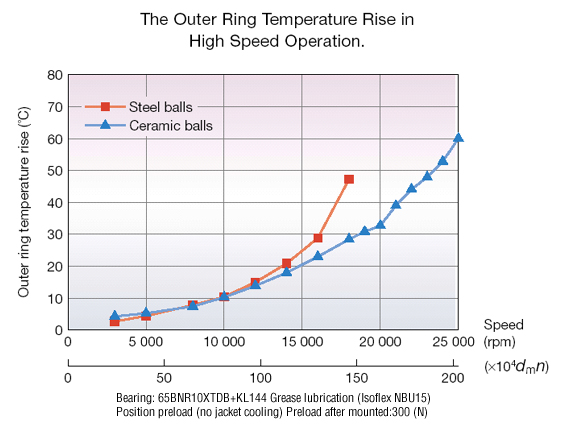
Thermal Ceramic bearings have better thermal properties
then the steel ball, also The
slip of the rolling element during operation is reduced, resulting in
less heat being generated.
Below you can see temperature performance between Steel and
Ceramic Balls.
To finish, we
remember again that this is not the magic potion, but helps !
Ceramic is
the future we think that in 2 or 3 years all the F2C engines will use this
technology. The
Team Contente-Goulão after the support gived to Boca bearings developing this
new bearings now, we are sarting to support F2C engine manufactures to produce F2C engines with this technology.
| -
This new bearings are already available in Bocabearing to be ordered.
However you need to request
Hybrid ceramic bearings
MR6900(10x22x6) or
MR696-ZZ(6x15x5),...
used by
the F2C Control Line Team Contente-Goulão.
Because there is not yet available, the
final part number for this bearings. |
|
Boca
Bearings Contacts : BOCA BEARING COMPANY
1500 SW 30th Ave., Unit #1
Boynton Beach, FL 33426 U.S.A. |
http://www.bocabearings.com
Toll free phone: (800) 332-3256
Toll free fax: (800) 409-9191
Local phone: (561) 998-0004
Local fax: (561) 998-0119
Email Address:
[email protected]
|