Hello there! My name is Althea Mariz A. San Jose, I am a student from Philippine Emirates Private School and this is my first robotics website as a project. In this website, you will be learning how to program parts of the Junkbot, find out their purposes and uses, as well as finding out what these parts are.
WHAT IS JUNKBOT?
Junkbot is a DIY robotic kit that enables young and old to create and build working robots from almost anything. It transforms house hold objects such as plastic bottles and old CDs,wooden spoons or cardboard in to unique,imaginative robots that can be programmed for a variety of functions and at different levels of skill. As they delight in making new shapes come alive,kids will learn the core STEAM concepts of analytical thinking,problem solving,prototyping, lateral thinking and building
Parts of the junkbot:
1. Mini USB power ,USB to computer
2. Power Jack.
3. On / off switch
4. Digital input / output pins
5. Analog input / output pins
6. DC motors’ pins
7. Bluetooth model (HM13 – Dual mode (classic and BLE))
8. WIFI model (ESP-12E)
9. No connection (NC) – Bluetooth (BL) –WIFI (WF) switch
10.LED
11. Buzzer
12. DC motors
13. Junkbot Board
14. Ultrasonic Sensor
15. IR Sensor
16. USB Cable
17. Wheels
18. Castor Wheel
19. Touch sensor
20. PIR sensor
21. RGB
22. Temperature Sensor
23. Pulse Sensor
24. Breadboard
25. Water Level Sensor
26. UV Sensor
27. LCD
28. Gas Sensor
Our first project is the LED
WHAT IS A "LED"?
 "LED" stands for "Light Emitting Diode." It is is an electronic device that emits light when an electrical current is passed through it.The energy efficient nature of LEDs allows them to produce brighter light than other types of bulbs while using less energy.
Purpose of LED:
The major uses of LED (Light Emitting Diodes) is to illuminate objects and even places. Its application is everywhere due to its compact size, low consumption of energy, extended lifetime and flexibility in terms of use in various applications. Applications and Uses of LEDs can be seen in: TV Backlighting.LEDs are extremely useful when put on quadcopters because they can help with identification and orientation, meaning you'll be able to see your quad better in the air and you will be able to tell which direction it is facing. They can also be programmed to change colour based on the different inputs received from the radio. For example, you can set the LEDs to show green when disarmed and red when armed. Or you can fade from one colour to another depending on how much throttle is applied. You can also assign indicator lights, where 2 LEDs on either side, blink depending on which direction the quadcopter is rolling, just like a regular car when it is turning either left or right.
HOW TO PROGRAM THE LED:
click here Find out how to program a LED in your junkbot using Arduino!
2nd project
PIR Sensor & Servo Motor
WHAT IS A "PIR SENSOR" ?
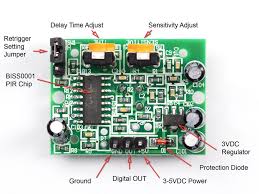
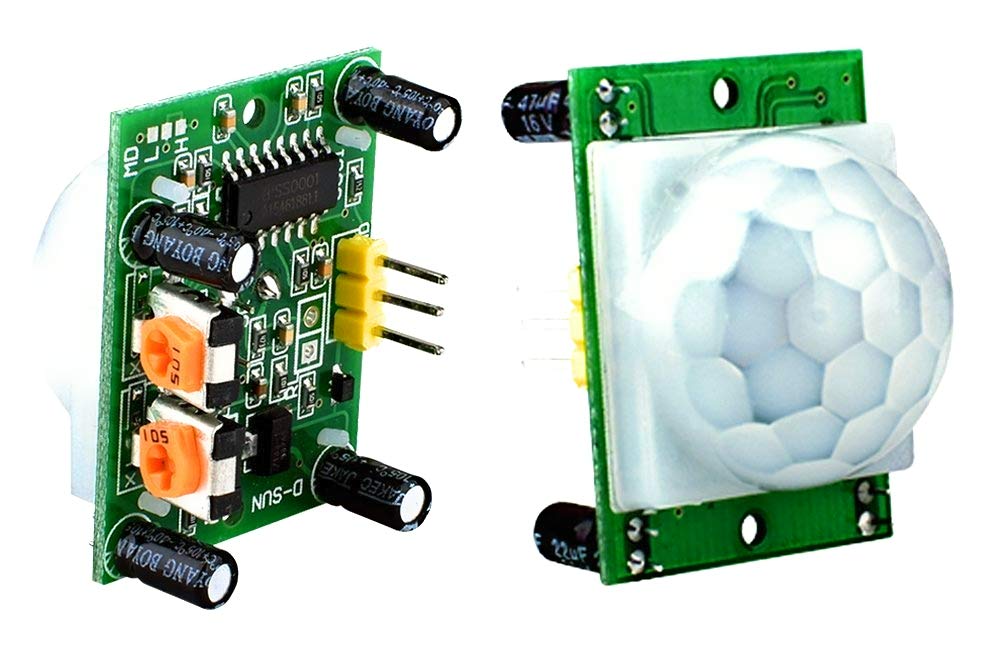 A passive infrared sensor (PIR sensor) is an electronic sensor that measures infrared (IR) light radiating from objects in its field of view. They are most often used in PIR-based motion detectors.
What is the purpose of the " PIR sensor " ?
PIR sensors are commonly used in security alarms and automatic lighting applications.
PIR sensors detect general movement, but do not give information on who or what moved. For that purpose, an active IR sensor is required.
PIR sensors are commonly called simply "PIR", or sometimes "PID", for "passive infrared detector". The term passive refers to the fact that PIR devices do not radiate energy for detection purposes. They work entirely by detecting infrared radiation (radiant heat) emitted by or reflected from objects.
WHAT IS A "SERVO MOTOR"?
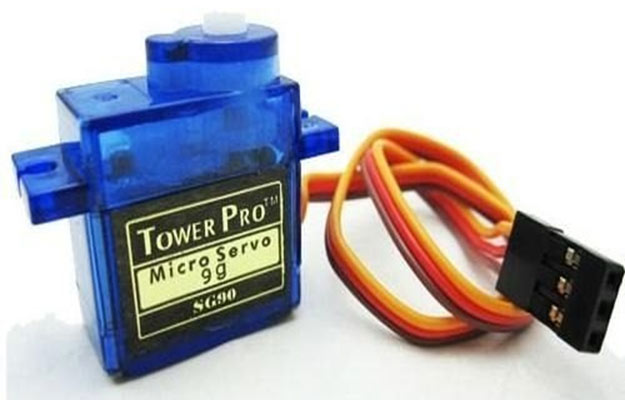 A servomotor is a rotary actuator or linear actuator that allows for precise control of angular or linear position, velocity and acceleration. It consists of a suitable motor coupled to a sensor for position feedback. It also requires a relatively sophisticated controller, often a dedicated module designed specifically for use with servomotors.
What is the purpose of a "Servo Motor" ?
Servomotors are not a specific class of motor, although the term servomotor is often used to refer to a motor suitable for use in a closed-loop control system.
Servomotors are used in applications such as robotics, CNC machinery or automated manufacturing.
HOW TO PROGRAM THE SERVO MOTOR:
click here to watch my video on How to program a Servo Motor in your junkbot app!
click here to watch my Math Presentation (project) about Data Collection