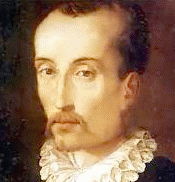
| Torquato Tasso |
| March 11, 1544, Sorrento � April 25, 1595, Rome |
| Poet |
Best known for his poem La Gerusalemme liberata (Jerusalem Delivered) (1580), in which he describes the imaginary combats between Christians and Muslims at the end of the First Crusade, during the siege of Jerusalem. Towards the beginning of 1575, he became the victim of a mental malady, which, without amounting to actual insanity, rendered him fantastical and insupportable, a misery to himself and a cause of anxiety to his patrons. Although it has been suggested that his malady was due to an overwhelming passion for Leonora d'Este, there is no evidence for this. Duke Alfonso II, contrary to his image as a tyrant, showed considerable forbearance. He was a rigid and unsympathetic man, as egotistical as a princeling of that age was wont to be. But to Tasso he was never cruelhard; unintelligent perhaps, but far from being that monster of ferocity which has been painted. The disease Tasso began to suffer from is now believed to be schizophrenia. Legends describe him wandering the streets of Rome half mad, convinced that he was being persecuted. At times he was imprisoned for his own safety by the Duke in St. Anne's lunatic asylum.
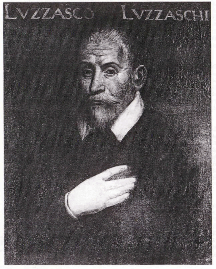
| Luzzasco Luzzaschi |
| c. 1545 � September 10, 1607 |
| Composer, Court Organist, Ferrara |
Luzzaschi composed seven books of madrigals for five voices, including the famous Madrigali ... per cantare, et sonare, a uno, e doi, e tre soprani of 1601. Unlike many madrigalists of the time, he included a highly ornamented soprano line, anticipating some of the changes to come in the early Baroque era. Also unique in Luzzaschi's work is the existence of written-out keyboard accompaniments. Luzzaschi was the director of the famous Concerto delle donne and composed madrigals for them, including his Madrigali of 1601. His work with these virtuosic women probably inspired the florid vocal lines he wrote.
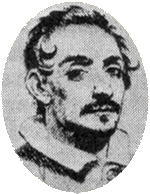
| Girolamo Frescobaldi |
| September, 1583 � March 1, 1643 |
| Composer, Church Organist, St. Peter's, Rome |
Frescobaldi studied under the organist and famous madrigalist Luzzasco Luzzaschi at Ferrara and is also considered to have been influenced by Carlo Gesualdo, who was in Ferrara at the time. His patron Guido Bentivoglio helped him get the position as an organist at the church of Santa Maria in Trastevere in Rome in the spring of 1607. Frescobaldi travelled with Bentivoglio to the Low Countries before Frescobaldi became organist of St Peter's in Rome in 1608, a post he held until his death. From 1628 to 1634 he was organist at the court of the Medicis in Florence.