Peatswamp Forests
Description: Peatswamp forest develops after mangroves have "reclaimed" land from the sea or river estuaries. Mangrove-mud is typically very oxygen-poor (and salty and often sulfur-rich), and as a consequence plant matter which drops to the floor of a mangrove forest decays only very slowly. Over thousands of years, deep layers of organic matter made up of partly decomposed leaves and trees, build up. This is called "peat". As the peat builds up, the ground becomes more stable, drier and less prone to flooding from the ocean, and the mangroves eventually give way to other trees. In some places, the peat may be as much as 15 metres deep, and over 5,000 years old at the bottom.
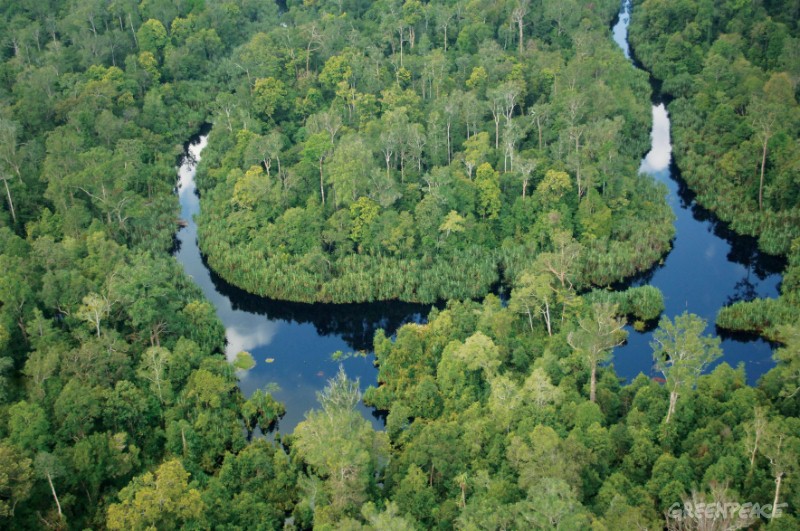 Peat is rich in organic material, so it can burn; and because of the lack of oxygen, it burns quite slowly. Peat fires burning in logged peat-swamp (which is prone to drying out) are almost impossible to put out, and can burn for years - much like burning coal seams. A significant amount of the pollution causing the famous "hazes" which periodically blanket southeast Asia is thought to come from burning peat forests in Kalimantan.
Peatswamp forests were once very common and quite widespread in Sarawak and Borneo generally (see map at top of page), but have been quite extensively logged.
Because of their unique development, and the fact that they are prone to flooding and have acidic soils, peatswamp forests have a unique ecology and composition. 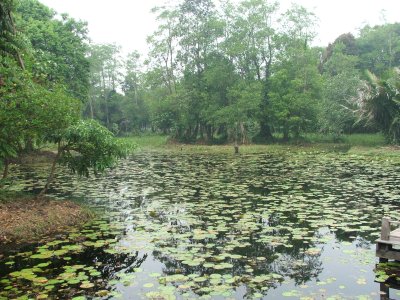
Plants: There are several types of peatswamp forest, which depend on the age of the forest. The youngest parts of the forest are those closest to the ocean and directly behind the mangroves. The oldest are futher back. The soils in old peatswamp forest are poor, all the nutrients having been washed away by millennia of rainwater. Despite this, peatswamp forests manage to support some very rich forest, including some huge trees. A number of the trees have a local name ending in the word paya, which simply means "swamp". These include rengas paya (Gluta beccarii), related to mango and cashews and with a nasty blister-causing sap, kapur paya (Dryoblanops rappa) a giant dipterocarp and sepetir paya (Copaifera palustris), which have large scented pods and were traditionally considered good for making boats. Huge alan trees (Shorea albida) dominate away from rivers. These can grow to 66m high and 6m in diameter. In the oldest parts of the peatswamp, with the most infertile soils, small trees related to the estuarine mangroves can be found.
Animals: Peatswamp forests are not rich in fruit-trees, and as a result, they generally cannot support much animal life, although various primates, including proboscis monkeys, are occasionally found in peatswamp forests. Despite the general absence of larger mammals, squirrels, bats and numerous bird species occur in abundance in peatswamp forests.
Best places to see: The best accessible peatswamp forest in Sarawak is found at Loagan Bunut National Park, near Miri.