 |
Pharaohnic Cairo
The most significant features of Pharaohnic Cairo are the Pyramids, the Sphinx and the Egyptian museum, so in this page we will talk about the Pyramids, while there are seperate pages for both The Sphinx and the Museum.
The Causeway
|
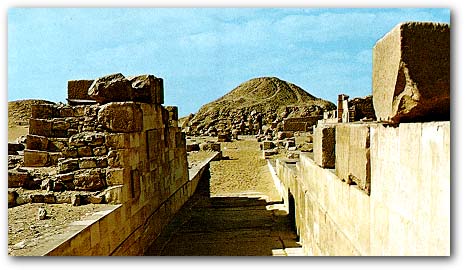
The causeway to the Pyramid of Unas (Unis) has been partially reconstructed. The causeway was originally enclosed entirely. It extends for about 700m toward the pyramid. The walls were inscribed with scenes of everyday life of the Egyptian. Almost all of the carvings in the pyramids and other monuments contain inscriptions and reliefs of royalty or noble life. The roof had a narrow slit to allow sunlight in to illuminate the inscriptions on the walls
The Pyramids
 |
How the Great Pyramid was built is a question that may never be answered. Herodotus said that it would have taken 30 years and 100,000 slaves to have built it. Another theory is that it was built by peasants who were unable to work the land while the Nile flooded between July and November. They may have been paid with food for their labor. The flooded waters would have also aided in the moving of the casing stones. These stones were brought from Aswan and Tura and the water would have brought the stones right to the pyramid. This pyramid is thought to have been built between 2589 - 2566 BC. It would have taken over 2,300,000 blocks of stone with an average weight of 2.5 tons each. The total weight would have been 6,000,000 tons and a height of 482 feet (140m). It is the largest and the oldest of the Pyramids of Giza.