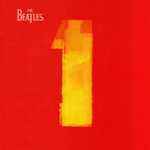
Hear a 30-second sample.

1. Love Me Do
Listen: Real Audio
2. From Me To You
Listen: Real Audio
3. She Loves You
Listen: Real Audio
4. I Want To Hold Your Hand
Listen: Real Audio
5. Can't Buy Me Love
Listen: Real Audio
6. A Hard Day's Night
Listen: Real Audio
7. I Feel Fine
Listen: Real Audio
8. Eight Days A Week
Listen: Real Audio
9. Ticket To Ride
Listen: Real Audio
10. Help!
Listen: Real Audio
11. Yesterday
Listen: Real Audio
12. Day Tripper
Listen: Real Audio
13. We Can Work It Out
Listen: Real Audio
14. Paperback Writer
Listen: Real Audio
15. Yellow Submarine
Listen: Real Audio
16. Eleanor Rigby
Listen: Real Audio
17. Penny Lane
Listen: Real Audio
18. All You Need Is Love
Listen: Real Audio
19. Hello, Goodbye
Listen: Real Audio
20. Lady Madonna
Listen: Real Audio
21. Hey Jude
Listen: Real Audio
22. Get Back
Listen: Real Audio
23. The Ballad Of John And Yoko
Listen: Real Audio
24. Something
Listen: Real Audio
25. Come Together
Listen: Real Audio
26. Let It Be
Listen: Real Audio
27. The Long And Winding Road
Listen: Real Audio
The Beatle's seven-year rock 'n' roll apprenticeship was powered by the music of Little Richard, Buddy Holly, Chuck Berry, The Everly Brothers and Elvis. Throughout the early years of the band, The Beatles perfected their musical skills by performing hundreds of long, tiring live shows in considerably less-than-ideal venues. The astonishing stylistic breadth of The Beatles' music, however, would become far greater than these early influences.
By 1960, The Silver Beatles (as the band was then known) departed for a now-famous stint in Hamburg, Germany. At the time, the band was made up of John, Paul and George Harrison on guitars and vocals, Pete Best on drums and Stuart Sutcliffe on bass. One year later, when The Beatles returned to Germany, the band appeared minus Sutcliffe, who had originally been allowed into the band simply because he was a favorite art schoolmate of Lennon's. Sutcliffe's musical skills (or lack thereof) had been the root of some dissension within the band. It soon become clear to Sutcliffe and to the other Beatles that there was no future for him in music. Sadly, Sutcliffe died of a brain hemorrhage shortly after leaving the group.
By the end of 1961, The Beatles had amassed an enormously enthusiastic following in Liverpool. Their notoriety was great enough to capture the attention of local record store owner Brian Epstein. In January 1962, Epstein procured an audition for the group with Decca records in London. Decca declined to sign the band, no doubt much to its later chagrin. Epstein noted several years later that it was the personal charm of the four Beatles that made him believe in the group's commercial potential. He became The Beatles' manager in 1962 and remained in that position until his death from an accidental overdose of sleeping pills in 1967.
By mid-1962, Epstein had groomed The Beatles' image, even persuading band members to dispense with their customary leather jackets and cowboy boots. A tireless worker, Epstein set up an audition with George Martin of Parlophone Records. As a result of the audition, the producer signed The Beatles to the label (an EMI subsidiary). Fortunately for him, George Martin was able to recognize something in The Beatles that only months earlier Decca had failed to see.
The final change in the group's membership occurred in August 1962, about one month after the group signed with Parlophone. Pete Best was asked by the other Beatles (with the encouragement of Martin) to leave the group. He was soon replaced by Richard Starkey, aka Ringo Starr, who had been playing with another group from Liverpool.
Starr had been a member of The Beatles for only a few weeks when the band recorded its first single, "Love Me Do"/"P.S. I Love You," which was released in September 1962. The single achieved only modest success. However, The Beatles' second release, the exuberant "Please Please Me," topped the British charts less than a year later. This 45 single and the British debut LP, also titled Please Please Me escalated the group's popularity to what became known as "Beatlemania." Meanwhile, teenagers in America were still oblivious to the group.
In February 1964, The Beatles arrived in America. The U.S. album debut, Meet the Beatles (Capitol Records) was released, and the single, "I Want to Hold Your Hand," skyrocketed to the No. 1 position on the U.S. pop charts. That same month, The Beatles' historic performance on The Ed Sullivan Show was seen by thousands of American teens. Thereafter, The Beatles were known in virtually every household in America.
For the next six years, with each album and single the group recorded, The Beatles expanded the parameters of popular music. On the second British LP, With the Beatles (the British version of Meet the Beatles), it was apparent that the songwriting talents of Lennon and McCartney were developing at a dizzying pace. By the time the Revolver album appeared in the summer of 1966, the band was far afield from its humble musical origins. The final track on the album, Tomorrow Never Knows, ushered in the era of psychedelia and pointed an entire generation in the direction of Sgt. Pepper's Lonely Heart's Club Band.
In August 1966, The Beatles took their first extended vacation in more than six years. When they returned to the studio shortly before Christmas that same year, the world - and even The Beatles - had changed. For the duration of the band's existence, The Beatles' music reflected its members' personal transformations as well as an altered international perspective. Returning from separate vacations, John, Paul, George and Ringo were full of creative energy. "Penny Lane"/"Strawberry Fields Forever" was recorded at EMI's Abbey Road studio in London and is considered by many to be the most artistic musical statement ever issued as a pop single.
The three studio albums that followed, Sgt. Peppers Lonely Heart's Club Band (1967), The White Album (1968) and Abbey Road (1969) are each enduring musical masterpieces. The three albums constitute the "mature" work of the band. However, while the music on these albums possesses previously unthinkable levels of beauty, originality and intelligence for mere pop music, all within the band was not rosy. The attitudes and goals of the individual Beatles, both personal and artistic, were no longer compatible as they had seemed to be only a few years earlier.
The final Beatles album (albeit not the last to be recorded), Let It Be, documented the disenchantment that individual members of The Beatles were experiencing. "The Long and Winding Road," Let It Be" and "Across the Universe" take on an almost heartbreaking poignancy when considered in the context of the embittered relationships that existed between the band members (especially Lennon and McCartney) at the time. Beatles fans would very soon mourn the breakup of the group. In January 1969, during the Let It Be sessions, The Beatles performed in public for the last time on the roof of Apple Records in London. At the end of the year, John, Paul, George and Ringo had gone their separate ways, each vigorously pursuing family life and a solo career. Hope of a Beatles reunion was permanently extinguished with the murder of John Lennon in New York City on Dec. 8, 1980.
In the spring of 2000, it was announced that the three remaining Beatles would reunite, having worked with Yoko Ono, to tell their story in a hardback book. The book, The Beatles Anthology, was released in October 2000 and included transcripts of new oral-history accounts from Paul McCartney, George Harrison and Ringo Starr as well as interviews with John Lennon before his death in 1980. Previously unseen photographs were also featured.
In the fall of 2000, The Beatles hit No. 1 on the charts again. An album of their No. 1 hits, titled 1, debuted at No. 1 on the Billboard chart, proving once and for all that The Beatles are forever.