|
|
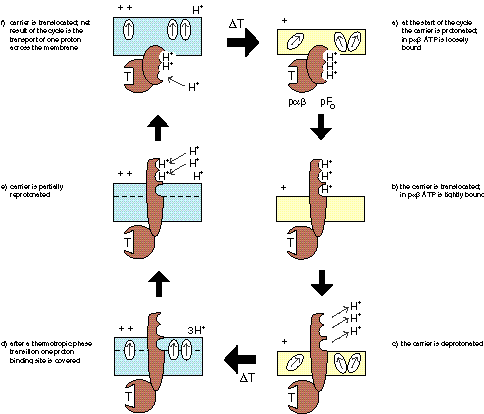
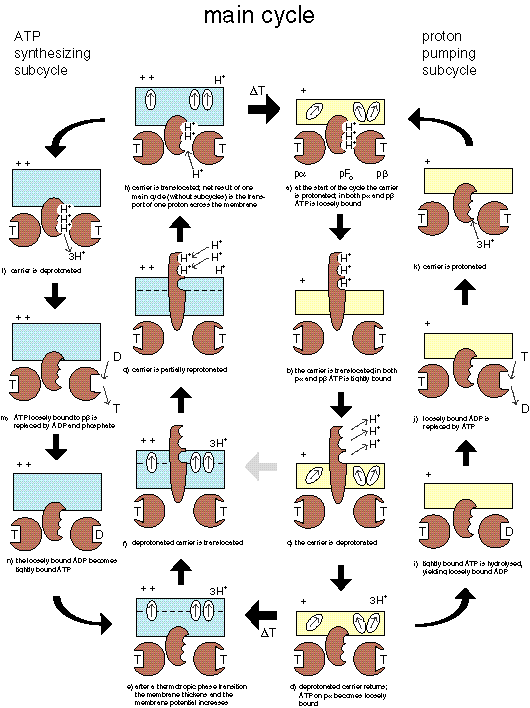
Membrane associated thermosynthesis: MTS |
|
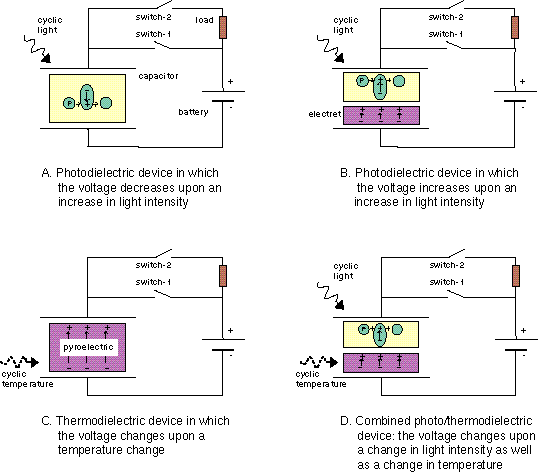
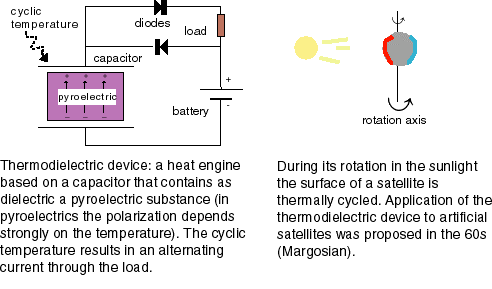
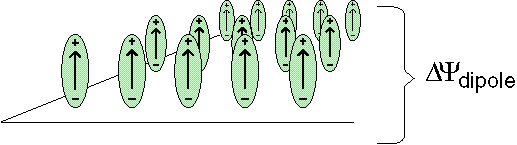
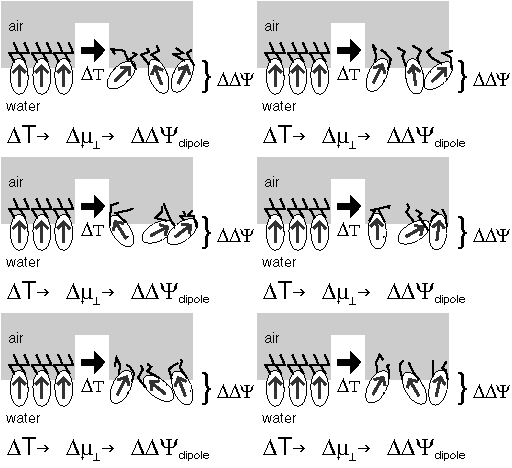
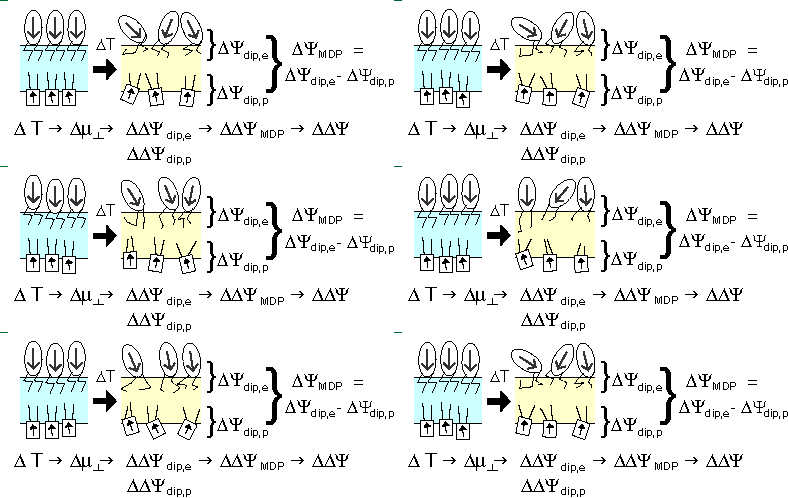
The voltage across a monolayer may vary with the temperature. At a certain temperature the variation may be very strong. Such strong variation is considered to be evidence of a phase transition in the monolayer. Upon the transition the disorder in the layer increases, and the dipole potential decreases. Only the average component of the dipole moment, �, normal to the surface, � ⊥ , contributes to the dipole potential. During the phase transition this average normal component decreases. |
|
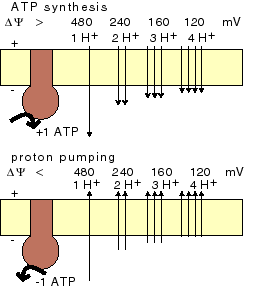
Consider first the relation between membrane potential and H+/ATP ratio. When the ratio is 1, it takes about 480 mV to synthesize ATP; is the ratio 2, it takes 480 / 2 = 240 mV to synthesize ATP, more generally, at ratio n it takes 480 / n mV. Conversely, protons can be pumped using ATP as long as the membrane voltage is lower than 480 mV (assuming H+/ATP ratio, or 'mode', 1), or 240 mV (mode 2), or, more generally, 480 / m mV (mode m). |
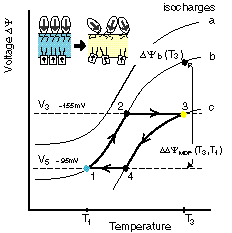
|
Cyclic variations of membrane potential during a thermal cycle, and associated changes in membrane potential due to voltage-activated ATP synthesis and proton pumping with different H+/ATP modes during MTS. |
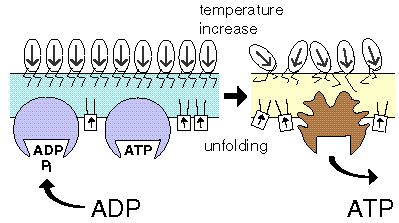
|
The evolution of ATPsynthase starts with a pF1 that is bound to a membrane that undergoes a thermotropic phase transition. Since the temperature interval required for a transition decreases with size, the advantage for the pF1 would be a smaller temperature interval for PTS to occur. The name pαβ is used to indicate that it may concern a progenitor of the α and β subunits present in contemporary pF1. |