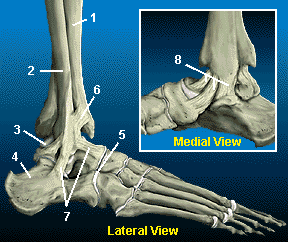
Advanced Lateral Mobility Prosthetic Ankle Design
A Research Project Conducted by
Ali Etebari and John Ferrante
Supervised by Dr. Laura Wojcik, ESM Department, Virginia Tech
Spring Semester 1998
INTRODUCTION
The goal of this project is to design a prosthetic ankle that will closely mimic the human ankle in biomechanical function and efficiency. The human ankle has a complex bone structure, providing for a wide range of motion and flexibility in all directions. The intricacy of the mechanics involved in the ankle presents a formidable challenge in attempting to emulate its proficiency. In order to improve upon lower-limb prostheses currently in use, lateral and reactionary movements will be focused upon as a basis for design. A greater range of motion will enhance the user�s ability to carry on day-to-day tasks as well as participate in activities requiring constant lateral movements. The ultimate goal of these efforts is to incorporate an improved responsiveness with the efficiency of commonly used prosthetics.
In designing a prosthetic ankle a variety of criteria were used to replicate the biomechanics of the human ankle. The anatomy of the ankle consists of two major joints; the true ankle joint, providing plantar and dorsal flexion, and the subtalar joint, providing inversion and eversion. These two joints can be most easily thought of as two hinge joints working perpendicular to each other. The fluidity of the human ankle is made possible by the manner in which these joints perform as a unit. A quality prosthetic ankle must incorporate these two intrinsic movements such that they move smoothly without affecting each other�s performance. This requirement is a major factor in designing an exceptional prosthetic ankle.
DISCUSSION
The final design chosen for the prosthetic ankle is based around the function of the two major hinges that mimic the human ankle. A primary hinge that provides the true ankle joint motion is situated in a central hub. This hub is then connected to the base foot structure by the means of another hinge, which supplies the lateral flexibility. The lateral hinge in this structure allows for a full range of side to side motion; similar to the operation of the subtalar joint in the human ankle. A key design feature is the ability of the ankle to respond to any sudden changes in the terrain of the walking surface. The preliminary drawings and final design for the prosthesis are shown below.
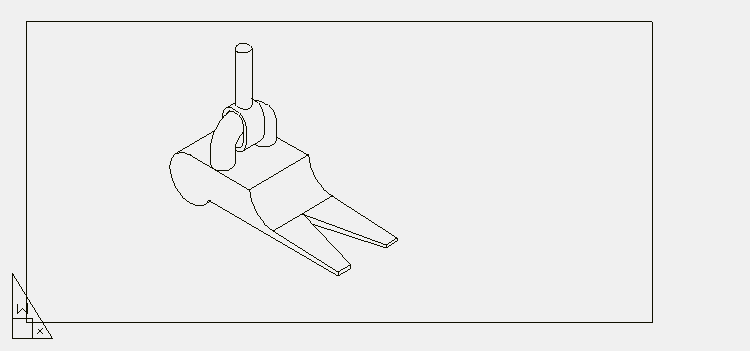
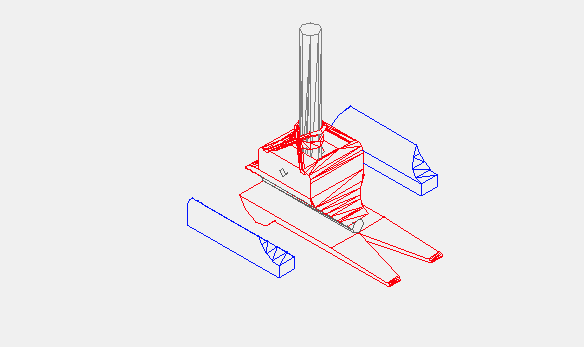
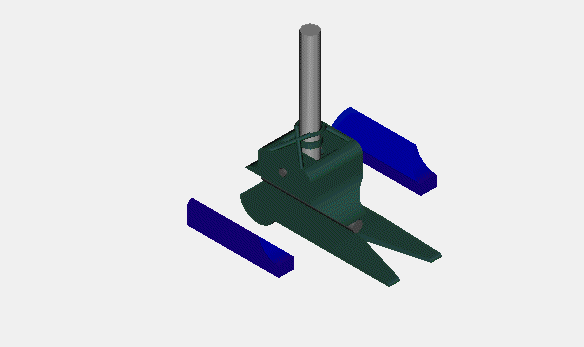
MATERIALS
In the past 30 or 40 years, primary prosthesis biomaterials have progressed from using inexpensive, low-strength metals, such as stainless steel, to materials with greater yield strengths and longer durability, like cobalt-chromium alloys. As current technology aims for more improved and efficient prostheses, high quality but very expensive alloys are being used more frequently. An example of a space-age biomaterials used in prostheses is porous titanium, also known as Ti 6%-Al 4%-V, or Ti6Al4V. Porous Titanium exhibits outstanding characteristics in that it has a very high yield strength, is very lightweight, and can be inserted into a human body without any reaction to the biological and physiological systems within. Unfortunately, such a material is rather expensive. Cobalt-chromium alloys are comparable to porous titanium in mechanical behavior, while at the same time much less expensive, making them a superior choice for biomaterial use in lower limb prostheses, such as ankle joints.
The construction of a prosthetic ankle joint is a complex task requiring thorough analysis of biomaterials and biomechanics. The ultimate goal of such analysis is the production of a reliable, durable, and fully functional replica of the human ankle. Choosing suitable materials can be rather difficult due to limitations in the availability, the affordability, and the characteristics of the materials under consideration. In most cases, there is no perfect biomaterial to be used in the construction of the prosthesis, but rather several suitable materials. As a result, the most efficient biomaterial must be chosen. Scientists strive to engineer new, technological materials to replace those used presently and in the past, but such improvements are difficult to come by because a gain in one property usually results in a loss in another property. For instance, materials with high yield strengths are most often characterized by low ductility. In order to choose the best material for use, all of its properties must be carefully examined and compared with the needs of the human body.
By far, the most important facet of the human ankle is its bone structure. Most lower-limb prostheses are currently constructed to replace the functions of the bones alone, neglecting many of the other major biological components, such as ligaments, tendons, cartilage, and muscles. By constructing a replacement for the overall mechanical structure of the limb, the necessary functions can be achieved without the need for complicated, often heavy, and rather expensive prostheses. As the need for a light prosthesis is of particular importance, severe constraints are placed upon its nature and materials. In order to function properly, without incredible overexertion of the body, a prosthetic limb must be very light. This need arises due to the fact that the prosthesis contains no muscles, which means that the body cannot do most of the work to help it function properly. The prosthesis has to be light enough such that very little work needs to be done by the person to accomplish the task provided by the prosthesis, in this case aiding the person in walking or running.
Several aspects of the ankle must be understood in order to analyze the efficiency of a particular biomaterial chosen to make up the overall bone structure of the ankle. The bones of the ankle support the entire body weight. As a result, the material to be used must be capable of withstanding a tremendous load for extended periods of time. In other words, the biomaterial needs to have a high yield strength. In addition, bones can handle a fair amount of plastic deformation, compelling the need for a rather ductile material. Based upon these two properties, as well as several others of lesser importance, scientists have analyzed many different types of biomaterials, mostly metal alloys, and chosen the most suitable materials for prostheses.
Certain specific criteria will be used in determining the best material for a superior ankle joint. These criteria include a variety of mechanical and economical considerations. As for mechanical properties, the alloy must show excellent strength, fair ductility, and low mass. Economical considerations involve an alloy�s affordability as a prosthesis and its durability, decreasing the frequency with which it needs to be replaced and the amount it costs to do so. Such factors that effect the durability of the product are the yield strength and the corrosion rate of the material.
Two types of commonly used biomaterials were determined to be the most feasible choices for the prosthetic ankle design. Steel alloys, used primarily in and prior to the 1970s, offer good strength and elasticity. Cobalt-chromium alloys, on the other hand, are a group of more recently used biomaterials which provide improved strength, durability, and higher strength to weight ratios than steel alloys, at a higher cost. Titanium alloys were found to be too expensive for the amount of metal needed for the prosthesis.
Stainless Steel Alloys:
The use of stainless steels in prosthetic design was a common occurrence in the past. Stainless steels were considered a cheap, efficient choice of material and were readily available. Certain types of steels exhibit beneficial properties which allow them to perform quite well as a biomaterial. A biomaterial is classified as a material which is used for prosthetics or implants to be incorporated with the human body. Newer, more advanced biomaterials are emerging which are replacing the stainless steels. The reason for this is that stainless steels possess some unfavorable properties, such as high susceptibility to pitting corrosion. The emphasis of this section is to analyze the different varieties of stainless steel, examine the properties of each type, and evaluate the performance of stainless steel as a biomaterial. During the 1970's, over half of the hard metal implants were fabricated from stainless steels, with the remaining portion commonly derived from alloys of the cobalt - chromium family. Stainless steels are a ferrous metal alloy, containing a relatively high amount of alloying elements. Stainless steels are highly resistant to corrosion or rusting, and are considered high alloy due to the high amounts of chromium present in the steel. Smaller amounts of nickel and molybdenum are sometimes also added. In lower alloy steels containing small amounts of carbon, usually on the order of 0.1 wt.% C, a corrosive layer of rust will commonly form on the outside and continue to grow inwards. This corrosive layer is caused by the iron in the steel reacting with the oxygen in the surrounding air and forming the reddish colored iron oxide(FeO). Such corrosion is deleterious to the life and efficiency of the steel and makes it a poor biomaterial. The key to stainless steels unique corrosion resistant properties is that the chromium reacts first with the oxygen in the air and forms a layer of chromium oxide(Cr2O3) around the existing piece of steel. This layer of Cr2O3 is very important due to the fact that it resists any further corrosion of the steel. This layer forms immediately, therefore if the steel is scratched, a brand new layer of Cr2O3 forms, filling in the scratch. Hence the name stainless, and the primary reason why this material is used in such various applications. Stainless steels are produced in wide varieties, each type possessing it's own characteristic properties and qualities. As different types of stainless steels are analyzed it can be seen that some perform excellently as biomaterials while others perform less than favorably. In considering stainless steels for prosthetic use and implants, certain qualities are found to be highly beneficial where others can be detrimental to our bodies. The steels commonly take the place of human bone. Material properties such as strength, durability, non-toxicity and low weight are highly desirable. This is why certain types of steels are not considered efficient biomaterials whereas other are in high demand. The difference in properties can be traced back to the elements present in the steel, the microstructural arrangement of the atoms, the fabrication techniques and many other variables. The American Iron and Stainless Steel Institute(AISSI) has created a classification system which organizes the steels into controlled groups and subgroups. Three of the main groups of stainless steels are 200, 300, and 400 series steel. The 200 series is the ferritic series whose microstructure contains the ferrite or alpha phase steel. Austenite or gamma phase steels are most abundantly present in the 300 series classification. The 400 series is the martensitic series which is primarily composed of martensite phase steel. (Brown pg. 308) The ferritic series composed of ferrite is a stable form of steel at room temperature without the addition of extra alloying elements. It has a body-centered-cubic structure, giving it a high strength and hardness. As carbon is added the ferrite mixes with cementite(Fe3C) and forms a layered structure of pearlite. This, of course, would not be considered "stainless" steel; this is simply steel, a cheaper material which is commonly used in construction. These industrial steels are subject to corrosion and rusting and usually have a large build up of iron oxide on the surface, marring its appearance. Once the addition of alloying elements such as chromium are added, only then does the steel earn the term stainless. However the base steel is ferritic in nature hence the 200 series is known as ferritic stainless steel. This is a fairly hard and relatively brittle stainless steel, although it does have a very high strength level. Unfortunately, many of its properties are not readily desired for biological implants and therefor it is not used as a biomaterial. For instance, ferritic steel lacks ease of fabrication and saline corrosion resistance. This category of stainless steels is quite magnetic; one property which is not readily desirable as a biomaterial for obvious reasons. It can clearly be seen that 200 series steels were overlooked as a biomaterial, however they are very efficient when incorporated into surgical and dental instruments. The 400 series, representing martensitic steels have many of the same properties as the 200 series. Martensite is considered the hardest form of steel, obtained by quenching, or rapidly cooling, a piece of austenitic alloy. The microstructural components are unable to form the desired pearlite or bainite due to the prevention of carbon diffusion and instead take the form of a "stretched" body-centered-tetragonal(BCT) cell structure. This restricts the movement of dislocations which cause plastic deformation, and therefore create a very strong, hard steel. This means that it also lacks a certain ductility which is a desirable property in biomaterials. Therefore, both 200 and 400 series are not preferred materials for use as a bone replacement in implants or prosthetic designs, and will not be discussed in further detail. Fortunately, the 300 series austenitic group of stainless steels embody properties which are beneficial as biomaterials and are widely used for that purpose. Austenite commonly exists only at temperatures above the eutectoid temperature of 727 degrees Celsius for low carbon content steels. Once the iron carbon alloy is cooled below the eutectoid temperature, the gamma phase begins to form into pearlite which consists of layers of ferrite and cementite. Depending on the weight percent carbon present in the steel, the cooling process may yield proeutectoid ferrite or cementite, but no austenite will be present. The speed of cooling will form percentages of martensite, pearlite and bainite, but the austenite can not exist below the 727 degree Celsius eutectoid temperature. The addition of the nickel alloying element to the steel allows austenitic steel to be present at room temperatures. In fact, nickel must be present in excess of 8 wt. % in order to stabilize the face-centered-cubic austenitic structure. The 200 and 400 series steels do not require the addition of nickel because of their BCC cell structure. The FCC structure in austenitic stainless steel allows for it to have desirable ductile and corrosion resistant qualities. Another advantage of the 300 series is the enhancement of the mechanical properties as a result of cold working. The table below shows how cold working of the steel can have drastic effects on the yield strength and tensile strength.
Mechanical Properties of Various Stainless Steels
Type Yield Strength(psi) Tensile Strength(psi) % Elongation
304 Annealed 40,000 83,000 60304 Cold Worked 75,000 110,000 60316L Annealed 35,000 80,000 50316L Cold Worked 115,000 140,000 20
(Brown pg.309)
Strain hardening takes place as the ductile stainless steels are worked. Consequently, the application of various loads further strengthens the steel. The negative consequence of cold working is the reduction of ductility. This is displayed by the lower percentage of elongation after the effects of strain hardening.
Austenitic 300 series stainless steels are further subdivided into various groups depending on nickel, carbon, molybdenum, and chromium contents. The weight percentage of each of these alloying elements results in different properties of the stainless steel. The main three categories termed 304, 316 and 316L type steels are shown in the following table along with their respective alloying elements.
Composition Weight Percent Type C Mn Si P S Cr Ni Mo Fe
304 0.08 2 1 0.045 0.03 18-20 8-12 ~~~ Balance316 0.08 2 1 0.045 0.03 16-18 10-14 2-3 Balance316L 0.03 2 1 0.045 0.03 16-18 10-14 2-3 Balance
(Brown pg.309)
As stated before, chromium is the element which gives the steel its corrosion resistant, "stainless" properties. A minimum of 18 wt. % chromium is necessary in order to benefit from the desirable corrosion resistant properties. A dense layer of Cr2O3 builds up over the surface of the steel approximately 400 microns in thickness and prevents the piece from further corrosion. This process is known as "passivization." Chlorine ions are notorious for destroying the passivization layer and the no longer stainless steel becomes subject to pitting corrosion. Type 304 steel is considered 18-8 steel due to the 18 wt. % chromium content and 8 wt. % nickel content. Type 316 steel involves the addition of 2-3 wt. % Molybdenum which acts to protect against harmful chlorine environment corrosion. Along with the addition of Molybdenum is a higher amount of nickel. This is because the Molybdenum tends to favor the stabilization of the BCC structure and will harden the steel. Additional nickel is required to ensure that the ductile austenitic form is sustained. (Recum pg.14-15) The third type of 300 series steel is termed 316L. The L stands for low carbon (0.03 %) and tends to decrease chances of precipitation of chromium carbides, which result in sensitization. Sensitization is a from of catastrophic intergranular corrosion failure and is not highly desirable.
Based upon current knowledge, the best picture which may be given of this phenomenon is as follows: In the areas immediately adjacent to grain boundaries, chromium and carbon combine to form chromium carbide, which precipitates out into the grain boundary. The result is that the areas around grain boundaries are denuded of chromium by comparison to the average chromium content in the balance of the grain. The region around the grain boundary then becomes more susceptible to corrosion for the following reasons:1) No chromium exists around the grain boundary to passivate the area through the formation of a protective oxide.
2) An additional galvanic effect aiding corrosion potentials is now possible because of compositional differences between grain boundary region and the grain itself.3) The presence of stress accentuates the catastrophic nature of this type of corrosion, since a corrosion attack produced along grain boundaries soon leads to failure across the structured member. (Brown pg. 310)
Due to the ability of the low carbon content to reduce sensitization and the high Molybdenum content to increase corrosion resistance, 316L is considered the best biological implant material among the various types of stainless steels. Stainless steel exhibits many properties which are quite beneficial for use as a biomaterial. The steel possesses very high short term corrosion resistance. The austenitic, FCC structure results in high ductility, which increases the durability and life of the steel. Cold working actually augments the tensile and yield strengths of the steel through increased strain hardening. Stainless steels are also quite affordable and readily available when compared to many newer alloys. Quite a few unfavorable properties are also exhibited by stainless steels. After prolonged exposure to chlorine ions in a saline environment, the steel can begin to pit and corrode. Therefore, the steels are not quality biomaterials over long term periods of time. Although stainless steels are quite strong, they are not very light weight, and do not possess a high strength to weight ratio in comparison to newer alloys. Cold working of stainless steels does increase the strength, but it also slightly decreases the ductility of the steel, which is not a desirable result. These undesirable properties of stainless steels have led to the increased use of newer alloys. The use of stainless steel as a biomaterial is quickly becoming quite rare. Two and a half decades ago stainless steel alloys were considered a common material which were readily available and easy to fabricate. Although the best choice of the times, stainless steel had many drawbacks and weaknesses. Over time it could be seen that other more efficient biomaterials could replace the mainstream usage of stainless steel. As the field of biomechanics matured into the 80's and 90's, many studies were conducted to expose other materials that did not contain some of the negative effects of the stainless steel groups. Many advances were made in the area of titanium. An especially new alloy termed porous titanium (Ti-6Al-4V), is bringing new excitement to the field of biomaterials. It possesses a high strength-to-weight ratio, more closely emulating the function and efficiency of human bone itself. The Ti3+ ion has not been known to cause any harm or pose malicious toxicity to the body. The use of porous titanium as a biomaterial also triumphs over stainless steel in respect to corrosion resistance. 316L stainless steel has the highest corrosion resistance of all the steels, but it is only efficient for a short period of time. After prolonged exposure to a high saline environment, the stainless steel will begin to pit and corrode, whereas the titanium alloys can remain functional for long periods of time. Other alloys such as Zirconium which is very similar to Titanium (only slightly heavier), contains a very favorable tissue tolerance. Tantalum, also a fledgling alloy, is currently the topic of extensive research, and exhibits many favorable properties. The cobalt-chromium alloys have been around for some time, yet they are still used in practice today under terms such as: Cast Vitallium, Zimaloy, Stellite 21, and Vinertia. The cobalt-chromium alloys are relatively strong and ductile materials; two properties commonly preferred in biomaterials. All of these different materials used in prosthetic design have their own specific properties; either favorable or disadvantageous. Many of these materials have filled the formidable shoes of stainless steel, which was once thought to be the perfect material for the job. While stainless steel is quite efficient, and a great biomaterial compared to many other possible choices, it had its weaker points which opened the door for the newer, more versatile alloys. (Brown pg. 312)
It can be concluded that certain specific types of stainless steels such as 316L are quite effective as biomaterials. However, it can also be noticed that many drawbacks are associated with the use of stainless steels in biomechanics. This is resulting in a movement towards the increased use of newer, safer, and more efficient alloys such as cobalt-chromium and porous titanium. The newer alloys do cost significantly more, which argues for the use of stainless steels in order to be more cost effective. However, large strides are being made in reducing the cost of production of these alloys. As a result, in the future we shall certainly see a greatly diminished use of stainless steel as a biomaterial. However, it should be noted that stainless steels have served a valuable role as a springboard to allowing the field of biomaterials to advance itself into the twenty first century.
Cobalt-chromium Alloys:
Cobalt-chromium alloys were created in the early 1900s when Haynes found that a mixture composed of about 25 weight % chromium and 75 weight % cobalt produced an alloy which exhibited high strength, high resistance to corrosion, oxidation, and wear. This alloy, which he called "stellite," which means "a star among metals," was also found to have a low coefficient of friction in comparison with other metal alloys, including steels (Brown, pp. 311). Such a material is particularly favorable for use in prosthetic limbs because of its oxidation and corrosion resistance. Cobalt-chromium alloys are fabricated in either wrought or cast forms. Most of the cobalt-chromium alloys used today for prostheses and implants contain several other elements including carbon, molybdenum, nickel, tungsten, and iron. The cobalt-carbon base of the alloy gives the material its high strength, while the addition of chromium gives the material corrosion resistance. Nickel adds to both the strength and ductility of the alloy, molybdenum gives the material high-temperature stability, and other elements can be added to the alloy to help stabilize various phases (Brown, pp. 312). The compositions of three commonly used alloys are given in Table 1.
�
| Table 1 | ||||||||||
| TYPICAL COMPOSITIONS OF COBALT-BASED ALLOYS USED IN BIOMEDICAL APPLICATIONS | ||||||||||
| Biomaterial | Cr |
Mo |
Ni |
Mn |
Si |
Fe |
C |
W |
Co |
|
| Co-Cr-Mo | 27 |
6 |
2.5 |
1 |
1 |
0.75 |
0.25 |
0 |
Balance |
|
| Co-Cr-Ni-W | 20 |
0 |
10 |
1 |
1 |
2.5 |
0.05 |
15.2 |
Balance |
|
| Co-Cr-Ni-Mo-Fe | 20 |
7 |
15 |
2 |
0 |
15 |
0.15 |
0 |
Balance |
|
(Brown, pp. 312)
Cobalt-chromium alloys have an advantage over other alloys in that their properties can be changed greatly to suit the application at hand by simply altering the composition of the alloy. Thus, they can be used for more applications than stainless steel and titanium alloys. This ability proves very advantageous in the biomedical industry due to the wide variety of implants and prostheses used. Therefore, cobalt-chromium alloys offer a great deal of flexibility in case one or more requirements of the ankle joint fail to be satisfied. In recent decades scientists have grouped these alloys into the most commonly used compositions of cobalt-chromium alloys and other elements.
The group of alloys containing mostly cobalt, chromium, and molybdenum, also known as the Co-Cr-Mo alloys, are often used in biomedical applications because of their high strength and fair ductility. The properties of this alloy are shown in Table 2.
| Table 2 | |||||||||
| TYPICAL PROPERTIES OF COBALT-BASED ALLOYS USED IN BIOMEDICAL APPLICATIONS | |||||||||
| Biomaterial | Yield Strength | Tensile Strength | Elongation | ||||||
| (ksi) | (ksi) | (%) | |||||||
| Co-Cr-Mo | 75 |
150 |
1 |
||||||
| Co-Cr-Ni-W | 67 |
145 |
50 |
||||||
| Co-Cr-Ni-Mo-Fe | |||||||||
| Annealed | 129 |
185 |
30 |
||||||
| Wrought | 260 |
340 |
1 |
||||||
(Brown, pp. 312)
The Co-Cr-Mo alloys are known commercially as Cast Vitallium, Zimaloy, Stellite 21, and Vinertia. In addition to their high strengths and fair ductility, they also are very resistant to stress corrosion and attack in chloride ion environments (Brown, pp. 312). Unfortunately, they cannot withstand some high-oxygen environments because there is a slight chance that the alloy will displace hydrogen from solution and depolarize at the cathode. This problem is characteristic of most of the cobalt alloys. As a result, the Co-Cr-Mo alloys should not be in contact with certain other materials, including stainless steels to avoid galvanic corrosion.
The Co-Cr-Mo alloys are most often cast rather than wrought because of their fair ductility and poor machinability. In cases where the composition of the alloy must be kept exact to a high degree, they can be vacuum cast using the investment or lost-wax process. However, these two procedures are complicated and costly. A more reasonable manner of fabricating the alloy is to arc weld the material under a protective atmosphere of helium gas. By doing so, the metal is given its general shape. The alloy is then ground, polished, and electropolished in order to give it a shiny, smooth surface, free of surface defects.
The Co-Cr-Ni-W alloys have lower yield and tensile strengths than the Co-Cr-Mo alloys, but are much more ductile. They are extremely resistant to halogen atmospheres, but often are subject to crevice corrosion, which means that they must be thoroughly polished for best performance. These alloys can be cast or wrought, and cause little reaction with tissue in implants.
The Co-Cr-Ni-Mo-Fe alloys, commercially known by such names as Elgiloy, display good strength and ductility when annealed. The metal can be work hardened in order to improve the strength of the material. The alloy can also be welded or soldered, and although difficult, is sometimes machined.
Because they are relatively inexpensive, cobalt-chromium alloys are used more often than titanium alloys. However, the properties of the two materials are very similar. The ultimate tensile strengths, yield strengths, moduli of elasticity, and percentage elongation of bone and several biomaterials typically used in lower-limb prostheses are compared in Table 3.
| Table 3 | ||||
| MECHANICAL AND PHYSICAL PROPERTIES OF ORTHOPEDIC ALLOYS | ||||
| Biomaterial | Ultimate Tensile | Yield Strength | Modulus of | % Elongation |
Strength x 10^3 psi |
x 10^3 psi |
Elasticity x 10^6 psi | ||
| Bone | 19.29 |
2.48 |
3 to 4 |
|
| 316L annealed | 70 |
25 |
28 |
40 |
| Cast Co-Cr | 95.0 (min) |
65 (min) |
36 |
8.0 (min) |
| Wrought Co-Cr | 130 (min) |
55 (min) |
33 |
60 |
| cold worked | 213 |
171 |
15 |
|
| Titanium 6 Al-4 V | 130 (min) |
120.0 (min).4 |
16 |
10 |
| (EL1) annealed | ||||
| cold worked | 173 |
159 |
10 |
|
| Ni-Co-Cr (MP35N) | 120 |
50 |
33.6 |
50 |
| annealed | ||||
| cold worked and aged | 260 |
230 |
8 |
|
(CRC Handbook, pp. 254 and 274)
As shown in the table, the properties of the cobalt-chromium alloys are very suitable for a prosthetic limb. These alloys show high yield strengths and ultimate tensile strengths which are both necessary qualities for a lower-limb prosthesis due to the large amounts of weight and pressure these materials will have to absorb. Because these materials exhibit such high strength, their moduli of elasticity are also very high in comparison with the bone they are to replace. The cobalt-chromium alloys average a modulus of elasticity of about 35 x 106 psi which is more than ten times the value for human bone, 2.48 x 10⁶. This drastic difference in moduli of elasticity between the two materials appears to be of high significance when considering how they will behave under large stresses. However, the microstructures of the cobalt-chromium alloys have a very simple crystal form, allowing for many slip planes that give the material the ability to plastically deform a great deal before failure. Although these alloys have high moduli of elasticity, this property affects only the hardness of the material and its yield and ultimate tensile strengths, and have relatively no affect upon the alloys� abilities to bend. As a result, the cobalt-chromium alloys elongate much more than the 3 to 4% characteristic of human bone. Wrought cobalt-chromium alloys can elongate to as much as 60%; which proves that it is possible to choose a cobalt-chromium alloy with a high ductility. This property is a necessity in climates where the temperature is low because the metal becomes much more brittle at lower temperatures. All in all, cobalt-chromium alloys have the necessary properties for replacing bone in a prosthetic limb.
Corrosion is another major factor in choosing a suitable biomaterial for a lower-limb prosthesis, as mentioned above. The amount a material will corrode over time determines its durability and its ability to function properly. Not only does corrosion affect the strength of the biomaterial, but it can cause friction between materials in the joint. Therefore, in order to work properly and be durable enough to justify its cost, the prosthesis needs to be made out of a corrosion-proof material. Table 4 shows the corrosion statistics for several commonly used alloys.
| Table 4 | |||
| CORROSION OF ORTHOPEDIC ALLOYS | |||
| Biomaterial | Corrosion Rate | ||
| (mpy) | |||
| Stainless Steel - 316L | 0.001 - 0.002 | ||
| Cast Co-Cr | 0.0031 - 0.009 | ||
| Wrought Co-Cr-W | 0.0001 - 0.00015 | ||
| Titanium 6 Al-4 V (EL1) | 0.0007 - 0.004 | ||
| MP35N | 0.0012 - 0.002 | ||
(CRC Handbook, pp. 275)
As can be seen from the table, the corrosion rate for cast Co-Cr is relatively high, but that for wrought Co-Cr-W is extremely low. In fact, wrought Co-Cr-W is less subject to corrosion than even porous titanium. So depending upon the composition and fabrication of the alloy, cobalt-chromium alloys can be formed in such a manner as to have excellent resistance to corrosion. This property is very important in ankle joint prostheses because of the need for the joint to function smoothly without the metal becoming corroded and causing unnecessary friction between adjacent portions of the alloy.
The cobalt-chromium alloys are excellent biomaterials for use in prosthetic ankle joints. These alloys exhibit high strength and good ductility, two necessary properties for the prosthesis to work properly. More importantly, cobalt-chromium alloys have superior resistance to external factors when other elements are added to the material, including oxidation and corrosion. The ability of cobalt-chromium alloys to resist such forms of wear and deterioration gives the metals a good degree of durability, cutting down on the need to replace the prosthesis frequently. Because these alloys are so much more suitable for ankle joint prostheses than stainless steels, and are comparable in quality to titanium alloys but much less expensive, cobalt-chromium alloys are ideal biomaterials for lower limb and ankle joint prostheses.
RESULTS AND CONCLUSIONS
A model of the prosthetic ankle design was constructed to demonstrate the invention�s mechanical efficiency and performance. Several observations can be made from the model. First of all, the general range of motion of the prosthesis was found to replicate that of the human ankle to a high degree. The experimentally calculated values for the forward, backward, inversion, and eversion maximum angles of deflection from the vertical axis of the human ankle are 27o, 21o, 25o, and 25o, respectively. For the model constructed, the values were 29o, 27o, 27o, and 27o, respectively. In addition, the motion of the model of the joint was fluid without any buckling or clanking due to the hinges affecting each other�s performance. Overall, the mechanical performance achieved by the designed prosthetic ankle met all of the desired requirements, and was rather successful in fulfilling its purpose.
However, the design had a few flaws that affected the efficiency of the prosthesis. One major problem with the design is that the toe strike of the human ankle and commonly used prostheses is lost in the use of an ordinary pin joint for the true ankle joint motion. In order to improve the design, the true ankle joint should be made using a bent length of metal with a high degree of elastic deformation. The subtalar joint replacement in the model proved successful and innovative, and such an idea could improve modern prosthetic limbs. Ongoing research involving lighter, stronger materials and innovative prosthetic ankle designs provides exciting possibilities for the augmentation of lower-limb prosthetics.
WORKS CITED
Biological and Biomechanical Performance of Biomaterials. Elsevier: New York, 1986.
Biomedical Materials. Materials Research Society: Pittsburgh, Pennsylvania, 1986.
Black, Jonathon. Biological Performance of Materials: Fundamentals of Biocompatibility. Marcel Dekker, Inc.: New �������� York, 1992.
Brown, J. H. U.; Jacobs, John E; and Stark, Lawrence. Biomedical Engineering. F. A. Davis Company: Philadelphia,�������� 1971.
Callister, William D. Materials Science & Engineering. John Wiley & Sons: Canada, 1997.
CRC Handbook of Engineering in Medicine and Biology. CRC Press, Inc., 1976.
Lee, A.J.C., Albrektsson, T., and Branemark, P.I. Clinical Applications of Biomaterials. John Wiley & Sons, Great ������������ Britain, 1982.
Stark, Lawrence, and Agarwal, Gyan. Biomaterials. Plunum Press, New York, New York, 1969.
Von Recum, Andreas F. Handbook of Biomaterials Evaluation. Macmillan Publishing Company, New York, 1986.
Winter, George D., and Gibbons, Donald F., and Plenk, Hanns Jr. Biomaterials 1980. � John Wiley & Sons, Great ������������� Britain, 1982.
 Get your own Free Homepage